
Strait of Hormuz Tensions Signal a Major Shift in Global Energy Flow
Introduction
A mere twenty-one miles of water separates the Persian Gulf from the Arabian Sea, yet this narrow passage serves as the primary artery for the global economy. The strait of hormuz news remains a critical focal point for global trade as recent maritime security developments signal a potential for further geopolitical escalation in the region.
What Happened
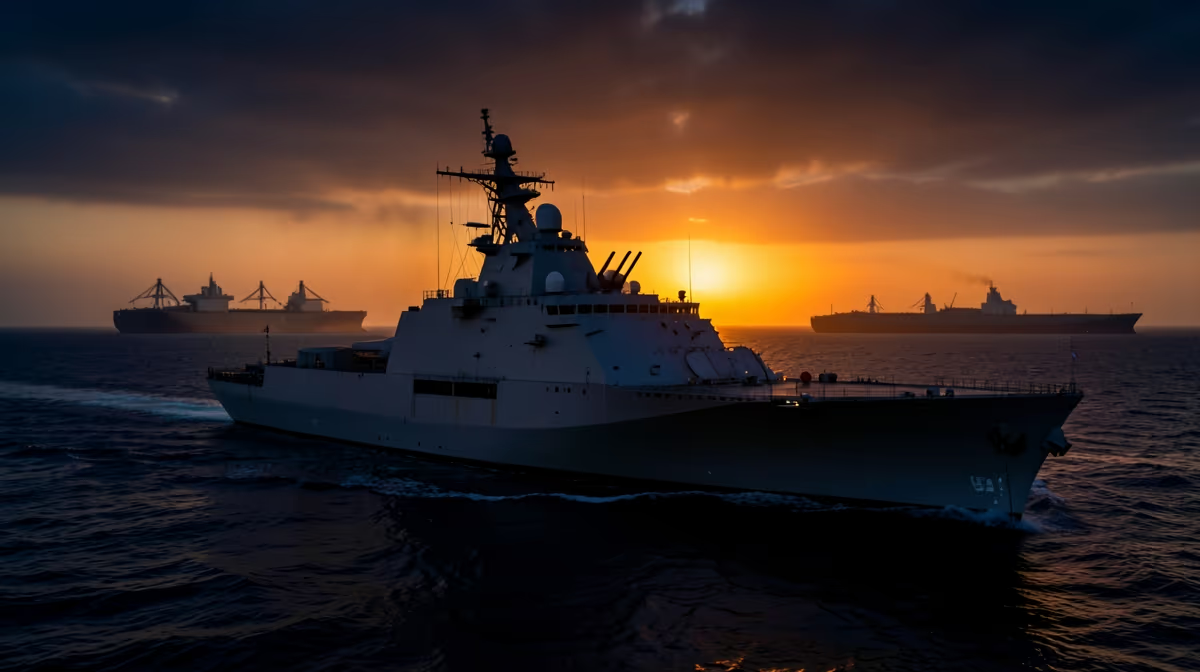
Tensions in the Strait of Hormuz, a vital maritime chokepoint through which approximately one-fifth of the world’s petroleum consumption passes, have persisted as the United States reinforces its naval presence in the Persian Gulf. Defense officials cite the continued threat of Iranian-backed harassment of commercial shipping vessels as the primary driver for sustained defensive patrols and reconnaissance operations in the area.
The United States Fifth Fleet has significantly integrated advanced drone surveillance and unmanned surface vessels to monitor for suspicious maritime activities in real time. This deployment of autonomous technology is designed to bolster maritime domain awareness alongside traditional carrier strike group assets. While direct kinetic confrontations have been avoided in recent weeks, the tactical posture of both U.S. forces and Iranian Revolutionary Guard naval units remains reactive. Pentagon officials have consistently emphasized that the United States is committed to protecting its allies and partners and preserving the free flow of commerce through the Strait, framing this presence as a necessary defensive deterrent against regional instability.
Key Facts
The Strait of Hormuz is a narrow passage linking the Persian Gulf to the Arabian Sea. It serves as the world’s most important oil transit point, with roughly twenty percent of total global oil consumption passing through the waterway daily. The passage is only 21 miles wide at its most constricted point, leaving vessels highly vulnerable to localized disruption.
The United States Navy has maintained a persistent presence in the region to protect commercial shipping lanes for decades. This includes regular escort missions and the use of integrated maritime surveillance systems. Historically, the waterway has served as a recurring site for naval standoffs, including the 1980s Tanker War, and more contemporary incidents involving vessel seizures and drone interactions. The waterway is currently subject to constant monitoring by U.S. Fifth Fleet assets, which utilize both manned surface combatants and AI-driven unmanned systems to maintain security.
Why It Matters
The global economy relies on the constant, predictable flow of energy through the Strait of Hormuz. Because the world is so dependent on affordable energy, any sign of instability leads to immediate alarm. If the Strait were closed or even partially blocked, it would cause a massive spike in global oil prices almost immediately. This volatility translates directly into higher costs for gasoline, heating, and the shipping of consumer goods worldwide, effectively triggering economic instability across both developed and developing nations. Global oil importers, consumers, and the insurance industry are particularly sensitive to these fluctuations, as the rising costs of transit—often viewed as a war risk tax—directly impact inflation and the fiscal stability of nations that rely on these exports.
Expert Analysis
The root cause of these ongoing tensions lies in the structural reliance of global energy markets on a single maritime chokepoint that serves as a strategic lever for Iranian projection of power to counter U.S.-led regional containment. This creates a volatile environment where the transition from a U.S.-guaranteed security umbrella to an increasingly multipolar landscape complicates traditional naval dominance.
A significant hidden factor is the integration of commercial maritime surveillance data with military intelligence. This has turned private shipping into a theater of hybrid warfare where non-state proxies and covert electronic jamming disrupt traffic without triggering formal kinetic conflict. Economically, this results in volatile insurance premiums and transport costs, which dictate fiscal stability for Gulf Cooperation Council states. The situation remains a high-stakes balance between deterrence through naval presence and the risk of accidental escalation that could lead to broader regional conflict.
Political And Geopolitical Implications
The Strait acts as a focal point for the U.S. maximum pressure campaign, forcing an uneasy balance between regional security and the avoidance of unintended escalation. Geopolitically, the rise of non-aligned powers such as China, which now serves as a primary destination for Gulf exports, has added a layer of complexity to traditional Western security arrangements. The current naval maneuvers serve as a reminder that the waterway remains a central focus of U.S. foreign policy, with the United States aiming to maintain a consistent operational footprint to deter harassment while emphasizing diplomacy as the preferred route for de-escalation. The presence of international coalition forces alongside the U.S. Navy further underscores the global nature of this security challenge.
What Happens Next
In the next 24 hours, observers should expect increased surveillance and naval posturing by the U.S. Central Command in response to Iranian IRGC maritime activity near the Strait. Over the next 72 hours, this is likely to be paired with heightened diplomatic rhetoric from Washington regarding freedom of navigation, potentially including the temporary redeployment of U.S. carrier strike group assets.
Experts predict a continuation of tactical posturing without direct kinetic conflict, as both sides seek to avoid a full-scale regional war while maintaining domestic credibility. The best-case scenario involves backchannel de-escalation leading to a temporary cessation of harassment incidents and a return to standard patrol protocols. Conversely, the worst-case scenario remains a miscalculated intercept that leads to an accidental exchange of fire, which could trigger a rapid escalation of force and temporary disruption of energy transit.
Frequently Asked Questions
Q: What is the current situation in the Strait of Hormuz?
A: The Strait of Hormuz remains a critical maritime chokepoint characterized by heightened military surveillance and periodic tensions involving commercial shipping. Recent activities focus on international naval patrols and diplomatic efforts aimed at ensuring the free flow of energy supplies.
Q: Why is the Strait of Hormuz important to the US?
A: The Strait is strategically essential to the United States because a significant portion of the world's petroleum passes through it daily. Any disruption can lead to global oil price spikes and impact economic stability, making its security a top priority for US foreign policy.
Q: Are ships safe traveling through the Strait of Hormuz?
A: While the waterway is heavily monitored by international naval forces, security risks fluctuate due to regional geopolitical conflicts. Commercial vessels generally continue to transit the area, often operating under increased security protocols and guidance from maritime authorities.
Q: What happens if the Strait of Hormuz is closed?
A: A total closure would cause a severe supply shock to the global energy market, leading to rapidly increasing oil prices and potential fuel shortages worldwide. Due to limited alternative routes, global trade would face significant logistical and economic challenges.
Q: Is there a threat of conflict in the Strait of Hormuz today?
A: Tensions often mirror broader geopolitical friction in the Middle East. While there is a constant risk of localized incidents or maritime confrontations, international efforts are consistently deployed to maintain deterrence and prevent the escalation of any major military conflict.
Q: How does the US monitor activities in the Strait of Hormuz?
A: The US maintains a persistent naval presence in the region, working with international coalitions to monitor traffic. Through advanced radar, satellite surveillance, and patrol missions, the US seeks to preserve maritime security for all merchant vessels.
Conclusion
The Strait of Hormuz continues to represent one of the most significant security flashpoints in the world. As the U.S. Navy maintains its presence alongside international partners to monitor the waterway, the emphasis remains on deterrence and the preservation of freedom of navigation. While current efforts are focused on preventing accidental escalation through surveillance and diplomatic engagement, the strategic importance of the Strait ensures that it will remain a central area of interest for global energy markets and military planners. Stakeholders must continue to watch for developments in naval posture and regional diplomatic dialogues as the only indicators of a potential shift in the security environment.
" } ]


.webp)

.webp)

