
Ukraine Moscow Drone Strike Signals a Major Shift in Conflict Tactics
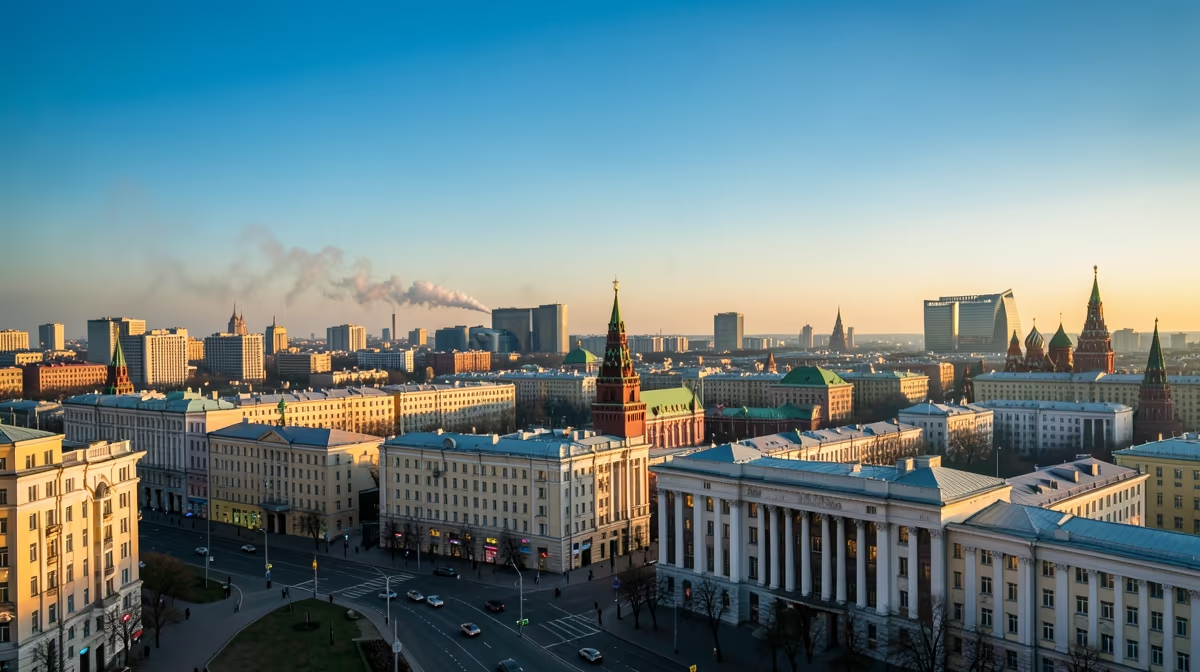
A wave of long-range aerial assets targeted the Russian capital and its surrounding districts early Tuesday, signaling a significant shift in the operational reach of the ongoing conflict. The recent Ukraine Moscow drone strike has marked a significant escalation in the ongoing russia-ukraine war, raising critical questions about the future of modern drone warfare in the region.
The Mechanics of the Operation
Russian defense officials confirmed that air defense systems were engaged across multiple provinces, including Bryansk, Tula, Kaluga, and Moscow, as they attempted to intercept dozens of unmanned aerial vehicles. Mayor Sergei Sobyanin verified that falling debris caused damage to residential infrastructure in several districts. While the Russian Ministry of Defense described the event as a thwarted terrorist attack by the Kyiv regime, the incident prompted immediate precautionary measures, including the temporary suspension of air traffic at major hubs such as Domodedovo and Vnukovo. Emergency services were deployed across the impact zones, and while no major casualties were reported, the psychological impact on the civilian population remains a focal point of the event.
The Strategic Rationale
This strike represents a calculated effort to bridge the conventional military parity gap that has persisted since the start of the full-scale invasion in 2022. By deploying domestic UAVs to target deep-rear logistics and administrative nerve centers, the operation seeks to exert pressure on Russian domestic air defenses. This shift is not merely a tactical maneuver; it is an attempt to erode the perception of safety within the Russian heartland. Analysts view this as an evolution of asymmetrical warfare where inexpensive, AI-enabled swarm technology is used to challenge multi-million dollar static air defense systems, potentially reshaping future arms export markets and military R&D priorities.
Historical and Political Context
The incident mirrors the strategic logic of the 1942 Doolittle Raid on Tokyo, which prioritized psychological disruption over material damage to demonstrate that a target once considered invulnerable is no longer beyond reach. For the Biden administration and other Western partners, this escalation creates a complex balancing act. Policymakers must manage the doctrine of escalation while responding to internal pressures to show tangible progress in the conflict. The strike forces the Kremlin into a difficult choice: invest heavily in expanding air defense coverage across a vast territory or acknowledge a persistent vulnerability that contradicts the narrative of a distant, manageable military operation.
The Reality of Modern Drone Warfare
The drones involved are generally identified as long-range, fixed-wing systems capable of traversing hundreds of kilometers. Their design, often improvised or domestically produced, allows them to evade radar detection by operating at extremely low altitudes. This makes them highly effective as an attritional tool. By forcing Russia to stretch its air defense resources away from the active front lines to protect the capital, these strikes create a ripple effect that complicates logistical support for the Russian military. The move forces a re-evaluation of defense policies, as current global security architectures were largely unprepared for the prevalence of such low-cost, high-impact aerial incursions.
The Broader Economic and Global Impact
Beyond the immediate damage to residential property, the escalation has systemic consequences for global energy markets and regional trade. Increased volatility is expected as insurance premiums for regional logistics hubs adjust to the heightened threat level. The post-sanction trade architecture is already under strain, and the normalization of drone attacks deep within Russian territory adds a layer of uncertainty that could accelerate shifts in global security arrangements. As the conflict spills over national borders, international observers are increasingly concerned about the potential for these strikes to trigger wider regional instability.
The Path Ahead
In the next 24 hours, analysts expect heightened Russian air defense activity around Moscow and potential localized retaliatory artillery shelling in Ukrainian border regions. Looking toward the 72-hour window, diplomatic rhetoric from the Kremlin is anticipated to increase, likely focusing on accusations of Western complicity. Experts predict that Russia may leverage these incidents to justify further strikes against Ukrainian energy infrastructure. The best-case scenario remains the containment of these incidents without direct NATO-Russian military engagement, while the worst-case involves a cycle of retaliatory strikes that lead to significant civilian casualties and a total breakdown in communication.
Frequently Asked Questions
Who was responsible for the drone strike in Moscow?
The Russian government has accused Ukraine of orchestrating drone strikes in Moscow. While Ukrainian officials have often remained ambiguous regarding specific operations, they generally frame such attacks as necessary measures of defense against the ongoing Russian invasion.
Did the Moscow drone attack cause significant damage?
The drone strikes in Moscow have primarily resulted in minor structural damage to residential buildings and office complexes. While they have caused concern among residents and prompted temporary airport closures, reports indicate there have been very few serious injuries or fatalities caused by these specific incidents.
How has Russia responded to drone strikes on Moscow?
Russia has condemned the strikes as terrorist acts and responded by intensifying its own missile and drone attacks on Ukrainian cities and infrastructure. Moscow has also tightened air defense measures and increased surveillance in the capital to deter further incursions.
What kind of drones are used in Moscow strikes?
Analysts suggest that the drones involved in these strikes are typically long-range, fixed-wing unmanned aerial vehicles capable of flying hundreds of kilometers. These are often inexpensive, improvised, or locally produced systems designed to evade radar detection by flying at low altitudes.
Are drone attacks on Moscow becoming more frequent?
Following the start of the full-scale conflict, there has been a noticeable increase in reports of drone activity in the Moscow region compared to the earlier stages of the war. These incidents have become a sporadic but recurring feature of the conflict, aimed at bringing the reality of the war closer to the Russian capital.
What is the strategic goal of drone strikes in Moscow?
The strategic objective is often viewed as an effort to disrupt the Russian domestic sense of security and force the Kremlin to divert air defense resources away from the front lines. By extending the conflict to the capital, it serves both as a tactical military action and a psychological messaging campaign.
Conclusion
The drone strikes on Moscow have fundamentally altered the theater of the ongoing conflict, bringing the reality of the war directly to the Russian capital. While the material impact remains limited, the strategic consequences for air defense resource allocation and domestic morale are profound. Moving forward, the situation remains highly volatile, with increased air defense activity and intensified diplomatic rhetoric expected in the coming days. The focus remains on whether these tactical shifts can be contained or if they will catalyze a broader escalation in the conflict’s reach.