
2026 El Nino Weather Shifts Threaten Global Systems With Record Intensity
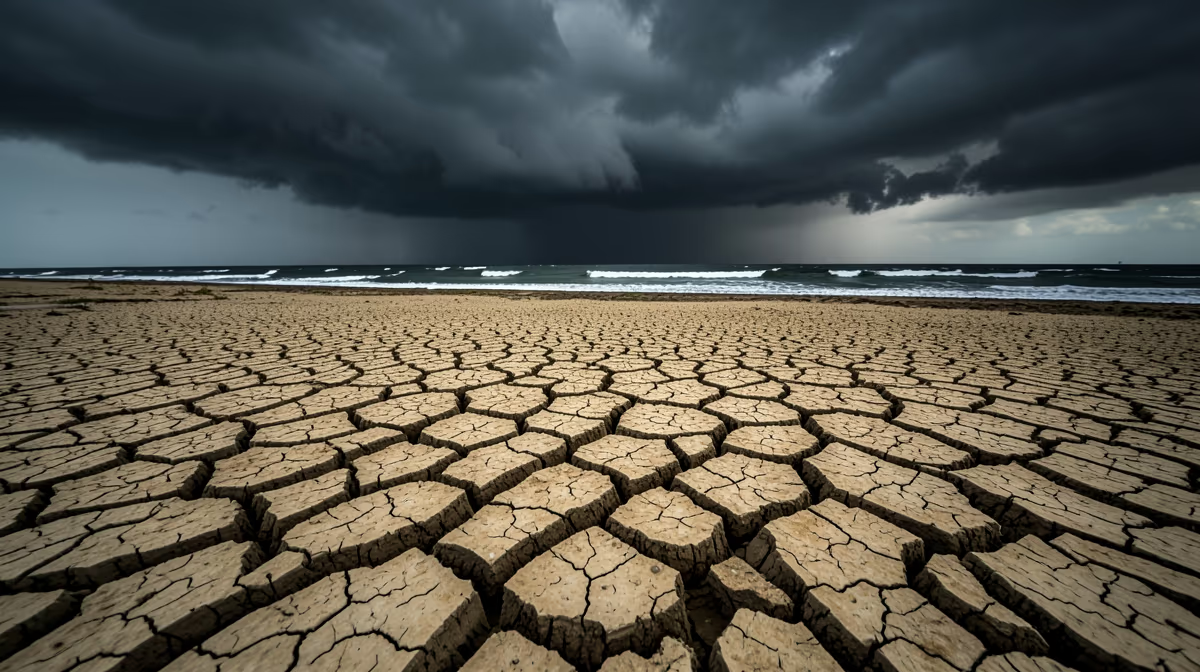
As meteorologists monitor ocean anomalies, experts warn that the 2026 El Nino could become the strongest in a lifetime, bringing unprecedented global weather shifts. Meteorological agencies worldwide, including the Met Office and AccuWeather, are warning that the upcoming 2026 El Niño event could evolve into a super El Niño and potentially become the strongest in a lifetime or living memory as sea surface temperatures rise.
Meteorological Forecasts and Rising Sea Temperatures
Forecast updates for Fall 2026 indicate that a building super El Niño will create a split-flow pattern ahead of the 2026/2027 winter season. Major forecasting bodies, such as China's meteorological authorities and international news outlets like Reuters and the BBC, have highlighted the rising ocean temperatures driving this powerful climate phenomenon.
Scientists and environmental analysts explain that this extreme El Niño is expected to significantly reshape global weather patterns. Concerns are growing regarding its severe timing and intensity, particularly regarding vulnerable regions like the Amazon rainforest where the peak of the event could have profound ecological impacts.
As global weather services continue to monitor the rapidly evolving sea temperature anomalies, preparedness measures are being evaluated across multiple continents to mitigate potential disruptions to agricultural cycles, extreme weather events, and winter climate patterns.
Why the 2026 Super El Nino Is Alarming Scientists
Meteorologists and weather agencies around the world are warning that a massive super El Niño is developing and could become the strongest event of its kind in living memory. As sea surface temperatures rise significantly in the Pacific Ocean, this powerful climate pattern is expected to radically reshape weather systems across the globe as we head toward the winter of 2026.
Experts explain that this upcoming event will trigger dramatic shifts in temperature and rainfall, leading to severe disruptions in normal seasonal weather patterns. Because of its extreme intensity, governments and scientists are preparing for widespread environmental and economic impacts that will touch nearly every corner of the planet.
- The 2026 El Niño event is forecasted by organizations like the UK Met Office and AccuWeather to potentially become the strongest in a lifetime or living memory.
- Severe Weather Europe reports that a Super El Niño is building a split-flow pattern ahead of the winter of 2026 and 2027.
- China has also forecasted this to be an exceptionally strong El Niño event as sea temperatures continue to rise.
- The Guardian notes that the El Niño may peak at a critical time for the Amazon rainforest, raising significant global concerns.
- Carbon Brief highlights that this super El Niño will drastically reshape weather systems worldwide.
The 2026 El Niño could become the strongest in a lifetime, bringing severe Super El Nino 2026 impacts worldwide.
Global Weather Patterns Expected During the Upcoming Climate Disruption
A super El Niño of this magnitude can severely disrupt global agriculture, spark extreme weather events such as severe droughts and floods, and accelerate global temperature rises. These shifts threaten food security, strain water supplies, and increase the risk of devastating wildfires in vulnerable ecosystems like the Amazon.
Vulnerable populations, agricultural sectors, vulnerable ecosystems like the Amazon rainforest, and communities prone to extreme weather events worldwide face direct consequences from these shifts. El Niño is a naturally occurring climate phenomenon characterized by the warming of surface ocean waters in the central and eastern Pacific Ocean. It typically occurs every two to seven years and globally influences wind patterns, ocean temperatures, and precipitation, often leading to extreme weather anomalies.
Unprecedented and rapidly rising sea surface temperatures in the Pacific Ocean are triggering a severe climate regime shift, serving as the core root cause of the current meteorological warnings.
Economic Fallout and Geopolitical Pressures
Governments face mounting pressure to implement emergency agricultural subsidies and disaster response frameworks while managing public anxiety over climate-induced scarcity. At the same time, severe disruptions to global supply chains, agricultural yields, and commodities markets are leading to inflationary pressures on food and energy prices worldwide.
Uneven vulnerability across nations could exacerbate international friction regarding climate finance, resource security, and migration pressures. There is also a hidden cascading strain on critical infrastructure and energy grids in rapidly developing economies as extreme weather patterns collide with baseline power demands. Historically, this mirrors the strong 2015-2016 El Niño event that caused widespread droughts, crop failures, and coral bleaching globally.
- August 2026: Major meteorological agencies issue dire warnings forecasting a historic super El Niño event.
- Late 2026: Emerging split-flow patterns and shifting weather systems begin impacting seasonal forecasts ahead of winter.
- 2027: Projected peak impacts on vulnerable ecosystems like the Amazon and global agricultural production cycles.
Outlook and Future Projections
Meteorological agencies and international news outlets will likely continue issuing updates and analyses regarding the mounting scientific consensus around the upcoming super El Niño event over the next 24 hours. Following that, researchers and global weather services will likely release further regional impact assessments, focusing on how the split-flow pattern and rising sea temperatures will reshape weather systems ahead of the winter season.
Analysts expect meteorological organizations to intensify monitoring as rising sea temperatures confirm the trajectory toward one of the strongest El Niño events in living memory, prompting widespread preparation for extreme weather shifts. Under a best-case scenario, accurate early forecasting allows global authorities and vulnerable regions like the Amazon to adequately prepare infrastructure and emergency responses, mitigating potential environmental and agricultural shocks. Conversely, the worst-case scenario involves the super El Niño peaking with unprecedented intensity, severely disrupting global weather systems, exacerbating droughts in critical ecosystems like the Amazon, and creating severe challenges for winter preparedness worldwide.
Frequently Asked Questions
What is the forecast for the 2026 El Niño event?
Meteorological agencies, including the Met Office and AccuWeather, indicate that the upcoming 2026 El Niño could develop into a 'super El Niño' and potentially become the strongest in a lifetime or living memory. Rising sea temperatures and updated forecasts suggest this event will significantly impact global weather patterns.
How will the 2026 super El Niño reshape world weather?
The super El Niño is expected to build a split-flow pattern heading into the winter of 2026 and 2027, drastically altering regional climates across the globe. Experts note that these extreme shifts will reshape standard weather expectations and drive unusual atmospheric conditions worldwide.
Who is most affected by the upcoming 2026 El Niño?
Vulnerable regions worldwide face severe climatic shifts, with specific concerns raised about ecosystems like the Amazon. According to reports from The Guardian, the El Niño may peak at a critical and dangerous time for the Amazon rainforest, posing major environmental worries.
What happens next as the El Niño builds up?
As sea temperatures continue to rise through late 2026, scientific organizations are closely monitoring the progression toward a winter peak. Forecasters from countries like China and international bodies are tracking the intensity of the event to better prepare for impending climate anomalies.
What is an El Niño and why is this one unique?
El Niño is a naturally occurring climate pattern associated with warming sea surface temperatures in the central and eastern tropical Pacific Ocean. The 2026 event is drawing intense global attention because current models and observations suggest it could surpass historical benchmarks in magnitude.
What specific impacts are predicted for the Amazon during the 2026 El Niño?
The upcoming El Niño threatens to peak during a vulnerable window for the Amazon basin, potentially exacerbating drought conditions and ecological stress. Experts emphasize that the timing of this peak could severely threaten the region's delicate environmental balance.
Conclusion
Major global meteorological agencies have confirmed that a powerful super El Niño is building for 2026, driven by rising sea temperatures. While the exact peak intensity and full regional consequences remain under continuous observation, the scientific consensus points to significant adjustments in global weather systems, winter patterns, and ecological monitoring across vulnerable regions.
Sources
- The 2026 El Niño could become the strongest in a lifetime — AccuWeather
- Fall 2026 Forecast Update: Super El Niño Builds a Split-Flow Pattern Ahead of Winter 2026/2027 — Severe Weather Europe
- El Niño set to be 'strongest in living memory', says Met Office — BBC
- Explainer: How the ‘super El Niño’ will reshape the world’s weather — Carbon Brief
- China forecasts strongest El Nino event as sea temperatures rise — Reuters
- El Niño may peak at the worst time for the Amazon – and it should worry us all — The Guardian


.webp)
