
Meta VR Glasses Debut Signals a Massive Shift in Personal Computing
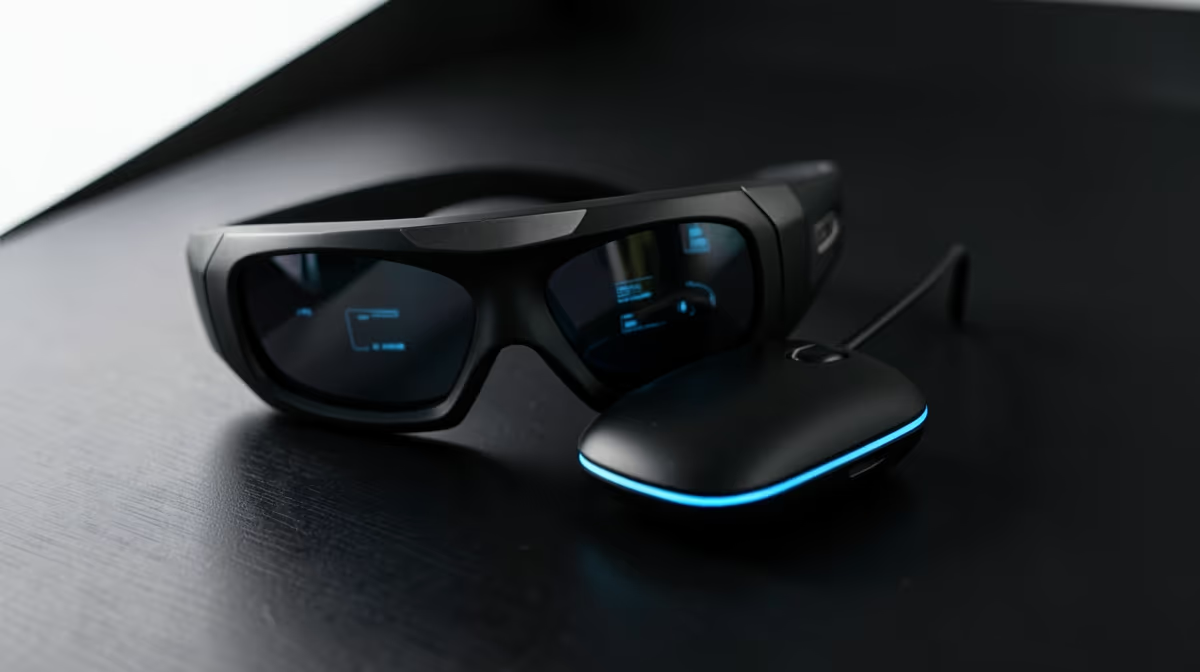
The future of personal computing is no longer confined to the glowing rectangles in our pockets or the bulky headsets tethered to our desks; it is migrating to the very accessories we wear daily. Mark Zuckerberg debuts Meta VR Glasses and Muse Charm pendant as part of AI agent push, signaling a fundamental transformation in how artificial intelligence interacts with the physical world and how humans perceive their digital surroundings.
The introduction of $1,299 lightweight VR glasses and camera-free smart eyewear marks Meta’s strategic pivot to decouple its revenue from advertising while addressing deep-seated consumer privacy concerns through hardware innovation.
The Hardware Reveal: A $1,299 Entry into Spatial Computing
At the center of Meta’s latest technological showcase is a premium commitment to the high-end wearable market. The newly unveiled Meta VR Glasses, carrying a price tag of $1,299, represent a significant step toward making spatial computing more accessible and lighter than previous iterations. This hardware is not merely a tool for immersive entertainment but serves as a primary vehicle for the company’s advanced artificial intelligence agents.
Alongside the glasses, the Muse Charm pendant serves as a unique peripheral designed to deepen the integration of AI into the user’s personal environment. This duo of devices marks a departure from Meta’s historical reliance on software-based social media platforms. By moving AI from a screen-based interface into physical, wearable accessories, the company is attempting to define the next standard of personal computing.
The pricing strategy positions these devices as a premium investment, placing Meta in direct competition with high-end tech rivals. At $1,299, the VR glasses are a clear signal that the company is moving toward a hardware-centric revenue model, aiming to capture a market share that values both high-performance specs and sophisticated AI capabilities.
Addressing the 'Meta Creep' and Privacy Concerns
One of the most notable aspects of this rollout is the introduction of camera-free smart glasses. For years, wearable technology has faced significant pushback from the public and regulators regarding surveillance and data privacy. This phenomenon, often referred to within the industry as the "Meta creep," has been a major hurdle for the mainstream adoption of smart eyewear.
Strategic Redesign for Public Trust
By offering a version of smart glasses without cameras, Meta is directly addressing the skepticism surrounding wearable surveillance. This move frames the company as a privacy-conscious hardware provider in an increasingly cautious political climate. These devices allow users to access the benefits of smart technology and AI agents without the social friction or legal concerns associated with built-in recording devices.
- Camera-free options provide a path for use in privacy-sensitive environments.
- The design aims to alleviate public anxiety regarding constant surveillance.
- It provides a choice for consumers who want smart features without the data-rich input of a camera.
This dual-track strategy suggests Meta is segmenting its user base: offering unmonitored privacy options for everyday wear while pushing immersive, data-heavy virtual environments for those seeking the full spatial computing experience.
Widening the Pitch Beyond Traditional Gaming
Historically, virtual reality has been synonymous with gaming. However, the debut of the Meta VR Glasses and Muse Charm highlights a major shift in the company’s strategic narrative. Meta is now widening its virtual reality pitch to include a broader consumer base interested in productivity, personal assistance, and everyday AI interaction.
The Role of AI Agents in Daily Life
The push into AI agents is the connective tissue between these new hardware releases. These agents are intended to be more than just voice-activated search engines; they are designed to be proactive assistants that reside within the wearable ecosystem. Whether it is through the Muse Charm pendant or the high-end VR glasses, these agents are positioned to become essential tools for navigating both digital and physical spaces.
This release marks a significant shift in how consumers might interact with artificial intelligence, moving AI from software on a screen into physical, wearable accessories.
By focusing on form-factor innovation, Meta is attempting to overcome the fatigue associated with traditional VR headsets. The new lightweight virtual reality spectacles are designed to be worn for longer periods, facilitating a transition toward a future where spatial computing is a standard part of professional and personal life.
Competitive Dynamics and Market Positioning
The landscape of wearable technology is becoming increasingly crowded, and Meta’s latest announcements are a direct response to rival offerings. Most notably, the lightweight VR glasses are positioned to one-up Apple’s Vision Pro, which has set the benchmark for high-end spatial computing.
| Feature/Competitor | Meta VR Glasses | Apple Vision Pro | Valve (Steam Frame) |
|---|---|---|---|
| Price Point | $1,299 | Premium / High-End | Competitor |
| Form Factor | Lightweight Spectacles | Headset | VR Headset |
| Core Strategy | AI Agent Integration | Spatial Computing | VR Gaming & Hardware |
| Market Launch | 2027 (Projected) | Available/Established | Market Entry |
Beyond Apple, Meta is also keeping a close eye on companies like Valve, which recently saw interest in its Steam Frame VR headset. The competition is no longer just about who has the best graphics or the most games; it is about which ecosystem provides the most seamless and useful integration of artificial intelligence into the user's daily routine.
Economic and Geopolitical Implications
The launch of premium hardware at a $1,299 price point is more than a product release; it is an economic pivot. Meta is aggressively expanding its hardware ecosystem to diversify its revenue streams away from traditional, ad-dependent models. This diversification is crucial as global privacy regulations and shifting consumer attitudes make traditional data-driven advertising more challenging to sustain.
Global Supply Chains and Standards
On a geopolitical level, hardware launches from major US tech giants like Meta dictate international standards for consumer AI integration and surveillance limits. The production and distribution of these devices heavily influence global supply chains across Asia. Furthermore, by introducing camera-free options, Meta is setting a potential international benchmark for how wearable technology can comply with varying global privacy standards.
The historical parallel here is the transition of mobile phones in the late 2000s. Just as phones moved from luxury enterprise novelties to essential, privacy-regulated consumer computers, spatial computing is currently undergoing a similar transformation.
The Timeline to 2027 and Beyond
While the debut has created significant industry buzz, the path to mainstream adoption is a multi-year journey. Meta has indicated a projected commercial launch window of 2027 for the lightweight version of these glasses, allowing time for the developer ecosystem to mature and for AI agents to become more sophisticated.
Short-Term and Long-Term Outlook
In the next 24 to 72 hours, tech analysts and market observers will continue to dissect the specifications and AI integration details, comparing them against the current market leaders. Initial consumer reactions and developer feedback will be critical in determining if Meta's strategic pivot will gain the necessary momentum.
- Next 24 Hours: Deep dives into the $1,299 pricing and AI agent capabilities.
- Next 72 Hours: Emerging analyst forecasts and market reactions to the camera-free design.
- 2027: The scheduled formal launch of the lightweight VR glasses to a broader audience.
- Future: The full integration of AI agents across a diverse wearable hardware ecosystem.
The best-case scenario for the company involves the successful alleviation of privacy concerns, driving broad adoption of the AI agent push. Conversely, the worst-case scenario would see high price points and consumer skepticism overshadowing the hardware innovations, leading to a lukewarm reception in an increasingly competitive market.
Frequently Asked Questions
What did Mark Zuckerberg recently debut for Meta?
Mark Zuckerberg debuted new Meta VR glasses priced at $1,299 alongside the Muse Charm pendant as part of a major AI agent push. These new devices showcase Meta's expanding hardware ecosystem centered around artificial intelligence.
Why are Meta's new hardware announcements significant?
The debut highlights Meta's strategy to widen its virtual reality and smart glasses pitch far beyond traditional gaming. By introducing lightweight designs and innovative accessories like the Muse Charm, Meta aims to capture a broader mainstream audience.
Who is affected by Meta's latest product launches?
Tech consumers, VR enthusiasts, and competitors in the mixed-reality space are directly impacted by these announcements. Notably, industry watchers view the lightweight virtual reality glasses as a direct challenge to products like Apple's Vision Pro.
What happens next for Meta's new virtual reality glasses?
Following their initial debut, the new Meta VR glasses are slated to formally launch in 2027. In the lead-up to the release, developers and consumers can expect further details on how the integrated AI agents will function across devices.
What is the background behind Meta's recent smart glasses releases?
Meta has been rapidly evolving its wearable tech portfolio, recently introducing both camera-free smart glasses and advanced virtual reality spectacles. These releases address ongoing privacy concerns, often referred to as the 'Meta Creep,' by offering camera-free alternatives.
How much do the new Meta VR Glasses cost?
The newly debuted Meta VR glasses carry a price tag of $1,299. This positions them as a premium offering within Meta's evolving hardware lineup as they push further into AI-driven wearables.
Conclusion
The debut of the Meta VR Glasses and the Muse Charm pendant represents a calculated move by Mark Zuckerberg to transition Meta from a social media giant into a dominant hardware and AI powerhouse. By pricing the VR glasses at $1,299 and introducing camera-free alternatives, Meta is attempting to solve the dual challenges of revenue diversification and consumer privacy. While the full commercial impact will not be realized until the projected 2027 launch window, the shift in strategy is clear: the company is no longer just building virtual worlds for gamers, but is instead creating a wearable ecosystem designed to house the next generation of artificial intelligence agents. The success of this initiative will depend on whether consumers are ready to embrace AI as a permanent, physical accessory in their daily lives.
Sources
- Mark Zuckerberg debuts $1,299 Meta VR Glasses and Muse Charm pendant as part of AI agent push — CNBC
- Here's How To Get A Steam Frame, Valve's VR Headset, And How Much It Costs — Game Informer
- Meta VR Glasses to launch in 2027 as company widens VR pitch beyond gaming — bestmediainfo.com
- Meta debuts no-camera smart glasses and virtual reality spectacles — The Guardian
- Meta’s Answer to the ‘Meta Creep’? Camera-Free Smart Glasses — WIRED
- Meta announces new lightweight virtual reality glasses to one-up Apple’s Vision Pro — Fortune


.webp)


