
Mohan Bhagwat US Visit Protests Spark Deep North American Divide
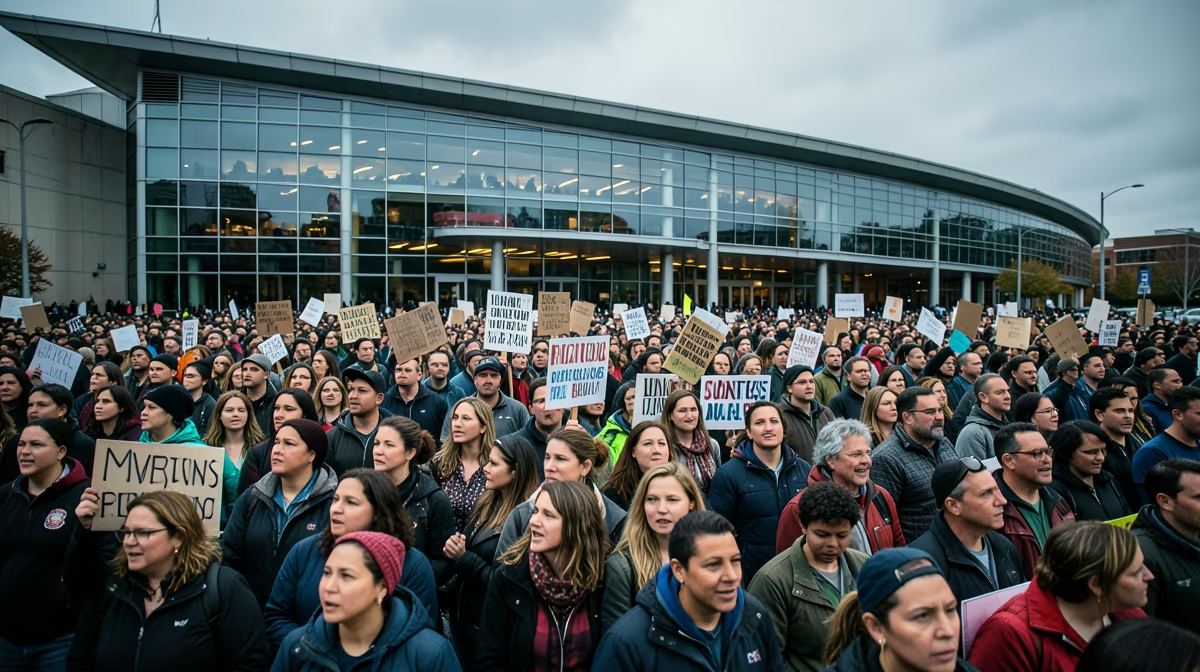
Recent demonstrations surrounding Mohan Bhagwat US visit protests have highlighted growing political polarization among the South Asian diaspora in North America. Protests and divided reactions have greeted Rashtriya Swayamsevak Sangh (RSS) chief Mohan Bhagwat during his ongoing visits to the United States and Canada, drawing criticism from civil rights groups and opposition from various organizations.
Background of the North American Tour and Protests
RSS chief Mohan Bhagwat's recent visits to the United States and Canada have sparked significant controversy, drawing both protests and divided reactions from local communities. Critics and various groups have strongly denounced the tour, viewing it as a promotional event for Hindu nationalism rather than a simple goodwill visit.
In places like New York, demonstrations were held to oppose the RSS leader's presence. The backlash has also extended into local politics, with some U.S. politicians openly rejecting donations from Hindu nationalist organizations in the wake of these rallies. Activists and community members organized rallies and demonstrations in New York to protest the presence of the RSS chief. The protests highlighted growing tensions and opposition to Hindu nationalist rhetoric among certain political and social groups in the US.
Impact of Hindu Nationalism on Diaspora Politics
The international expansion and outreach of ideological organizations like the RSS are meeting direct pushback from diaspora communities, civil rights groups, and foreign political actors over concerns regarding Hindu nationalism and minority rights in India. The visits and subsequent protests highlight polarization within the Indian diaspora in North America, forcing local U.S. and Canadian politicians to take public stances—such as rejecting donations from Hindu nationalist groups—to align with progressive and minority constituents.
While direct economic disruption is minimal, increased scrutiny on transnational religious and nationalist organizations risks impacting philanthropic funding channels and cross-border donations from diaspora members to ideological groups in India. The friction compounds existing tensions between Western governments and New Delhi regarding human rights, religious freedom, and extraterritorial activities, as demonstrated by calls for sanctions and defensive pushback from Indian official bodies.
The tightening stance of U.S. and Canadian politicians against far-right diaspora rallies may signal a broader, quiet shift in Western electoral strategies to curb foreign nationalist interference in domestic politics. The protests mirror historical diaspora-led demonstrations against the overseas activities of hardline political and religious movements from various home countries seeking legitimacy abroad.
Timeline of Events and International Friction
- August 2026: U.S. religious freedom bodies and critics raise alarms, prompting sharp rebukes from Indian officials over proposed sanctions.
- Late August 2026: RSS chief Mohan Bhagwat's visits to the U.S. and Canada spark organized demonstrations and rallies.
- September 2026: North American politicians begin openly rejecting donations from Hindu nationalist groups following high-profile rallies.
The visit coincides with heightened international debate, including calls from religious freedom bodies for potential sanctions against the RSS. Meanwhile, the Indian government has strongly pushed back against these calls, dismissing the bodies as biased and lacking credibility. In response to the developments, international scrutiny has increased, and India recently slammed the US religious freedom body as biased after it called for RSS sanctions.
Future Outlook and Expert Predictions
Continued local protests and demonstrations by critics and diaspora groups in North American cities regarding the RSS chief's visit are expected, alongside ongoing diplomatic and media exchanges between Indian authorities and international observers. Analysts would likely expect the friction between diaspora critics and Hindu nationalist supporters in North America to maintain media attention, while diplomatic tensions over religious freedom reporting continue to simmer between US and Indian stakeholders.
Heightened discourse on Hindu nationalism, potential political fallout regarding campaign donations in the US, and further official responses from Indian bodies condemning international criticism or sanction calls will likely shape the coming days. Best case scenarios suggest that protests remain peaceful, leading to constructive public dialogue on religious nationalism, community relations, and transparent political funding without escalating into broader diplomatic crises. Conversely, worst-case projections note that if protests escalate into civil unrest or violent clashes between opposing groups abroad, it could prompt harsher political backlash, legislative scrutiny on foreign nationalist organizations, and severe diplomatic strain.
The protests and political reactions in North America highlight how overseas diasporas and foreign political ideologies increasingly intersect with Western domestic politics, influencing campaign funding, free speech debates, and international human rights scrutiny.
Frequently Asked Questions
Why are critics opposing RSS chief Mohan Bhagwat's US and Canada visit?
Critics and various diaspora groups have denounced the visit as a goodwill tour promoting Hindu nationalism. Opponents argue that the platform is being used to propagate far-right ideologies abroad, drawing sharp criticism from local communities.
What happened during the protests against the RSS chief in New York?
Activists and community members organized rallies and demonstrations in New York to protest the presence of the RSS chief. The protests highlighted growing tensions and opposition to Hindu nationalist rhetoric among certain political and social groups in the US.
How have US politicians reacted to the RSS rallies and visits?
In the wake of far-right RSS rallies in locations like New York, some US politicians have taken formal stances, such as rejecting campaign donations from Hindu nationalists. These moves reflect rising scrutiny over foreign political and ideological influences within domestic American politics.
What is the broader context behind calls for sanctions against the RSS?
The visit coincides with heightened international debate, including calls from religious freedom bodies for potential sanctions against the RSS. Meanwhile, the Indian government has strongly pushed back against these calls, dismissing the bodies as biased and lacking credibility.
Who is affected by the divided reactions to Mohan Bhagwat's North American tour?
The polarized reactions directly impact the South Asian diaspora living in the US and Canada, dividing communities between supporters of Hindu nationalist organizations and vocal critics of their ideology. Additionally, local lawmakers and civil rights groups find themselves navigating these community tensions.
What happens next regarding the diplomatic and community fallout from the visit?
As civil opposition and political pushback continue to unfold across North America, bilateral discourse concerning religious freedom, foreign influence, and diaspora activism remains under close observation. Both proponents and critics are expected to maintain pressure on local and international policymakers.
Conclusion
The North American tour by RSS chief Mohan Bhagwat has triggered distinct political friction, community protests, and policy reactions across the United States and Canada. Confirmed developments indicate that the visits drew organized demonstrations in locations such as New York, prompting certain U.S. politicians to reject donations from Hindu nationalist groups. Furthermore, international scrutiny and calls for sanctions from religious freedom bodies faced sharp pushback from Indian authorities. As local communities and diplomatic stakeholders navigate these ongoing tensions, civil opposition and political debates regarding foreign nationalist influences are expected to remain a focal point of international interest.
Sources
- Why critics oppose RSS chief Mohan Bhagwat's US visit — Religion News Service
- RSS chief’s visit to US denounced as ‘goodwill tour’ for Hindu nationalism — Al Jazeera
- RSS Chief Mohan Bhagwat’s US, Canada visits draw divided reactions — The American Bazaar
- U.S. Politicians Reject Donations From Hindu Nationalists, Days After Far-Right RSS Rally in New York — Zeteo | Substack
- Protest in New York against RSS chief’s visit — Dawn
- 'Biased, no credibility': India slams US religious freedom body over call for RSS sanctions — The Times of India