
Aaron Sorkin The Social Reckoning Film Sparks Intense Political Debate
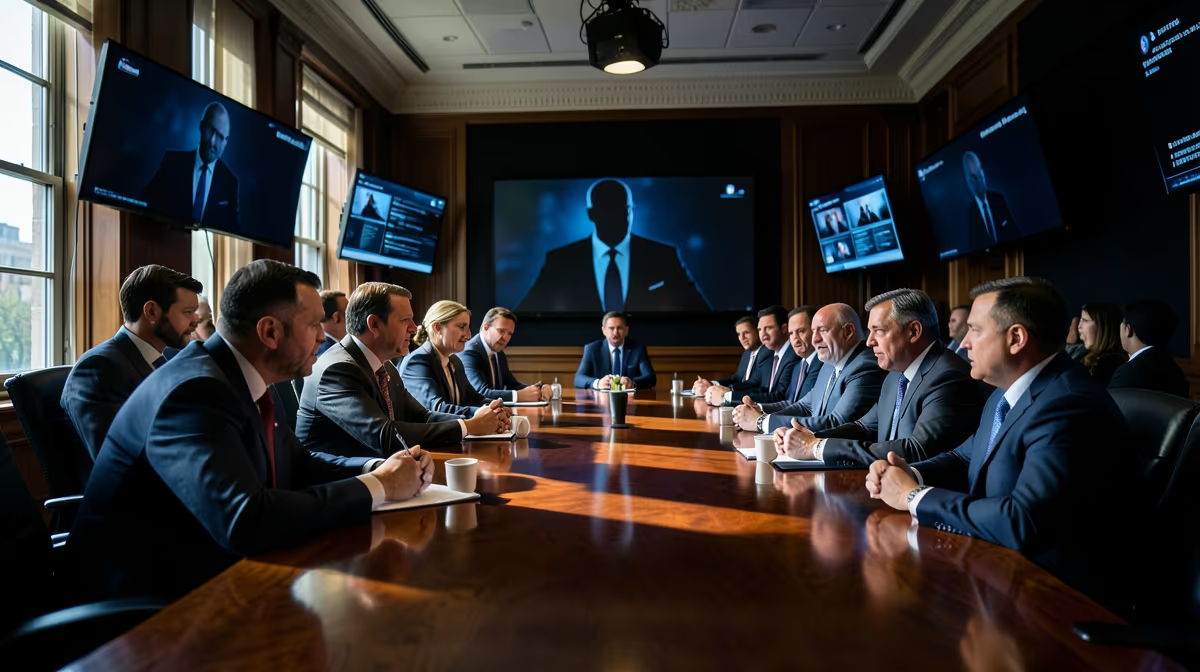
The upcoming Aaron Sorkin The Social Reckoning film has officially ignited intense political debate across the United States, drawing sharp reactions from tech leaders and policymakers alike. As the project transitions from a Hollywood production to a central figure in a national firestorm, it highlights the increasingly blurred lines between cinematic dramatization and the high-stakes regulation of the digital world.
The film's bipartisan criticism highlights a rare moment of cross-political alignment, where both sides of the aisle find reasons to scrutinize the portrayal of Big Tech power.
A Polarizing Portrait of Digital Power
The core of the controversy stems from the film’s critical examination of the influence wielded by modern social media platforms. Starring Jeremy Strong as Facebook founder Mark Zuckerberg, the movie offers an unflinching look at the rise of algorithmic dominance and the social fallout of a connected world. While dramatizations of corporate leaders are a staple of the industry, the specific timing and tone of this project have hit a collective nerve.
Critics from both the left and right have weighed in with significant heat. On one side, analysts point to concerns regarding how the film depicts content moderation and the handling of free speech. On the other, there is pushback against the portrayal of corporate accountability and the ethics of digital business models. This friction is not merely about the quality of the cinema but about the real-world implications of how tech leaders are perceived by the public. The project, which has already earned Sorkin recognition like the Newport Beach Film Festival Maverick Award, is being viewed as a proxy battleground for the ongoing culture wars surrounding Silicon Valley.
The Mechanics of Political Friction
The political dimension of the backlash is particularly complex. Unlike many issues in contemporary American life that split neatly down party lines, the reaction to the film has been widespread and varied. The film faces scrutiny regarding its depiction of modern tech culture, with different ideological groups finding unique faults in the narrative.
- Conservative critics have focused on themes of Silicon Valley censorship and how the film reflects the perceived bias of tech giants.
- Progressive commentators have leaned into the film's examination of media accountability and the systemic impact of advertising-driven algorithms.
- Centrist observers are parsing the film's message for its accuracy regarding the rise of digital platforms and their role in historical events.
This ideological friction is a direct response to how the film dramatizes the powerful role of social media in public discourse. By putting a human face on these systemic issues through the performance of Jeremy Strong, the film forces a confrontation with the uncomfortable realities of the information age.
Economic and Geopolitical Implications
Beyond the immediate political debate, the film carries significant economic and geopolitical weight. The scrutiny directed toward tech giants in the wake of such a high-profile release can impact public trust, which in turn fuels regulatory pressure. Analysts note that major social media enterprises are sensitive to long-term valuation dynamics that are often influenced by cultural narratives. When a film as influential as this one challenges the corporate integrity of a tech leader, the ripple effects can be felt in the markets.
On a global scale, foreign regulators are closely monitoring the American fallout. These regulators often view Silicon Valley's governance struggles through a lens of national sovereignty and information control. As domestic debate intensifies over the power of U.S.-based monopolies, it provides a roadmap for international bodies to consider their own regulatory frameworks. The film serves as a catalyst for a broader discussion on whether tech platforms should be viewed as neutral utilities or as powerful publishers with a duty to the public good.
Key Players in the Tech-Cinema Intersection
The narrative of the film is not just about a single man but about a constellation of figures who have shaped the digital era. The production incorporates elements that echo the experiences of real-world whistleblowers, providing a bridge between fiction and history.
| Entity | Role in 'The Social Reckoning' Context |
|---|---|
| Aaron Sorkin | Writer and director whose work shapes public perception of modern institutions. |
| Jeremy Strong | Actor whose portrayal of the Facebook founder anchors the film's critique. |
| Mark Zuckerberg | The real-world subject whose leadership is the focal point of the controversy. |
| Frances Haugen | Real-world whistleblower whose actions remain relevant to the film's themes. |
The inclusion of these figures, whether through direct portrayal or thematic parallels, ensures that the film remains grounded in the controversies that have defined the last decade of technological growth.
The Human Cost and Cinematic Legacy
A hidden angle in this cinematic focus on tech leadership is how Hollywood might be attempting to shape the regulatory narrative. By focusing on the personality and choices of individuals, the film may inadvertently distract from the broader systemic advertising business models that drive platform engagement. This focus on "the Great Man" theory of history, even when critical, places the burden of change on personal ethics rather than structural reform.
Historical parallels are already being drawn to the release of "The Social Network" and the subsequent congressional hearings that brought tech executives to the witness stand. The current situation suggests that the film could be more than just entertainment; it could be the opening salvo in a new era of public and political scrutiny. The film's premiere has already sparked bipartisan debate, setting the stage for a prolonged cultural conversation.
Future Trajectory and Expert Predictions
As the film moves through its release cycle, its impact is expected to grow. In the next 24 hours, media coverage and critical reviews are likely to amplify, with a specific focus on the bipartisan nature of the criticism. Moving into the next 72 hours, discussions regarding Sorkin’s potential plans for a Zuckerberg trilogy are expected to dominate both entertainment and political commentary platforms.
Analysts expect the cross-partisan criticism to drive intense public curiosity, keeping the film at the center of cultural and political conversations.
Experts predict several possible outcomes: 1. Best Case: The film successfully sparks a nuanced, constructive national dialogue regarding tech accountability, social media regulation, and the artistic interpretation of modern history. 2. Worst Case: The political friction devolves into polarized culture-war noise, which would overshadow the artistic merits of the film and fail to generate meaningful engagement on the underlying issues.
Regardless of the outcome, the film has cemented its place as a significant cultural milestone in the ongoing debate over big tech influence.
Frequently Asked Questions
What is Aaron Sorkin's film The Social Reckoning about?
The Social Reckoning is a film written by Aaron Sorkin that focuses on Facebook founder Mark Zuckerberg, with Jeremy Strong taking on the lead role. The movie has sparked intense discussion across the political spectrum since its release.
Why is The Social Reckoning sparking political debate?
The film has drawn critical heat and debate from both sides of the political aisle due to its portrayal of tech culture and political influence. Critics from various viewpoints have scrutinized how the movie handles its complex real-world subjects.
Who plays Mark Zuckerberg in The Social Reckoning?
Actor Jeremy Strong stars as Facebook founder Mark Zuckerberg in the film. His performance anchors the narrative as the movie examines the fallout surrounding the tech giant.
What did Aaron Sorkin say about a potential Zuckerberg trilogy?
Filmmaker Aaron Sorkin has indicated that he is not entirely ruling out the possibility of expanding the narrative into a Zuckerberg trilogy. This openness to future installments comes amid the current media attention and debate surrounding the release.
What is the background of the real-world events inspiring these films?
The film builds upon the themes explored in earlier tech-industry dramas and incorporates elements related to modern whistleblowers like Frances Haugen. These real-world controversies surrounding social media platforms provide the foundational context for Sorkin's dramatic interpretation.
What happens next for Aaron Sorkin following the film's release?
As the debate over the film continues, Sorkin is also being recognized in the industry, receiving honors such as the **Maverick Award** at the Newport Beach Film Fest. Meanwhile, audiences and critics await any official decisions regarding his hinted future projects in the franchise.
Conclusion
The release of *The Social Reckoning* has proven that the intersection of cinema and Silicon Valley remains a high-voltage environment. By dramatizing the life and choices of one of the world's most powerful tech figures, Aaron Sorkin has re-opened a national dialogue on the ethics of social media and the responsibility of the platforms that host our public discourse. Verified developments show that the film is facing pressure from both sides of the political aisle, a rare feat that underscores the deep-seated concerns regarding tech influence. As the industry watches for a potential trilogy and the film continues its award-season run, the real-world implications for tech regulation and public perception will remain the primary focus of observers and policymakers alike.
Sources
- What The Social Reckoning gets right — and wrong — The Verge
- Aaron Sorkin Set for Newport Beach Film Fest Maverick Award, Podcast — The Hollywood Reporter
- Anti-Zuckerberg movie 'The Social Reckoning' takes critical heat on both sides of political aisle — Fox News
- ‘The Social Reckoning’ Filmmaker Aaron Sorkin Isn’t Ruling Out a Zuckerberg Trilogy — The Hollywood Reporter
- REVIEW | OPINION: ‘The Social Reckoning’ — Jeremy Strong plays Facebook founder Mark Zuckerberg — The Arkansas Democrat-Gazette
- Here's what the real Facebook whistleblower Frances Haugen is doing now — Business Insider


.webp)
