
Iran Strait of Hormuz Ultimatum Sparks Fears of a Global Oil Crisis
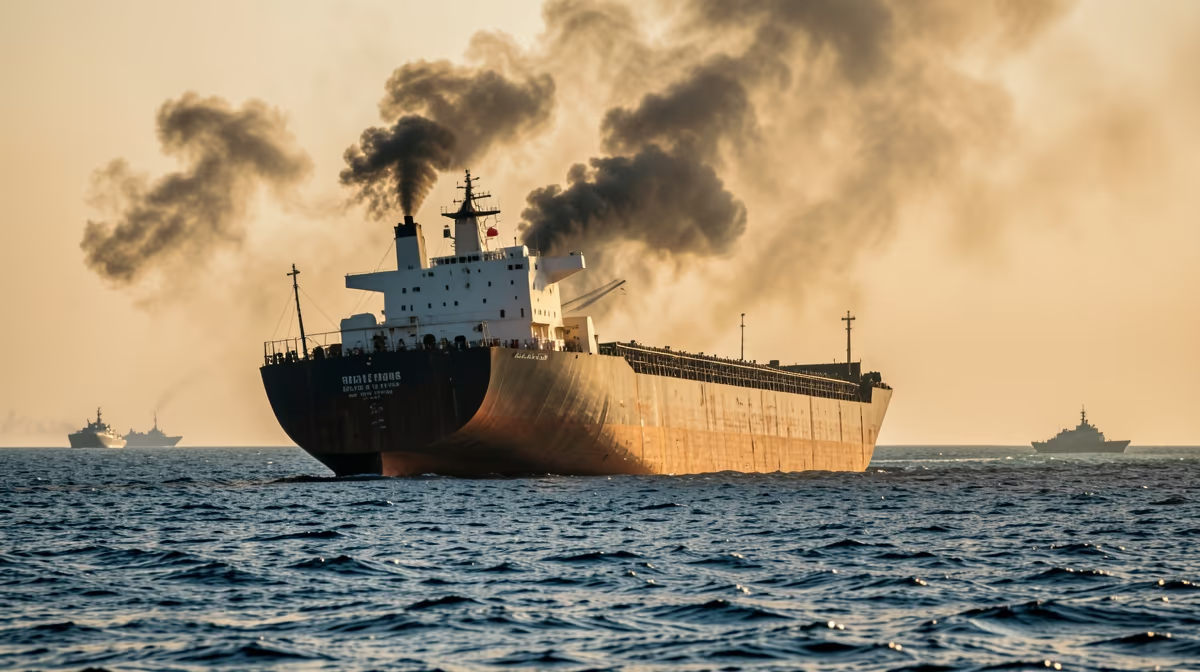
A burning commercial vessel adrift in the Persian Gulf has abruptly transformed regional naval friction into an immediate global economic emergency. As crude benchmarks spike worldwide, Iran urges US Strait of Hormuz diplomatic engagement to consider a formal framework for restoring transit through the vital maritime corridor.
The initiative emerges at an extraordinarily precarious moment for international shipping routes. Tehran has formally put forward terms for talks with the United States to establish safe transit within a strict seven-day window, conditioned on a parallel seven-day ceasefire, even as naval mine detonations continue to ignite merchant vessels and jeopardize international petroleum flows.
Tehran has offered Washington a seven-day window to negotiate the reopening of the Strait of Hormuz under ceasefire conditions as naval mine strikes push crude toward historic highs.
Maritime Hostilities and the Chokepoint Crisis
The current crisis escalated rapidly following confirmed naval incidents within the narrow waterway that connects the Persian Gulf to the Gulf of Oman and the broader Arabian Sea. According to verified reports, two commercial tankers sustained direct damage after striking sea mines deployed along the transit corridor.
The blasts resulted in severe structural fires, with at least one violating vessel left burning in the strait. These maritime strikes have abruptly upended commercial navigation across the primary sea artery through which a massive portion of the world's petroleum flows. Shipping firms, facing unprecedented physical dangers to their fleets and crews, have suspended or severely restricted passage through the corridor.
"Try your luck," Tehran warned the United States, defying threats of renewed strikes as international maritime observers confirmed commercial vessels burning in the waterway.
The physical damage to commercial vessels underscores the vulnerability of international commerce within restricted geographical chokepoints. With naval security deteriorating by the hour, maritime authorities and commercial operators are grappling with an immediate shutdown of normal transit, stranding cargo and complicating regional logistical links.
The Seven-Day Proposal and Ceasefire Terms
Against the backdrop of maritime destruction, Iranian officials have leveraged control over the waterway to seize the diplomatic initiative. Tehran has presented the United States with a direct proposal: open negotiations focused on the operational status of the shipping lane, linked explicitly to an immediate seven-day ceasefire.
The proposal sets a strict timeline, urging Washington to accept talks on reopening the waterway within seven days. Tehran maintains that its conditions remain active on the negotiating table, placing the burden of de-escalation squarely on the United States. Concurrently, regional rhetoric has sharpened. As U.S. warnings mount, Iranian leadership has issued defiant public challenges dared American forces to strike again with the taunt to "try your luck."
This dual strategy combines active physical deterrence at sea with public diplomatic pressure. By tying the reopening of one of the world's most critical transit routes to bilateral ceasefire terms, Tehran is testing Washington's willingness to engage directly under crisis conditions while simultaneously signaling its capacity to disrupt international commerce indefinitely.
Economic Shockwaves Across Global Energy Markets
The direct consequence of the naval standoff has been swift and disruptive across global commodity exchanges. Benchmark Brent crude surged to touch $110 per barrel as traders factored in the immediate loss of operational stability across Middle Eastern supply channels.
The economic fallout extends well beyond crude pricing. Regional fuel exports and international supply chains have suffered substantial dislocations. Compounding the shifting balance in product transit, China's September fuel exports experienced a jump of 39.4%, illustrating the massive market adjustments underway as importing nations scramble to secure alternative supplies and manage disrupted maritime trade flows.
| Market Indicator | Observed Shift | Strategic Significance |
|---|---|---|
| Brent Crude Benchmark | Touched $110 per barrel | Severe supply risk premium driven by maritime chokepoint closure |
| Commercial Tanker Traffic | Halted following mine blasts | Direct physical danger to vessels navigating the strait |
| China September Fuel Exports | Surged by 39.4% | Major realignments in international refined product flows |
| Diplomatic Window | Seven-day proposed deadline | Timeframe put forward by Tehran for bilateral ceasefire terms |
Energy-importing nations and global consumers face immediate compounding costs. Prolonged disruption in the Strait of Hormuz directly limits available petroleum supplies, placing immense financial burdens on international industries, commercial transport, and domestic markets dependent on sustained Middle Eastern output.
Geopolitical Alignments and Historical Parallels
The confrontation in the Gulf is accelerating geopolitical polarization across major powers. Former U.S. President Donald Trump issued a stern public warning regarding the broader international dimension of the conflict, cautioning that Russia could join forces with Iran if hostilities between Washington and Tehran continue to spiral.
The prospect of foreign alignments entering the standoff transforms regional naval security into an arena of global power deterrence. Analysts note that Tehran's diplomatic posturing may also function to pressure allied cohesion among Western nations, testing the resilience of energy-dependent partners who rely heavily on Persian Gulf supplies and may favor immediate de-escalation over protracted naval confrontation.
The unfolding standoff bears striking similarities to the 1980s Tanker War during the Iran-Iraq War. During that historical conflict, commercial merchant ships transiting the Persian Gulf were systematically targeted, forcing foreign powers to deploy international naval escorts to secure critical petroleum routes. Today's reliance on sea mines and asymmetric naval tactics revives those historical precedents, demonstrating how maritime chokepoints remain primary instruments of geopolitical leverage.
A Chronology of Escalation
The sequence of military and diplomatic events highlights how rapidly localized naval incidents can escalate into global economic confrontation:
- Sea mine blasts strike commercial oil tankers navigating the Strait of Hormuz, leaving at least one vessel ablaze.
- Brent crude oil prices touch $110 per barrel as commercial shipping halts and China records a 39.4% jump in September fuel exports.
- Iran formally proposes talks with the United States, outlining a seven-day timeline and tying maritime reopening to a bilateral ceasefire.
- U.S. and international figures issue severe geopolitical warnings, including concerns over potential Russian alignment with Tehran, while Iranian authorities publicly challenge Washington's deterrence.
This structured progression illustrates how military pressure, energy shocks, and diplomatic overtures have unfolded concurrently, leaving little room for miscalculation on either side.
Strategic Forecast: 24 to 72 Hours
The trajectory of the standoff depends entirely on how Washington responds to Tehran's proposed framework over the immediate operational horizon.
Immediate 24-Hour Horizon
Extended 72-Hour Outlook
Analysts project that energy markets will experience persistent volatility while maritime transit remains contested. In a best-case scenario, the United States and Iran engage in the proposed talks, leading to an accepted seven-day ceasefire, the de-escalation of maritime hostilities, and the safe, phased reopening of the Strait of Hormuz. Conversely, the worst-case scenario entails additional sea mine detonations or military strikes, closing the chokepoint indefinitely and sending global oil prices to even more damaging heights.
Frequently Asked Questions
What is Iran's recent proposal regarding the Strait of Hormuz?
Iran has urged the United States to accept a proposal to reopen the Strait of Hormuz within seven days. This proposal includes conditions such as a potential seven-day ceasefire.
Why is the Strait of Hormuz currently causing global concern?
The critical waterway has faced severe disruptions after tankers were reportedly hit by sea mines, causing vessels to catch fire. These incidents sent Brent crude oil prices touching $110, raising alarms about global energy supplies.
Who is affected by the closure and tensions in the Strait of Hormuz?
Global energy markets and nations reliant on Middle Eastern oil shipments are heavily affected by the crisis. Additionally, broader economic impacts are felt internationally as fuel exports and shipping security are compromised.
What happens next regarding the reopening of the strait?
Diplomatic negotiations and responses from the United States and international stakeholders will determine whether the proposed seven-day ceasefire and reopening terms are accepted. Meanwhile, live updates continue to monitor developments on the ground.
What is the background of the current conflict in the Strait of Hormuz?
The tensions escalate amidst ongoing regional conflicts and military warnings, with recent reports highlighting sea mine blasts impacting vessels in the vital shipping lane. Iran's challenge to the U.S. follows heightened rhetoric and security incidents in the area.
What specific details emerged about the tanker incidents in the strait?
Reports confirmed that at least two tankers were hit by sea mines in the Strait of Hormuz, leaving a violating vessel on fire. The blasts occurred as oil markets reacted sharply to the security threats in the region.
Conclusion
The confrontation in the Strait of Hormuz represents an acute convergence of asymmetric naval warfare, energy market volatility, and high-stakes diplomacy. With two tankers struck by sea mines, crude touching $110 per barrel, and commercial shipping largely paralyzed, the operational integrity of the world's most critical petroleum corridor hangs in the balance.
Whether the crisis transitions toward de-escalation depends on how Washington navigates Tehran's seven-day proposal and its accompanying ceasefire demands. As international markets absorb the economic shock of altered fuel flows and elevated crude benchmarks, the immediate focus remains on whether bilateral diplomacy can clear the waterway or if continued maritime strikes will prolong the shutdown of global energy transit.
Sources
- Iran urges U.S. to accept proposal to reopen Strait of Hormuz — The Spokesman-Review
- Iran says two Hormuz tankers hit mines as Brent touched $110 and China’s September fuel exports jump 39.4% — Oil & Gas Middle East
- Iran proposed talks with the United States on reopening the Strait of Hormuz "within seven days" — Українські Національні Новини (УНН)
- Live Updates: Iran says Strait of Hormuz reopening, seven-day ceasefire conditions still on the table — CBS News
- Iran war updates: ‘Violating’ vessel on fire in Hormuz after sea mine blast — Al Jazeera
- Trump warns Russia could join forces with Iran as Tehran dares US to strike again: 'Try your luck' — Fox News


