
Kolkata Pandal Stampede Sparks Urgent Investigation Across City
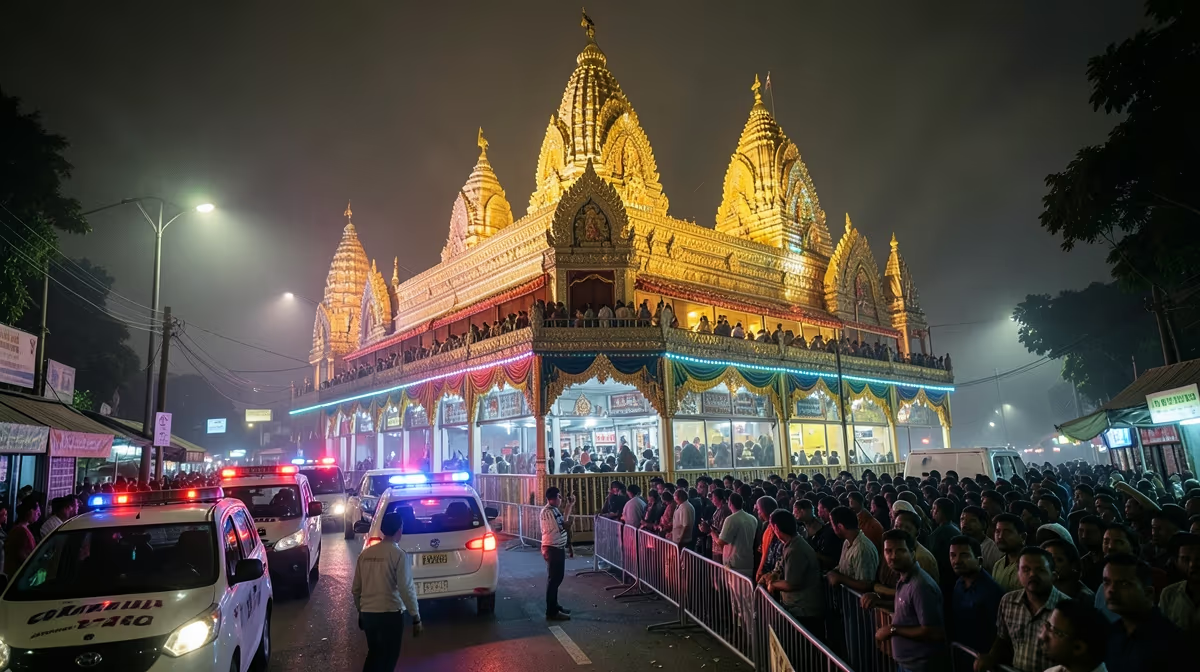
A sudden surge within a densely packed festival enclosure turned an evening of devotion into an overwhelming tragedy. A tragic Kolkata Pandal Stampede has sent shockwaves across the city during the ongoing Durga Puja celebrations, leaving families mourning and raising critical questions about mass safety protocols.
The fatal stampede at the Chorbagan Durga Puja pandal claimed 19 lives, with the majority of the victims identified as women and children.
The catastrophic event unfolded amid the peak period of the annual festival, an occasion that traditionally unites millions across urban spaces in communal celebration. As the sheer volume of attendees converged upon confined festive infrastructure, critical bottlenecks rapidly transformed high-density enthusiasm into a devastating public safety crisis.
Tragic Incident Unfolds at Chorbagan Durga Puja Pandal
The deadly disaster occurred at the Chorbagan Durga Puja pandal in Kolkata, a major cultural gathering that attracts dense waves of visitors seeking to observe intricate artistic installations and offer prayers. During peak festive hours, an extreme surge of devotees entered the space, rapidly overwhelming the site's capacity.
The sudden compression of movement triggered chaotic conditions, trapping attendees within narrow corridors. Emergency services and local volunteers immediately mobilized to the site, facing immense challenges as the extreme crowd density severely impeded initial rescue, medical triage, and evacuation operations.
Nineteen individuals were confirmed dead in the crush. A significant majority of the fatalities were women and children, whose vulnerability was intensified by the lack of viable exit routes when panic set in. Numerous other attendees sustained injuries as the venue's infrastructure buckled under uncontrolled human flow.
The Human Cost and Structural Factors
The scale of the disaster has focused urgent attention on the operational circumstances at the venue. Preliminary assessments point to multiple structural failures that converged to create lethal choke points:
- Massive over-capacity limits during peak festival attendance hours
- Critical bottlenecks created by inadequate entry and exit route design
- Compression of general pedestrian pathways by unregulated commercial stalls
- Dedicated VIP entry channels that narrowed available corridors for general attendees
The majority of those who lost their lives in the disaster are women and children, highlighting acute vulnerabilities during sudden crowd crushes.
When high-density crowds encounter physical constrictions without continuous outward release points, localized pressure escalates within seconds. The physical configuration at Chorbagan trapped thousands in a confined perimeter, cutting off breathable space and triggering progressive crowd collapse before emergency responders could fully penetrate the site.
Authorities Urge Strict Crowd Management Following Festival Disaster
In the aftermath of the mass casualties, intense scrutiny has fallen on administrative preparedness, regulatory enforcement, and on-site oversight. Organizing committees and municipal bodies operate under explicit mandates to balance massive festive participation with structural safety codes, yet the tragedy revealed substantial gaps in execution.
The incident underscores recurring operational vulnerabilities at mega-cultural events. Analysts have drawn historical parallels to the 2013 Ratangarh temple stampede in Madhya Pradesh, an event that similarly exposed how systemic crowd control failures, poor communication, and inadequate route regulation can turn mass religious gatherings into fatal catastrophes.
The fallout extends into civic and policy domains:
- Administrative scrutiny: Local governance and municipal bodies face immediate inquiries over permitting processes and the verification of physical safety barriers.
- Economic implications: While the festival drives significant tourism and local commercial trade, recurring mass-gathering hazards prompt calls for mandatory organizer insurance and expanded security spending.
- International attention: Global media coverage of mass-gathering disasters in the country reinforces sustained concerns regarding emergency infrastructure readiness during mega-scale cultural events.
Sequence of Critical Developments
The escalation from celebratory foot traffic to mass casualty unfolded across distinct phases as crowds peaked across the city.
| Event Phase | Operational Reality |
|---|---|
| Festive Peak | Heavy influx of devotees across Kolkata pandals, generating record pedestrian density |
| Structural Bottleneck | Severe over-capacity and pathway narrowing at the Chorbagan Durga Puja installation |
| Catastrophic Surge | Crowd compression triggers fatal stampede; 19 casualties confirmed, mostly women and children |
| Emergency Deployment | First responders face access constraints amid persistent overcrowding while evacuating the injured |
| Regulatory Fallout | Administrative investigations launched into crowd management protocols and physical site parameters |
Public Safety Analysis and Event Accountability
The root cause of the Chorbagan disaster centers on a fundamental failure of capacity regulation. When temporary architecture is erected to house cultural installations, crowd containment protocols must dynamically adapt to real-time influx rates.
When organizers permit structural obstructions—such as commercial concessions or segregated transit channels—the total usable square footage diminishes, lowering the critical threshold for crowd collapse. The disaster demonstrated that without rigid, mechanized turnstiles or real-time density monitoring, temporary pandals operate with virtually zero margin for error once peak thresholds are breached.
Accountability rests between the venue organizers and the regulatory authorities who approve festival layouts. Investigations are focusing on whether adequate emergency exits were maintained, whether designated evacuation corridors remained unblocked, and why preventative crowd metering was not enforced prior to the catastrophic crush.
Trajectory for the Coming Days
The immediate period following the stampede involves intense administrative, logistical, and civic developments:
Immediate Emergency Response
Medium-Term Administrative Actions
Projected Outcomes
Frequently Asked Questions
What happened during the Kolkata Durga Puja stampede?
A tragic stampede occurred at a crowded Durga Puja pandal in Kolkata, leading to the loss of 19 lives and dampening the festive celebrations. The sudden surge overwhelmed the venue, causing panic and chaos among the attendees.
Why is the Kolkata pandal stampede a major concern?
The incident highlights critical crowd management failures during large-scale public festivals, raising serious concerns about safety protocols at major religious gatherings. It serves as a grim reminder of the urgent need for stricter crowd control and regulated entry points.
Who was most affected by the Kolkata Durga Puja stampede?
Reports indicate that the majority of the victims in the tragic stampede were women and children. Families gathered to celebrate the festivities were deeply impacted by the sudden loss of their loved ones.
What went wrong at the Chorbagan Durga Puja pandal?
While investigations continue into the exact sequence of events, overcrowding and inadequate exit routes appear to have played a significant role in the disaster. The immense rush of visitors overwhelmed the venue's capacity to manage the crowd safely.
What happens next following the Kolkata stampede tragedy?
Authorities are expected to review safety measures and enforce stricter guidelines for pandal organizers to prevent similar tragedies in future celebrations. Officials will likely face increased scrutiny regarding crowd regulation and emergency response preparedness.
How did the stampede impact the broader Durga Puja festivities?
The disaster cast a dark shadow over the traditional celebrations in Kolkata, turning a time of joy into deep mourning. Festivities were severely dampened as the city reeled from the shock of the mass casualties.
Conclusion
The tragedy at the Chorbagan Durga Puja pandal stands as a severe reminder of the life-or-death stakes inherent in mass event planning. With 19 confirmed dead—predominantly women and children—the disaster has cast a solemn pall over one of India's most significant cultural periods. Moving forward, the critical priority for regional authorities and festival organizers centers on thorough investigations into structural bottlenecks, the enforcement of uncompromising crowd management standards, and the establishment of verifiable safety infrastructure to ensure mass celebrations do not descend into preventable catastrophe.


