
US Coast Guard Rescue Off Baja Coast Triggers Massive Search
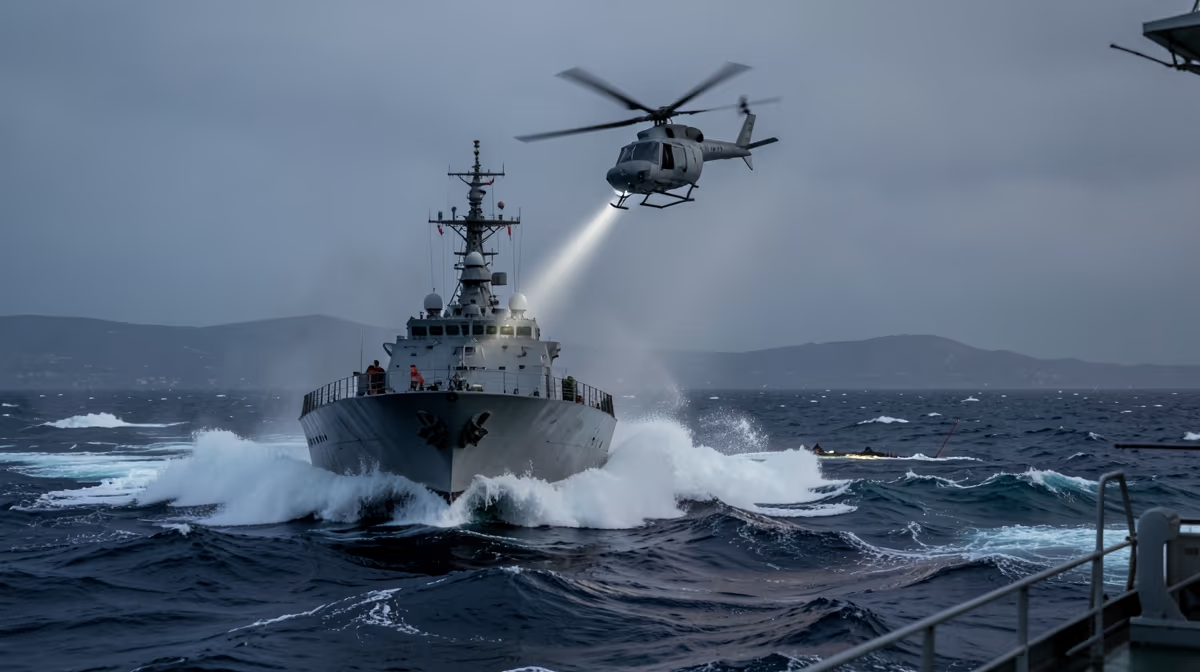
A frantic distress transmission crackling through the Pacific Ocean frequency sent maritime emergency personnel scrambling toward the waters off the Baja California peninsula. An urgent US Coast Guard rescue operation quickly unfolded across the remote open sea, successfully pulling 16 survivors from the water while triggering an exhaustive international search for additional passengers still missing after their vessel sank.
A rapid international maritime response saved 16 survivors following a vessel capsizing off the Baja California coast, while cross-border teams continue intensive searches for missing passengers.
The maritime disaster occurred when a boat encountered catastrophic trouble and capsized in the Pacific Ocean off the coast of Mexico's Baja California peninsula. Emergency dispatchers and search teams mobilized specialized assets after receiving the critical mayday distress call. While rescue teams managed to secure 16 individuals alive, the incident immediately transitioned into an active, multi-agency search operation to locate unaccounted-for individuals who were tossed into the open sea.
Emergency Response and the Pacific Mayday
The sequence of events began with an urgent mayday call originating from a vessel navigating off the Baja coast. When a maritime distress call of this nature is broadcast, regional emergency frameworks require immediate triangulation and rapid asset deployment to counter the rapid drift of currents and fluctuating sea conditions.
Following the receipt of the distress signal, the U.S. Coast Guard dispatched maritime assets into the sector. Upon arrival at the coordinates, rescue crews discovered the stricken vessel in an extreme state of compromise, with passengers cast into the open ocean after the boat sank. Crews executed direct water retrievals, securing 16 survivors and providing immediate stabilization.
The timeline established by operational reporting outlines the initial critical milestones of the incident:
- An emergency mayday distress call was transmitted from a vessel navigating Pacific waters off the Baja California coast.
- The U.S. Coast Guard deployed response assets directly to the reported coordinates to initiate search and rescue sweeps.
- First responders successfully pulled 16 individuals from the ocean and initiated emergency care protocols.
- Coordinated international operations expanded into an ongoing search to track and locate remaining missing passengers.
Despite the initial recovery of 16 individuals, operational commanders faced an evolving crisis as headcounts confirmed that several people remained missing in the water, prompting an immediate expansion of the search perimeter.
Coordinating the Baja California Search Operation
Executing a sustained Pacific Ocean rescue operation requires precision navigation and continuous assessment of dynamic environmental factors. The waters extending off the Baja California peninsula are notoriously complex, characterized by deep ocean swells, shifting cross-currents, and expansive surface areas that complicate visual and sensor-based detection.
The ongoing operation represents a joint operational effort between United States and Mexican maritime search and rescue entities. Because the incident occurred off Mexico's coast, bilateral coordination mechanisms were activated to ensure seamless coverage of maritime patrol sectors. The response encompasses both surface vessels and aerial search patterns aimed at spotting flotsam, life jackets, or individuals adrift.
| Operational Dimension | Status and Parameters |
|---|---|
| Confirmed Rescued | 16 individuals secured from open water |
| Primary Operating Agencies | U.S. Coast Guard and Mexican maritime authorities |
| Geographic Sector | Pacific Ocean off the Baja California coast |
| Primary Mission Objective | Location and recovery of unaccounted-for passengers |
| Operation Status | Active maritime search and survivor medical management |
Rescue coordinators face the logistical challenge of calculating drift vectors over time. As hours elapse following a sinking, wind and subsurface currents disperse survivors and debris over dozens of square nautical miles, requiring continuous re-calibration of search grids to maximize the likelihood of detection.
Environmental Hazards and Open-Water Survival
Surviving a sudden vessel sinking in the Pacific Ocean introduces immediate and severe physiological threats. Beyond the risks of hypothermia and dehydration, individuals adrift in these remote corridors confront grave maritime hazards.
Reports emerging from the rescue zone indicate that survivors faced severe hazards while awaiting retrieval, including dangerous interactions with marine wildlife. In addition to battling rough surface conditions, accounts highlighted that individuals in the water encountered aggressive shark activity before rescue teams could pull them to safety.
Maritime emergencies far from shore amplify survival risks exponentially, turning every passing hour into a critical race against environmental exposure and offshore predators.
The presence of marine predators, coupled with the disorientation caused by capsizing, underscores the acute physical and psychological trauma experienced by those aboard. Medical response units mobilized alongside rescue cutters have focused heavily on treating acute trauma, exposure, and wounds sustained while passengers were stranded in open water.
Cross-Border Logistics and Bilateral Maritime Cooperation
The incident highlights the operational intricacies of cross-border maritime governance along the Pacific frontier. When a vessel founders near maritime boundaries, the responsibility for life-saving interventions demands immediate diplomatic and operational synergy between the United States and Mexico.
This Mexico coastguard search effort illustrates how cross-border emergencies test shared maritime safety frameworks:
- Rapid intelligence and telemetry sharing between U.S. Coast Guard command centers and Mexican naval authorities.
- The harmonization of jurisdictional protocols to permit swift entry and movement of international rescue cutters and aircraft.
- Bilateral resource allocation, balancing the substantial economic and operational burdens of multi-day open-ocean search campaigns.
- Coordinated medical evacuations and survivor transport to regional shore-based healthcare facilities.
These cooperative frameworks are essential for maintaining security and humanitarian safety across North American coastal corridors. Without integrated communication channels, the time required to mobilize rescue cutters across international boundaries would significantly diminish the survivability window for victims of offshore disasters.
Vulnerabilities in Remote Coastal Corridors
The emergency off Baja California brings renewed scrutiny to underlying transit vulnerabilities in regional Pacific waters. The corridor running parallel to the peninsula serves a diverse spectrum of maritime traffic, ranging from regulated commercial and passenger vessels to smaller, less equipped craft navigating far from major ports.
Investigators and maritime analysts observe that remote offshore routes frequently mask significant distress monitoring limitations. When smaller or overloaded craft venture into offshore ocean lanes, standard distress-beacon systems may be absent, leaving crews entirely reliant on high-frequency radio mayday broadcasts that must be caught by distant monitoring stations.
Furthermore, remote Pacific navigation corridors present structural monitoring challenges. Analysts note that potential commercial transit pressures or illicit, unregulated transit operations frequently push small vessels beyond safe operational thresholds into treacherous open seas. When sudden hull breaches or severe capsizing events occur under these conditions, the absence of comprehensive manifests complicates initial casualty reporting, forcing rescue agencies to deduce the total number of missing passengers through survivor interviews rather than verified documentation.
Operational Projections: The Next 72 Hours
The coming days remain decisive for both the tactical rescue mission and the subsequent administrative investigations surrounding the sinking. Operational expectations for the immediate and near-term response outline distinct priorities:
The Immediate 24-Hour Horizon
Over the next 24 hours, the U.S. Coast Guard and Mexican regional authorities are projected to maintain continuous, maximum-intensity surface and aerial sweeps across the primary search grid. Operations will focus on expanding outer search radii to account for drift modeling while medical teams stabilize the 16 rescued survivors. Concurrently, maritime investigators will interview survivors to firmly establish the vessel's point of origin, passenger manifest, and the mechanical or structural factors that triggered the sinking.
The 72-Hour Outlook
Over the next 72 hours, search operations will transition based on maritime condition evaluations and cumulative drift analysis. Sustained inter-agency coordination between international maritime services will focus on reconciling casualty counts and evaluating the feasibility of continued life-seeking operations. In a best-case scenario, favorable sea states and precise drift projections will allow international search crews to locate the remaining missing passengers safely. Conversely, adverse ocean conditions, poor visibility, or deteriorating weather could hinder ongoing search assets, complicating rescue sweeps and leading to unfavorable outcomes for those still unaccounted for in the Pacific.
Frequently Asked Questions
What happened off the Mexico Baja coast involving the U.S. Coast Guard?
The U.S. Coast Guard responded to an emergency mayday call and successfully rescued 16 people after a boat capsized and sank in the Pacific Ocean off Mexico's Baja California peninsula. The operation immediately led into an intensive search for additional missing individuals.
Why is the search and rescue operation off the Baja coast so critical?
The operation is critical because multiple passengers remained unaccounted for after the vessel went down. Search teams are working against time, ocean currents, and environmental exposure to locate any additional survivors.
Who was affected by the boating disaster off the Baja coast?
The incident directly impacted the passengers and crew aboard the sunken vessel, resulting in 16 people rescued with injuries and trauma, while others remain missing. Families and friends are awaiting updates as international teams patrol the waters.
What happens next in the search and rescue efforts?
Search and rescue teams from the U.S. Coast Guard and Mexican authorities will continue sweeping targeted Pacific sectors using surface vessels and aircraft. Operations are focusing on drift analysis to locate missing individuals while medical teams care for survivors.
What background details are known about the mayday incident?
The emergency response began immediately following a mayday distress call transmitted from the vessel in distress off Baja California. U.S. and Mexican maritime agencies quickly coordinated cross-border air and sea assets to respond to the scene.
What specific hazard complications arose following the boat sinking?
Reports indicated that survivors in the water faced severe environmental perils, including cold ocean conditions and aggressive interactions with marine predators, with accounts confirming shark attacks among people awaiting rescue in the open sea.
Conclusion
The maritime emergency off the Baja California coast remains an active cross-border response. While the rapid deployment of U.S. Coast Guard assets successfully saved 16 people from the Pacific Ocean, the mission continues as international search crews scour the waters for missing passengers. Moving forward, the focus remains divided between sustained open-water search operations, survivor medical care, and official inquiries to determine the precise circumstances that caused the vessel to capsize.
Sources
- 16 People Rescued in Pacific Ocean Off Mexico, U.S. Coast Guard Says — The New York Times
- US Coast Guard rescues 16 people and searches for more after mayday call off Mexico’s Baja coast — Oregon Public Broadcasting - OPB
- Search continues for 11 missing after boat sank off Mexico’s Baja coast — Al Jazeera
- Search continues after boat capsizes off Baja California coast. Survivors attacked by sharks — Bozeman Daily Chronicle
- U.S. Coast Guard rescues 16 people, searches for more after May Day call off Mexico's Baja Coast — TelegraphHerald.com


