
Atlantic Ocean Infrastructure Faces a Silent, Unprecedented Security Crisis
Introduction
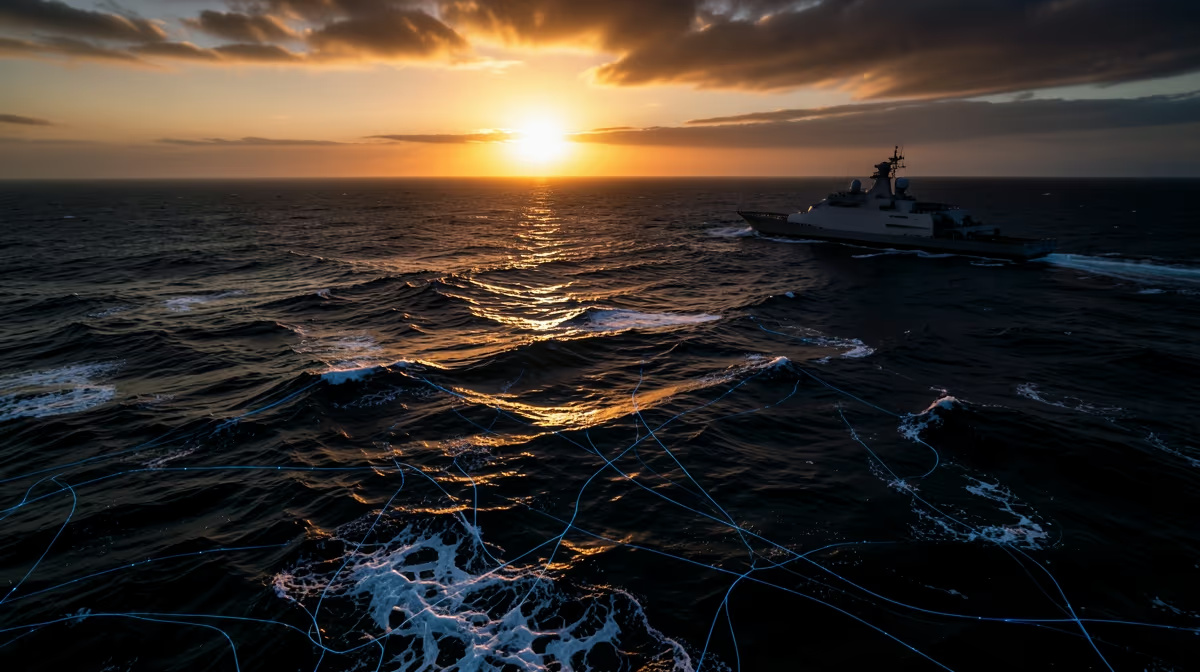
Beneath the rolling waves of the atlantic ocean, a silent network of fiber-optic cables serves as the digital backbone of the global economy, now facing unprecedented scrutiny from both environmental shifts and state actors. As the basin transforms from a peripheral trade route into a critical theater of strategic competition, the intersection of climate change and maritime security is rewriting the rules of 21st-century statecraft.
What Happened
Oceanographers at the National Oceanic and Atmospheric Administration reported that sea surface temperatures in the Atlantic Ocean have reached record-breaking highs for the fourteenth consecutive month. This sustained thermal anomaly, which began in early 2023, is fundamentally altering marine climate patterns and influencing atmospheric pressure systems across the US Eastern Seaboard. Meteorologists and deep-sea researchers have documented significant coral bleaching in the Florida Keys and shifts in the migratory paths of commercial fish stocks, such as menhaden and Atlantic bluefin tuna.
Simultaneously, the strategic profile of the basin is evolving. The Atlantic has transitioned from a stable transit zone to a domain of intense competition for data sovereignty and energy infrastructure protection. While state officials in Florida and North Carolina address the rise of nuisance tidal flooding, international researchers are investigating whether these thermal shifts signify a localized anomaly or a more permanent, systemic disruption to the Atlantic Meridional Overturning Circulation.
Key Facts
The Atlantic Meridional Overturning Circulation acts as a vital conveyor belt, transporting heat from the equator to the North Atlantic to regulate global weather. Modern satellite data confirms this system is currently at its weakest point in over a millennium. As glaciers in Greenland melt, they release massive volumes of fresh water into the basin; because fresh water is less dense than salt water, it inhibits the sinking process necessary to keep this conveyor belt moving.
Beyond these environmental mechanics, the physical geography of the basin remains vast. The ocean covers approximately 41 million square miles, with an average depth of 12,000 feet, reaching 27,480 feet at the Milwaukee Deep. Formed 200 million years ago by the breakup of Pangea, it continues to widen by about an inch every year due to seafloor spreading at the Mid-Atlantic Ridge. Today, this massive body of water sustains billions of people through trade and biodiversity, yet its stability is increasingly threatened by the convergence of climate change and human infrastructure development.
Why It Matters
The instability of the Atlantic Ocean carries profound implications for coastal communities, global agriculture, and data-dependent markets. If the circulation system reaches a tipping point, it could trigger rapid shifts in regional weather patterns, including more frequent extreme winter storms, prolonged droughts, and unexpected heat waves. These environmental changes threaten to disrupt agricultural output and compromise the resilience of coastal infrastructure.
Economically, the stakes are equally high. The Atlantic basin now facilitates trillions of dollars in data flow through subsea fiber-optic cables. The transition from physical commodity shipping to the protection of this digital backbone has placed undersea energy grids and data pipelines at the center of national security concerns. For municipalities along the US East Coast, this manifests as a need for immediate, high-cost investments in shoreline stabilization and flood mitigation to counter the rising base levels caused by thermal expansion.
Expert Analysis
The root cause of this dual crisis is the strategic repositioning of the Atlantic from a passive transit route to a critical domain for energy transition and data sovereignty. Dr. Sarah Jenkins, a senior climate scientist at NOAA, noted that the current heat content in the basin is unprecedented in the modern satellite record, necessitating an immediate reassessment of hurricane intensity models.
This environmental pressure is compounded by the political competition between the United States and emerging adversaries for dominance over maritime chokepoints. Much like the 19th-century Great Game in Central Asia, modern statecraft is being transposed into the maritime domain. Infrastructure control has become a primary instrument of power, with the Atlantic Security Architecture expanding to counter hybrid warfare threats directed at offshore wind farms and deep-sea mineral extraction zones. The lack of a clear legal framework regarding deep-seabed mining further complicates this, creating a jurisdictional vacuum that threatens to spark conflict in international waters off the US coast.
Political And Geopolitical Implications
The geopolitical landscape of the Atlantic is witnessing a return to militarization. During the 20th century, US naval hegemony was established through the Cold War strategy known as the GIUK gap. Following a post-Cold War pivot toward the Indo-Pacific, which resulted in a decline in regional resource allocation, the contemporary era is defined by the vulnerability of subsea cables. Policymakers are now focused on protecting these assets against sabotage, viewing the security of the Atlantic as a fundamental component of broader defense analysis. This re-militarization reflects a growing recognition that the integrity of undersea infrastructure is inseparable from the continuity of Western economic and national security.
What Happens Next
In the next 24 hours, meteorologists will increase monitoring of tropical disturbances near the Cape Verde islands as sea surface temperatures fluctuate. Over the next 72 hours, atmospheric instability may lead to the formation of organized storm systems, and coastal regions should prepare for elevated rip current risks. Looking further ahead, the National Hurricane Center and NOAA anticipate an active period. Forecasters warn of potential rapid intensification of late-season systems due to anomalous heat content in the basin. While a best-case scenario involves atmospheric shear preventing storm organization, the worst-case scenario involves a significant cyclone tracking toward densely populated urban centers, necessitating emergency resource deployment.
Frequently Asked Questions
How deep is the Atlantic Ocean?
The Atlantic Ocean has an average depth of approximately 12,000 feet. Its deepest point is the Milwaukee Deep in the Puerto Rico Trench, which reaches a depth of about 27,480 feet.
Why is the Atlantic Ocean important to the world?
The Atlantic Ocean plays a critical role in regulating the Earth's climate by transporting heat from the tropics toward the poles. It is also a vital global highway for international trade and supports diverse marine ecosystems that provide food and resources for billions of people.
What is the size of the Atlantic Ocean in square miles?
The Atlantic Ocean covers approximately 41 million square miles, making it the second-largest ocean in the world. It accounts for about 20 percent of the Earth's total surface area.
What countries border the Atlantic Ocean?
The Atlantic Ocean is bordered by a wide range of countries across four continents. These include nations in North and South America in the west, and Europe and Africa in the east.
How was the Atlantic Ocean formed?
The Atlantic Ocean began forming about 200 million years ago during the breakup of the supercontinent Pangea. As tectonic plates moved apart, magma rose to fill the gap, creating the Mid-Atlantic Ridge and expanding the ocean floor over millions of years.
Is the Atlantic Ocean getting wider?
Yes, the Atlantic Ocean is slowly getting wider due to the process of seafloor spreading. The Mid-Atlantic Ridge acts as a divergent plate boundary, where new oceanic crust is continuously created and pushes the continents apart by about an inch every year.
Conclusion
The Atlantic Ocean is currently undergoing a period of significant stress, marked by record-breaking sea surface temperatures and a weakening circulation system that threatens global weather stability. Simultaneously, the region has emerged as a high-stakes arena for geopolitical competition, as nations race to secure the undersea infrastructure that supports the modern digital economy. While scientists work to monitor the potential for rapid storm intensification and long-term oceanographic shifts, policymakers must navigate the dual challenges of climate adaptation and the defense of critical subsea assets. The future of this maritime domain will depend on balancing these environmental and strategic imperatives to ensure the continued security of coastal communities and global trade networks.


