
Cape Verde Is Quietly Reshaping Its Role in the Atlantic Economy
Introduction
Tucked away in the central Atlantic Ocean, a chain of volcanic islands is rewriting the narrative of how small nations navigate the complexities of global economic and environmental shifts. Cape Verde, also known as Cabo Verde, remains a point of interest for global travelers and sports fans, many of whom are discovering its strategic importance for the first time. Whether you are asking where is Cape Verde located on the map or tracking the latest developments regarding a potential Cape Verde world cup appearance, the archipelago is emerging as a critical case study in resilience. By balancing its rich cultural heritage with a forward-looking commitment to sustainability, this nation is quietly shifting its position within the global arena.
What Happened
The current trajectory of the archipelago is defined by a rigorous push toward energy autonomy and economic diversification. Following a robust recovery from the post-pandemic slowdown, the government has accelerated its transition to green energy with the aim of achieving 50 percent renewable energy penetration by 2030. This policy, known as the Energy Transition Master Plan, is central to the country's national security, as it seeks to break a historic reliance on imported fossil fuels that leaves the economy vulnerable to fluctuating global prices.
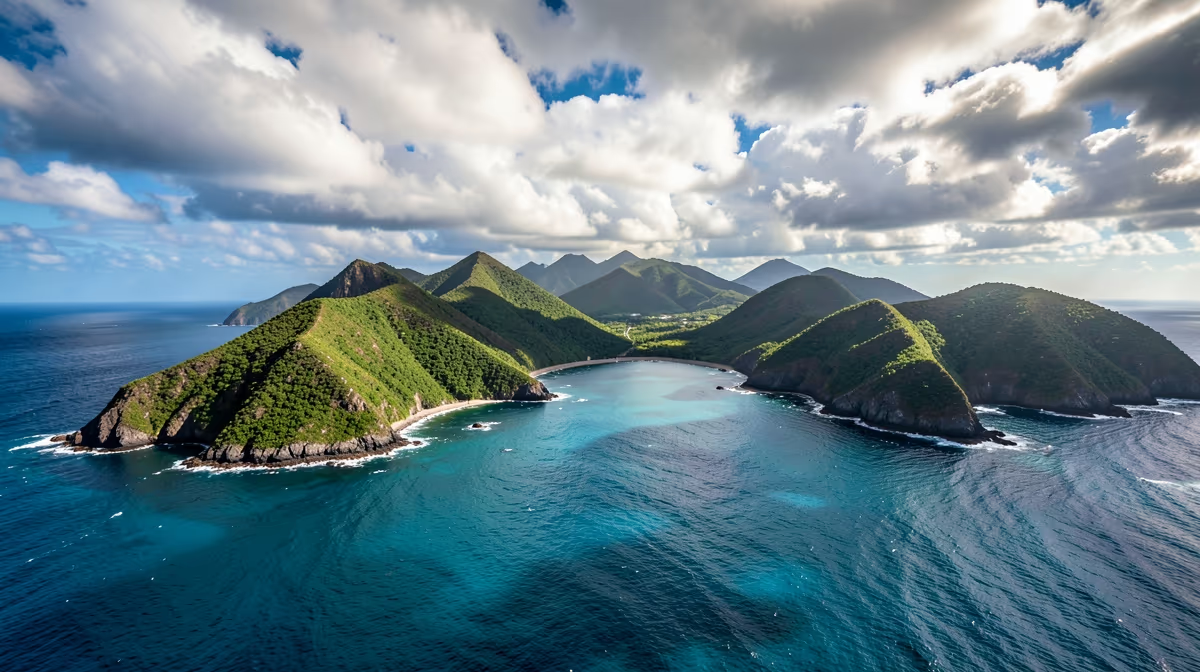
Simultaneously, the tourism sector, which contributes roughly 25 percent to the national GDP, is undergoing a transformation. Prime Minister Ulisses Correia e Silva has led efforts to prioritize sustainable infrastructure, particularly on the islands of Sal and Boa Vista. These initiatives are designed to prevent the pitfalls of mass tourism while protecting the delicate biodiversity of the ten volcanic islands and five islets. Furthermore, the nation has navigated the complexities of international trade, focusing on strengthening its role as a stable democratic hub that connects the European Union, the African Union, and the Lusophone sphere.
Key Facts
Cape Verde is an archipelago consisting of ten islands and five islets, situated approximately 350 miles off the coast of Senegal. Since gaining independence from Portugal in 1975, the country has maintained a stable multi-party democracy, becoming one of the most consistent political environments in Africa. The official language is Portuguese, though the majority of the population communicates in Cape Verdean Creole. Economically, the nation graduated from Least Developed Country status to Middle-Income Country status in 2008, a milestone that reflects its progress in institutional stability. The country is recognized for its unique position as an Atlantic bastion that blends African and European influences, serving as a peaceful gateway between continents.
Why It Matters
The development of this archipelago is a bellwether for small island states worldwide. Cape Verde serves as a critical model for climate resilience, as the nation is highly susceptible to environmental shifts, including rising sea levels. Its success in managing renewable energy transitions provides a tangible blueprint for other nations facing similar geographical limitations. For the 600,000 residents, these structural changes are vital for long-term economic sovereignty. For international investors, the move toward a blue economy and digital service hub status offers new avenues for engagement. The ongoing efforts demonstrate that geography does not have to dictate a nation's ability to innovate, provided there is a focus on sustainable infrastructure and diplomatic stability.
Expert Analysis
The root cause of Cape Verde’s current strategic approach is its historic geographic isolation, which is compounded by extreme resource scarcity and a heavy reliance on maritime logistics. Historically, the archipelago evolved from an uninhabited territory into a 15th-century hub for the transatlantic slave trade and a victualing station for the Portuguese Empire. Today, that history has been replaced by a modern, democratic identity. The primary challenge remains the structural trade deficit, which the government is attempting to mitigate by pivoting toward digital service sectors. By transforming from a traditional tourism-dependent economy to a regional logistical and sustainable energy center, Cape Verde is leveraging its location to offset the constraints of being an island nation.
Political And Geopolitical Implications
Cape Verde holds a unique place in Atlantic geopolitics, functioning as a nexus for anti-narcotics enforcement and international submarine cable connectivity. Its diplomatic focus is heavily invested in the "special partnership" with the European Union, which facilitates trade and security cooperation. However, there is a nuanced tension in the background: the nation must balance its role as a secure partner for Western interests with the increasing need for infrastructure investment from diverse global partners, including China. This balancing act requires a stable and agile government capable of maintaining neutrality while securing the financing necessary for its green energy transition.
What Happens Next
In the next 24 hours, the government will continue to monitor meteorological data to prepare for seasonal weather patterns, while maintaining focus on critical infrastructure projects currently underway in Praia and Mindelo. Looking ahead to the next 72 hours, diplomatic efforts will likely intensify as engagement with the European Union focuses on trade agreements and maritime security cooperation across the Atlantic corridor. Expert projections suggest that if regional maritime security remains stable, the nation will experience sustained economic growth. The best-case scenario involves the successful implementation of green hydrogen projects, which would attract foreign direct investment and lower national energy costs. Conversely, the worst-case scenario involves unexpected climatic disruptions or a downturn in European travel demand, which could strain the country's fiscal reserves.
Frequently Asked Questions
Is Cape Verde safe for tourists?
Cape Verde is generally considered a safe destination for tourists, with a stable political environment and low levels of violent crime. Visitors should exercise standard precautions in larger cities or crowded tourist areas to prevent petty theft.
Do I need a visa to travel to Cape Verde?
Citizens of many countries, including those from the European Union, the United Kingdom, and the United States, are exempt from visa requirements for short stays. However, travelers must complete an online pre-registration form known as the EASE system at least five days before departure.
What is the best time of year to visit Cape Verde?
The best time to visit Cape Verde is between November and June when the weather is warm and dry. This period avoids the brief rainy season and offers ideal conditions for beach activities and water sports.
What language is spoken in Cape Verde?
The official language of Cape Verde is Portuguese, which is used in government, media, and education. However, the most widely spoken language among locals is Cape Verdean Creole, which is a blend of Portuguese and African languages.
Which island in Cape Verde is best for a vacation?
Sal and Boa Vista are the most popular islands for beach lovers, offering extensive white sands and high-end resorts. For travelers interested in hiking, lush scenery, and mountain culture, Santo Antão and Fogo are highly recommended destinations.
Do I need vaccinations for Cape Verde?
There are no mandatory vaccinations for travelers arriving from most countries, but being up to date on routine vaccines is always recommended. It is advisable to consult a travel clinic regarding malaria prevention if you plan to visit specific rural areas on the island of Santiago.
Conclusion
Cape Verde stands at a crossroads, utilizing its democratic stability to drive necessary economic and environmental reforms. By prioritizing energy autonomy and diversifying its tourism sector, the archipelago is actively working to insulate its population from the volatility of global markets. While the challenges of geographic isolation and climate vulnerability remain, the nation's commitment to sustainable development and regional maritime security provides a clear pathway forward. As the government continues to foster international partnerships, the success of these ongoing initiatives will be vital in cementing Cape Verde’s role as a resilient and innovative leader in the Atlantic region.
" } ]


