
Cuba Free-Market Economic Reforms Trigger Major Regional Shift
Introduction
A quiet, structural transformation is unfolding across the Caribbean as the Cuban government dismantles decades of absolute state control in favor of a nascent private sector. This transition, defined by the emergence of small independent businesses, marks a pivotal moment in the island’s history and carries significant weight for the trajectory of cuba free-market economic reforms within a traditionally socialist framework.
What Happened
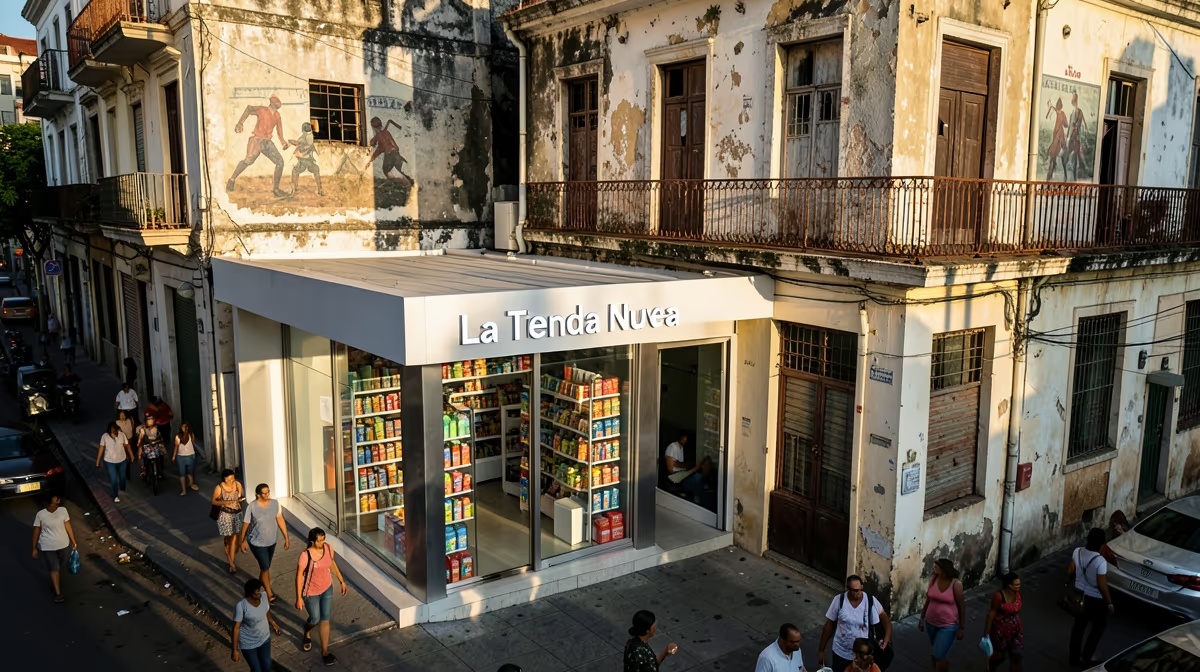
The island nation is undergoing a significant transformation as Cuba free-market economic reforms begin to reshape the local business landscape, signaling a potential shift in long-standing US-Cuba relations. Since 2021, the Cuban government has formally authorized over 10,000 new private businesses, known as mipymes, to operate in a landscape previously dominated by state monopolies. These entities are now permitted to import goods, manufacture products, and provide services that were once the exclusive domain of the state.
This move follows a long timeline of incremental adjustments. In 2011, Raul Castro initiated the Lineamientos to allow limited self-employment, but the 2021 authorization represents a much broader integration of market principles. Today, the government is drafting new tax codes and banking regulations to further integrate these private enterprises into the national financial system, even as the country faces its most severe economic crisis in decades, characterized by record-high inflation and acute foreign currency shortages.
Key Facts
The Cuban government has legalized small and medium-sized private enterprises, known as mipymes, to alleviate the impact of its worst economic crisis in years. These business owners can now hire employees, though the government sets strict limits on the scale of these operations. While private activity is growing, the government continues to maintain control over strategic sectors such as energy and large-scale manufacturing.
The economic reality remains challenging. The Cuban peso has faced severe devaluation, pushing the country toward a de facto dollarized economy. Consequently, rising economic inequality is evident as those with access to foreign currency or private business opportunities pull ahead of those who rely solely on government salaries. Furthermore, MSMEs remain restricted from operating in certain professional sectors, such as law and medicine, ensuring the state retains final oversight.
Why It Matters
These changes represent a historic turning point, signaling the potential end of the absolute state-run economic model that defined Cuba since the 1959 revolution. For the United States, this transition could shift the regional political landscape and change the nature of migration patterns and trade. As the Cuban government seeks new ways to survive without relying entirely on state subsidies or international bailouts, the emergence of a private sector offers a potential, albeit cautious, pathway to stabilization.
For the Cuban diaspora in the U.S. who send remittances, these reforms offer a new channel for engagement with their homeland. However, for international investors, the environment remains complex, as private businesses must navigate high taxes, restrictive banking regulations, and a dual-currency environment that complicates foreign investment.
Expert Analysis
The root cause of these shifts is the systemic failure of the centralized command economy, exacerbated by the collapse of Venezuelan subsidies and tightened U.S. sanctions, which necessitated a move toward micro-entrepreneurship to prevent total state insolvency. From an economic perspective, the transition creates a dual-track system, leading to acute income inequality and inflationary pressure on the Cuban peso.
Politically, the ruling Communist Party faces a delicate balancing act. They must permit the growth of MSMEs to alleviate domestic scarcity while simultaneously implementing repressive legal frameworks to ensure these new private actors do not evolve into a formal political opposition. Some observers suggest these reforms may serve as a mechanism for elite regime members to launder state assets into private businesses, effectively creating a crony-capitalist class that remains beholden to the Party for survival. While similar to the Doi Moi reforms in Vietnam or the Dengist transformation in China, Cuba is attempting a more constrained version, lacking the same level of structural openness.
Political And Geopolitical Implications
The emergence of a nascent private sector is being leveraged by the Cuban state to improve ties with the European Union and attract capital from the Cuban diaspora, potentially offsetting the isolationist impact of U.S. embargo policies. Within the United States, the reforms have sparked a nuanced debate. While U.S. officials acknowledge the potential for increased grassroots autonomy, critics argue that the state retains ultimate control through regulatory hurdles, making it difficult to discern if the shift represents a genuine transition to a free market or a temporary survival strategy for the Communist Party. Washington currently maintains a wait-and-see approach, conditioning further economic easing on verifiable legislative progress within the MSME sector.
What Happens Next
In the next 24 hours, expect increased diplomatic signaling from the U.S. State Department regarding potential humanitarian adjustments to trade policy. Within the next 72 hours, financial sectors in Florida may experience heightened speculation regarding potential expansions of U.S. travel and remittance authorization.
The best-case scenario involves the establishment of a formal framework for U.S.-based private capital to support Cuban entrepreneurs, leading to a gradual revitalization of the Cuban retail sector and stabilized migration flows. Conversely, the worst-case scenario involves internal political friction within Cuba leading to a reversal of reforms, resulting in renewed U.S. sanctions and increased economic instability that triggers a significant regional migration crisis.
Frequently Asked Questions
Is Cuba moving toward a free-market economy?
Cuba has introduced limited market-oriented reforms, such as the legalization of small and medium-sized private businesses known as MIPYMES. While the state still maintains control over key strategic sectors, these changes represent a significant shift toward allowing private enterprise within the socialist framework.
What are MIPYMES in Cuba?
MIPYMES are micro, small, and medium-sized enterprises that the Cuban government began authorizing in 2021 to revitalize the economy. These businesses are allowed to operate in various sectors, including manufacturing, services, and trade, marking a departure from the previous state-run monopoly model.
Can foreigners own businesses in Cuba?
Foreign investment is permitted in Cuba, typically through joint ventures with the state or international economic association contracts. However, the private sector reforms are primarily aimed at Cuban citizens, and foreign ownership is still heavily regulated and restricted to specific sectors approved by the government.
Why is Cuba liberalizing its economy now?
Cuba is pursuing these economic reforms largely to combat a severe economic crisis exacerbated by the pandemic, U.S. sanctions, and the inefficiency of state-run enterprises. By incentivizing private activity, the government hopes to increase domestic production, reduce reliance on imports, and generate tax revenue.
What are the main limitations of Cuba's economic reforms?
The primary limitations include high inflation, supply chain shortages, and significant bureaucratic hurdles that complicate business operations. Additionally, the government continues to exert strict regulatory oversight, which keeps the private sector dependent on state-controlled entities for supplies and distribution.
Are private businesses in Cuba truly free-market?
While these businesses operate with a degree of independence, they are not strictly free-market in the Western sense because they operate within a highly regulated socialist system. The state retains ultimate authority over economic policy, and private entities face constraints that do not exist in standard capitalist economies.
Conclusion
The shift toward a private sector in Cuba is a calculated response to dire economic conditions rather than a sudden ideological pivot. As the Cuban government navigates the tensions between market-based survival and socialist control, the impact on regional geopolitics and the future of U.S. relations remains to be seen. The coming months will be critical, as both international observers and the Cuban populace monitor whether these reforms lead to sustained economic stabilization or if they remain constrained by the regulatory grip of the state. Success depends on whether the legislative environment can evolve to truly support the burgeoning MSME sector without collapsing under the weight of internal political friction and economic volatility.


