
Dr Congo Crisis Deepens as Global Tech Supply Chains Face New Risks
Introduction
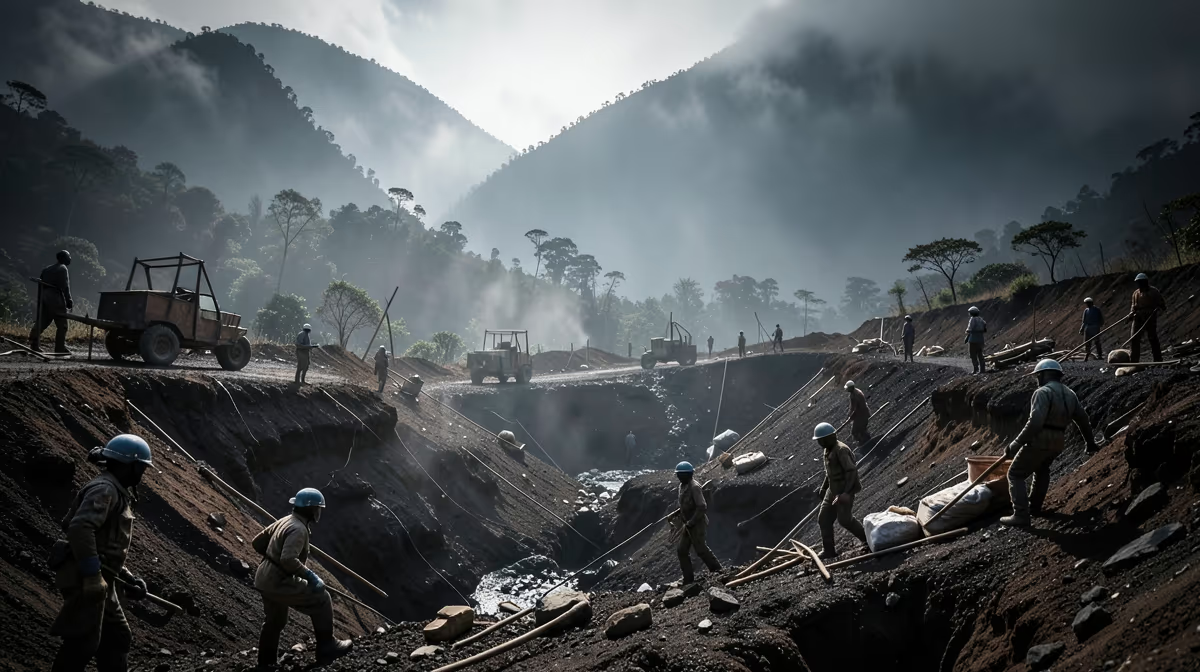
The global shift toward green energy and high-end technology relies on supply chains that often start in the conflict-ridden depths of the eastern provinces of the dr congo. The ongoing situation in the Dr Congo continues to command international attention, raising critical questions about regional stability and global economic impact. As the world transitions toward electric vehicle batteries and advanced AI hardware, the persistent resource instability in Congo creates a direct link between local displacement and international market security.
What Happened
The United States government on Thursday announced new sanctions targeting key figures involved in the ongoing conflict in the eastern Democratic Republic of Congo, citing persistent human rights abuses and the exploitation of natural resources by armed groups. The U.S. Department of the Treasury's Office of Foreign Assets Control designated several individuals associated with the M23 rebel movement and other illicit militias, restricting their access to the U.S. financial system.
This action follows reports from United Nations experts detailing the expansion of the conflict in North Kivu, which has displaced millions of people and exacerbated a severe humanitarian crisis. U.S. officials stated that the sanctions are intended to exert pressure on external actors who continue to fuel instability and violence in the mineral-rich eastern provinces. The administration's move represents a shift toward more aggressive financial monitoring of regional networks that facilitate the illicit trade of gold and coltan. Diplomatic efforts remain focused on de-escalation, though the situation on the ground remains volatile as rebel groups continue to consolidate territory near the provincial capital of Goma. A spokesperson for the U.S. State Department noted that the government remains committed to using all available tools to disrupt the networks that benefit from the suffering of the Congolese people and continues to call for an immediate cessation of hostilities.
Key Facts
The scale of the crisis is immense, with over 7 million people displaced within the country due to the ongoing conflict. The M23 rebel group has captured significant territory in the North Kivu province, creating a dire emergency for local populations who face acute food insecurity and a lack of access to medical care.
Economically, the country is one of the world's largest producers of cobalt and coltan, essential components for global smartphones and electric vehicle batteries. While the United Nations has maintained a long-standing peacekeeping presence in the region, the organization faces significant challenges in maintaining stability. The country, formerly known as Zaire, remains the second-largest in Africa by land area, and its vast mineral wealth has historically functioned as a catalyst for internal and regional struggle rather than a foundation for state-building.
Why It Matters
The crisis in the DRC is a global concern because of its impact on the supply chains for essential electronics and green energy technology. When instability disrupts the extraction and transport of minerals like cobalt and copper, it forces global markets to navigate significant price volatility and logistical uncertainty. Furthermore, the continued unrest threatens to create a massive regional refugee crisis, which could destabilize neighboring countries and exacerbate international humanitarian efforts.
For investors and analysts, the situation highlights the risks of relying on regions where state sovereignty is fragile and infrastructure is limited. The connection between the current security crisis and the global technology sector creates a precarious dependency, making the region a critical focus for international diplomacy and security policy.
Expert Analysis
The root cause of this instability lies in the systemic extraction of strategic mineral resources under conditions of fragile state sovereignty and legacy colonial infrastructure. This is compounded by complex power struggles between the government in Kinshasa, decentralized provincial militias, and entrenched patronage networks fueled by foreign security aid.
The economic angle is defined by the global green energy transition's reliance on Congolese cobalt and copper, which has created a resource curse that fluctuates with international market demand. From a geopolitical perspective, the region has become a proxy battleground, characterized by Chinese state-backed industrial dominance and US-led attempts to diversify critical mineral supply chains. Observers note a historical parallel to the 19th-century scramble for Africa, where concession-based exploitation previously dictated regional dynamics, a pattern now rebranded as modern green-tech diplomacy. Hidden within this framework is the pervasive role of artisanal mining and illicit cross-border trade networks that bypass official taxation and institutional oversight.
Political And Geopolitical Implications
The situation represents a delicate balancing act for Western powers. The US is currently attempting to deepen its mediation role, focusing on balancing pressure on Rwanda to withdraw support for insurgents while sustaining support for the institutional reforms led by President Felix Tshisekedi. This geopolitical strategy aims to mitigate the influence of competing external actors who benefit from the current insecurity. The ongoing tension between Kinshasa and various armed actors continues to draw scrutiny from international bodies, with the regional security consultations serving as a primary mechanism for managing the threat of further spillover into neighboring nations.
What Happens Next
In the next 24 hours, experts anticipate increased diplomatic pressure from Washington regarding the M23 conflict in North Kivu and intensified calls for a ceasefire. Within the next 72 hours, there is potential for further regional security consultations and announcements regarding US humanitarian aid allocations to displaced populations in Goma.
Looking forward, the best-case scenario involves the successful negotiation of a sustained ceasefire and a formal withdrawal of external proxy forces from Eastern DRC. Conversely, the worst-case scenario involves an escalation of direct military confrontation leading to a humanitarian catastrophe and regional spillover that destabilizes key trade routes. The effectiveness of the current US-led mediation will be the determining factor in whether the region moves toward stabilization or further fragmentation.
Frequently Asked Questions
What is the official name of the Democratic Republic of the Congo?
The official name of the country is the Democratic Republic of the Congo, often abbreviated as the DRC or DR Congo. It was formerly known as Zaire and is the second-largest country in Africa by land area.
What is the capital city of the Democratic Republic of the Congo?
The capital and largest city of the Democratic Republic of the Congo is Kinshasa. Located along the Congo River, it serves as the nation's primary administrative, economic, and cultural center.
What is the main language spoken in the Democratic Republic of the Congo?
French is the official language of the Democratic Republic of the Congo and is used in government, education, and media. Additionally, four national languages are widely spoken: Lingala, Kikongo, Tshiluba, and Swahili.
What are the primary natural resources found in the DRC?
The Democratic Republic of the Congo is exceptionally rich in natural resources, including cobalt, copper, diamonds, gold, and coltan. These resources are critical to global industries, particularly in the production of electronics and renewable energy technologies.
Is it safe to travel to the Democratic Republic of the Congo?
Travel to the Democratic Republic of the Congo is currently restricted or discouraged by many governments due to ongoing security concerns in certain eastern regions. Prospective travelers should consult their country's official travel advisories and prioritize safety planning when visiting specific authorized areas.
What is the climate like in the Democratic Republic of the Congo?
The DRC features a tropical climate characterized by high temperatures and significant humidity throughout the year. Most of the country experiences a distinct wet season and a dry season, with the central basin region maintaining consistent rainfall because of its location near the equator.
Conclusion
The crisis in the Democratic Republic of the Congo remains a volatile intersection of humanitarian suffering and global industrial necessity. With the recent imposition of US sanctions against key militia figures, the international community is attempting to curb the illicit trade that fuels regional violence. While diplomatic efforts are underway to negotiate a path toward stability, the situation remains highly fluid. The immediate future hinges on the success of international mediation and the ability of the DRC government to maintain control over its eastern territories, ultimately influencing the long-term security of global mineral supply chains.


