
Drone Warfare Evolution Marks a Dangerous New Era for Global Security
Introduction
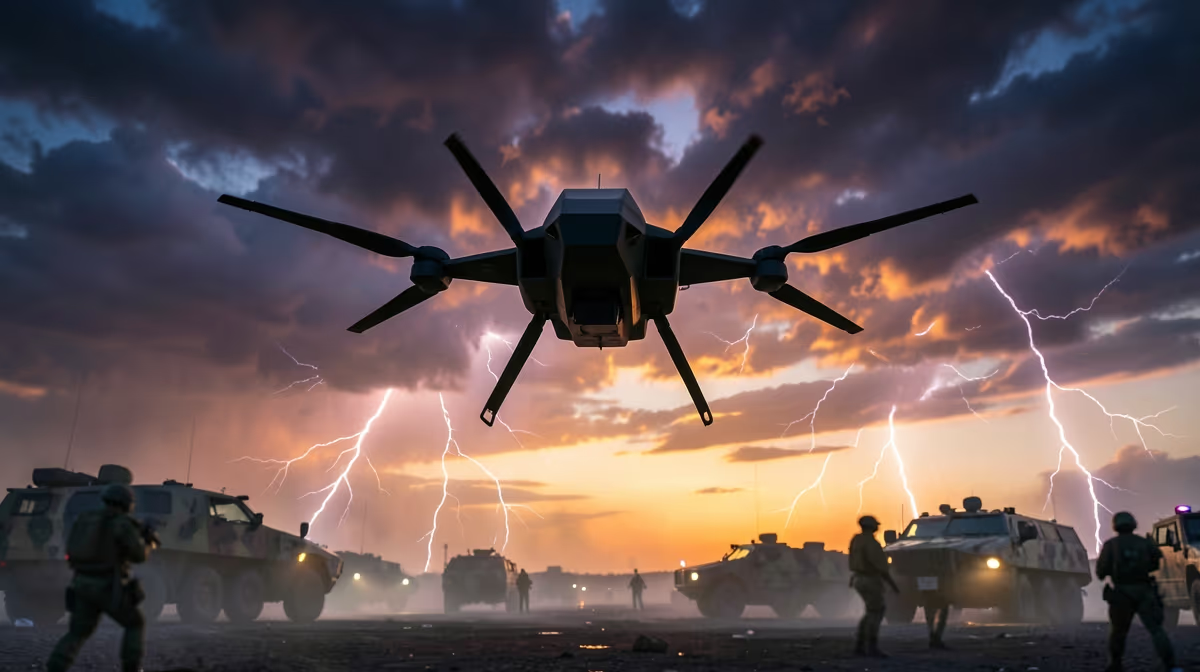
A silent revolution is unfolding in the skies above modern conflict zones, permanently dismantling the long-held military doctrines of air superiority and traditional power projection. The landscape of global conflict is shifting rapidly as drone warfare becomes a central pillar of military strategy, forcing nations to reconsider how they protect their borders and execute precision strikes in an era of unprecedented technological disruption.
What Happened
Global military reliance on unmanned aerial systems has reached an unprecedented scale in 2024, fundamentally transforming tactical warfare in regions ranging from Ukraine to the Middle East. As nations prioritize low-cost, high-precision drone technology over traditional heavy munitions, the proliferation of commercial and military-grade platforms has democratized access to strike capabilities. Both state actors and non-state groups now conduct reconnaissance and kinetic operations at a fraction of the cost required for manned aircraft.
This shift has compelled major global powers to accelerate the development of sophisticated counter-UAS technologies, including directed-energy weapons and electronic jamming suites. In the ongoing conflict in Ukraine, the integration of first-person view drones has turned the battlefield into a high-density theater of sensor-driven warfare. Persistent surveillance and rapid-response strikes have become the standard, a trend mirrored in the Red Sea and across the Levant, where inexpensive loitering munitions are increasingly used to challenge sophisticated naval and air defense networks. Alongside advancements like the Storm Shadow missile, these systems are redefining how nations execute long-range engagement.
Key Facts
Drones are unmanned aerial vehicles, often referred to as UAVs, utilized for military operations. They can be controlled remotely by operators located thousands of miles away or fly autonomously using pre-programmed software. Historically, these systems were developed for mid-20th-century reconnaissance, but their use as weapons escalated dramatically after 2001, when the United States began utilizing Predator and Reaper drones for counter-terrorism operations.
Current technological capabilities range from small, handheld scouting devices to large, jet-sized aircraft capable of carrying heavy missiles. These systems can stay airborne for many hours, providing constant surveillance over a target area. Because they do not place a human pilot at risk and are significantly cheaper to deploy than traditional fighter jets, they have become a preferred tool for projecting military power. However, the move toward autonomous drone systems—those that operate without constant human input—remains a growing area of concern for international regulation and military ethics.
Why It Matters
The rise of drone warfare is fundamentally changing how countries engage in conflict by lowering the barrier to entry for military intervention. While these platforms protect the lives of soldiers by keeping them away from the immediate front lines, the implications for global security are profound. There is mounting concern regarding the risk of civilian casualties and the potential for invisible, perpetual conflicts, often described as forever wars.
For civilians living in active combat zones, the presence of these systems creates a persistent psychological burden. The ability to monitor areas indefinitely inflicts chronic stress and paralysis, regardless of whether a kinetic strike occurs. Furthermore, the lack of clear accountability when strikes go wrong remains a significant issue for international humanitarian law. Businesses and defense logistics sectors are also feeling the impact, as the shift toward software-defined hardware and agile, low-cost platforms disrupts the traditional military-industrial complex monopoly.
Expert Analysis
The root cause of this transition is the asymmetry of the cost-benefit analysis in modern power projection. Low-cost, expendable platforms are effectively negating the utility of expensive, high-value conventional assets. As Dr. Marcus Hill, a defense analyst at the Global Security Institute, noted, we are witnessing a paradigm shift where the cost-exchange ratio heavily favors the attacker, forcing militaries to rethink the very nature of air superiority.
This evolution finds a striking historical parallel in the invention of the crossbow during the Middle Ages, which allowed peasant infantry to bypass the armor and social status of the aristocratic knightly class. Today, the democratization of precision strike capabilities is similarly destabilizing regional balances of power by providing middle powers and non-state actors with strategic depth previously reserved for superpowers. The movement toward autonomous swarming represents the current cutting edge of this transition, marking the total commoditization of aerial attrition in large-scale state conflicts.
Political And Geopolitical Implications
The political angle is defined by the erosion of democratic accountability. By conducting lethal operations without deploying domestic personnel, nations are often able to bypass traditional legislative war powers. Geopolitically, the deployment of these systems provides non-state actors and middle powers with engagement capabilities that were once exclusive to global superpowers, complicating the regional security environment.
International regulatory frameworks are currently struggling to keep pace with these advancements. While the United Nations has held multiple sessions regarding the regulation of Lethal Autonomous Weapons Systems, a legally binding international treaty has yet to be adopted. As nations like the United States, China, Russia, Iran, and Turkey continue to lead in deployment, the risk of regional escalation and the proliferation of drone technology to non-state actors remains a central concern for global security planners.
What Happens Next
In the next 24 hours, experts anticipate an increased deployment of first-person view drones in active conflict zones, particularly along the Russia-Ukraine front line, accompanied by the activation of heightened electronic warfare countermeasures. Within the next 72 hours, there is likely to be an acceleration of tactical integration regarding AI-enabled autonomous swarm technology in clandestine field testing. This is expected to coincide with rising geopolitical tensions regarding the proliferation of these platforms.
Looking toward the broader future, the prevailing trend suggests a rapid shift toward low-cost, expendable drone swarms that render traditional, expensive air defense assets increasingly vulnerable. A best-case scenario involves the development of international consensus on ethical frameworks and restrictive export controls, which could limit the access of non-state actors to weaponized platforms. Conversely, a worst-case scenario involves the uncontrolled escalation of regional conflicts, accidental military engagements, and the potential for widespread disruption to commercial aviation as AI-driven lethal drones become more pervasive.
Frequently Asked Questions
How are drones changing the nature of warfare?
A: Drones are transforming warfare by enabling precision strikes from long distances while significantly reducing the risk to human pilots. They also provide persistent surveillance capabilities, which shifts the battlefield dynamic toward asymmetrical conflicts where cheaper technology can challenge traditional military assets.
What is the primary role of military drones?
A: Military drones are primarily used for intelligence, surveillance, and reconnaissance missions to gather real-time data on enemy movements. Additionally, they are increasingly used for direct combat operations, including targeted strikes and electronic warfare against adversaries.
Are drones in war considered ethical?
A: The ethics of drone warfare are highly debated, centering on concerns regarding accountability, civilian casualties, and the psychological impact of remote-controlled killing. Proponents argue that drones reduce friendly casualties and offer more precision, while critics emphasize the lowering of the threshold for entering into armed conflicts.
Can drones be hacked during combat?
A: Yes, military drones are susceptible to various cybersecurity threats, including signal jamming, GPS spoofing, and unauthorized remote hijacking. Militaries invest heavily in encrypted communication and anti-jamming technologies to protect their unmanned aerial vehicles from being controlled or intercepted by adversaries.
What countries are the leading users of drone technology?
A: The United States, China, and Israel are currently the world leaders in the development and deployment of military drone technology. Other nations, such as Turkey and Iran, have also become significant players by successfully utilizing their domestically produced drones in regional conflicts.
How does drone warfare impact civilian populations?
A: Drone warfare can cause significant psychological distress for civilian populations living under constant surveillance, leading to a permanent state of fear. Furthermore, even with advanced targeting technology, drone strikes still carry the risk of collateral damage and civilian deaths, which often complicates international humanitarian law and humanitarian efforts.
Conclusion
The rapid integration of autonomous and semi-autonomous aerial systems into military operations marks a fundamental shift in the global defense landscape. As drone warfare continues to render traditional, high-cost defensive assets increasingly vulnerable, major powers and international bodies are being forced to grapple with the strategic, ethical, and legal consequences of this technological proliferation. While the benefits of increased precision and reduced personnel risk are clear, the risks of escalation and the loss of traditional accountability structures remain significant. Future developments will likely center on the evolution of counter-UAS capabilities and the ongoing efforts to establish international frameworks to govern the use of increasingly autonomous lethal systems.


