
Drone Warfare Evolution Triggers Major Shift in UK Defense Strategy
Introduction
The silent hum of rotors over a battlefield has become the defining sound of a new era in global defense, signaling a shift where human presence is no longer the primary requirement for kinetic engagement. The rapid advancement of military technology has shifted the global landscape, with drone warfare becoming a central pillar in contemporary asymmetric conflict strategies that challenge the very foundations of traditional air defense systems.
What Happened
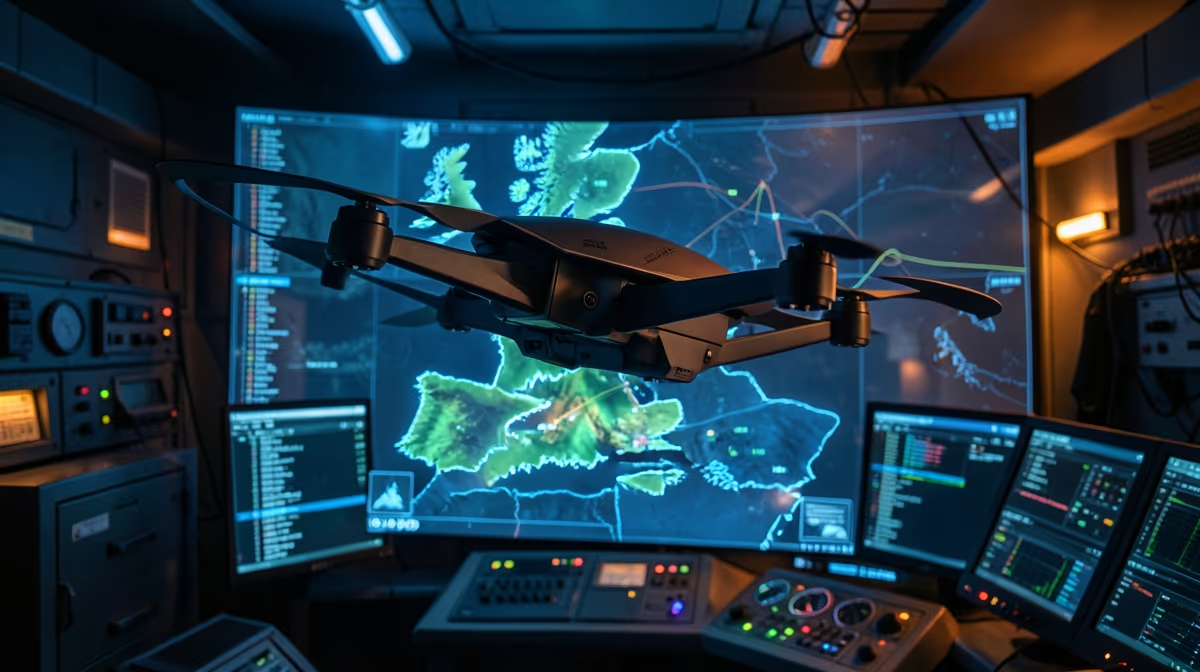
The United Kingdom is accelerating the integration of advanced drone technology into its armed forces as part of the 2024 Integrated Review Refresh, shifting focus toward autonomous swarm capabilities to counter evolving threats in European and global theaters. The Ministry of Defence has intensified its investment in the Dragonfly program and other uncrewed aerial vehicle projects, aiming to provide soldiers with persistent surveillance and precision strike capabilities. This strategic pivot follows lessons learned from the conflict in Ukraine, where affordable, mass-produced drones have fundamentally altered battlefield dynamics and the efficacy of traditional armored assets.
Industry leaders and defense officials are currently testing integrated combat systems that allow for human-in-the-loop operations. These systems are designed to operate in contested electromagnetic environments, ensuring that the UK maintains a technological edge against near-peer adversaries while adhering to stringent legal frameworks regarding autonomous targeting. Despite the rapid advancements, the procurement process faces scrutiny from parliamentary defense committees regarding supply chain resilience and the ethical implications of AI-driven weaponry. The government maintains that all lethal autonomous systems remain under strict sovereign control, emphasizing a human-in-the-loop requirement for all kinetic engagements.
Key Facts
Drone warfare involves using remotely piloted aircraft to conduct surveillance or launch strikes without putting a human pilot in direct physical danger. These machines, often called Unmanned Aerial Vehicles, are operated by personnel located hundreds or thousands of miles away from the target area, utilizing satellite links to control their movement and weapons systems in real time.
The UK operates the MQ-9 Reaper drone fleet for surveillance and strike missions, with operators often working from bases like RAF Waddington. Drones are used for intelligence, surveillance, and reconnaissance as well as direct action. The Ministry of Defence maintains strict legal guidelines, known as Rules of Engagement, for drone operations. Furthermore, the technology is rapidly evolving toward autonomous systems that can make tactical decisions without constant human input. The government has officially confirmed the transition toward high-volume, low-cost drone procurement to complement high-end assets, while the finalize regulatory framework governing the deployment of fully autonomous lethal systems remains subject to ongoing legislative review and international treaty discussions.
Why It Matters
The rise of drone warfare is fundamentally changing how the UK conducts its military operations, shifting the risk away from service personnel while expanding the reach and duration of international interventions. This shift creates complex legal and moral challenges, as the psychological distance of remote warfare can lower the political threshold for engaging in conflict, necessitating a constant public discussion about accountability and international law. This transition affects British military personnel, government policymakers, citizens in active conflict zones where UK drones operate, and international human rights organizations monitoring global military conduct. The normalization of these systems impacts national security infrastructure, commercial aviation safety, and the broader defense manufacturing sector.
Expert Analysis
The root cause of this transition is the strategic necessity to maintain a technological edge and force projection while minimizing direct troop casualties in an era of asymmetric warfare. Historically, this mirrors the development of strategic long-range bombing in the 1920s and 30s, which redefined British imperial reach and pre-war deterrence strategies. Analysts note that the current strategy is driven by a symbiotic dependency between the Ministry of Defence and private defense contractors, which fuels industrial exports and domestic research and development. The normalization of remote, automated warfare effectively lowers the threshold of conflict, making it legally and ethically easier for the executive branch to initiate kinetic operations without extensive parliamentary oversight or public deliberation.
Political And Geopolitical Implications
The UK government prioritizes the Global Britain framework, utilizing unmanned systems to maintain influence in regional theaters like the Middle East and Eastern Europe without triggering domestic political backlash associated with high-risk deployments. Integration of British drone capabilities into NATO frameworks strengthens the UK's position as the primary European technological partner for the United States, effectively containing Russian and Iranian regional influence. Defense Secretary John Healey has stated that the modernization of our drone fleet is not merely an enhancement but an operational necessity to ensure our forces can dominate in an increasingly complex and contested battlespace.
What Happens Next
In the next 24 hours, the sector expects increased Ministry of Defence procurement announcements and potential regulatory updates regarding counter-UAS technology deployment in civilian airspaces. Within 72 hours, observers anticipate parliamentary discussions on drone oversight and accelerated investment in the UK's DragonFire laser directed energy weapon systems. Experts predict the UK will prioritize the integration of AI-driven swarming defense systems to mitigate asymmetrical threats from non-state actors. While the best-case scenario involves the rapid deployment of non-kinetic countermeasures resulting in a safer airspace with minimal disruption to commercial flights, the worst-case scenario warns that a successful drone incursion at a critical national infrastructure site could lead to prolonged aviation grounding and a major public security crisis.
Frequently Asked Questions
What is drone warfare and how does it work?
Drone warfare involves the use of remotely piloted or autonomous unmanned aerial vehicles to conduct military operations such as surveillance, reconnaissance, and precision strikes. These aircraft are controlled by operators from a distance or programmed to operate independently, allowing military forces to engage targets without putting pilots in immediate physical danger.
Are drones legal in modern warfare?
The use of drones in warfare is generally considered legal under international humanitarian law, provided that their deployment adheres to the principles of distinction, proportionality, and military necessity. However, their use remains a subject of intense global debate regarding accountability, the potential for collateral damage, and the ethical implications of automated lethal force.
Which countries currently use drones for military purposes?
Many countries have integrated drone technology into their military arsenals, including major powers like the United States, China, Russia, and the United Kingdom. Additionally, a growing number of smaller nations and non-state actors have acquired various types of UAVs, significantly altering the landscape of contemporary conflicts worldwide.
What are the advantages of using drones in combat?
Drones offer several strategic advantages, most notably the ability to gather real-time intelligence and conduct surgical strikes without risking the lives of human personnel. They are also significantly more cost-effective to operate and maintain compared to traditional crewed fighter aircraft, allowing for prolonged surveillance missions.
What are the primary criticisms of drone warfare?
Critics often argue that drone warfare lowers the threshold for entering armed conflicts, as it reduces the political risk of casualties among military personnel. There are also significant concerns regarding the psychological impact on civilian populations living under constant aerial surveillance and the difficulty of ensuring transparency and accountability for unintended civilian deaths.
How has drone technology changed the nature of war?
Drone technology has transformed modern conflict by shifting the focus toward remote engagement and asymmetric warfare, making traditional defensive systems less effective. This shift has democratized air superiority for smaller nations and groups, creating new challenges for international security and conventional military strategies.
Conclusion
The rapid integration of drone technology into the UK's defense architecture marks a pivotal moment in the evolution of military strategy. By moving toward a hybrid fleet of high-end assets and cost-effective, swarming unmanned systems, the Ministry of Defence is attempting to balance technological superiority with the realities of modern asymmetric threats. As the UK navigates the procurement of platforms like the MQ-9B Protector and explores counter-UAS technologies, the ongoing parliamentary debates regarding ethical oversight and supply chain resilience remain essential. The future of this sector will be defined by the ability to manage the delicate equilibrium between operational reach, international legal compliance, and public security in an increasingly contested global airspace.
" }


