
Gatwick Airport Cancelled Flights Reveal Deep Fragility in UK Travel
Introduction
A silent crisis in the air traffic control tower has triggered a cascading failure across the UK aviation network, leaving thousands of passengers stranded and prompting urgent questions about the resilience of modern transport infrastructure. As Gatwick airport cancelled flights today, the disruption has served as a stark reminder of how interconnected and fragile our global transit systems have become.
What Happened
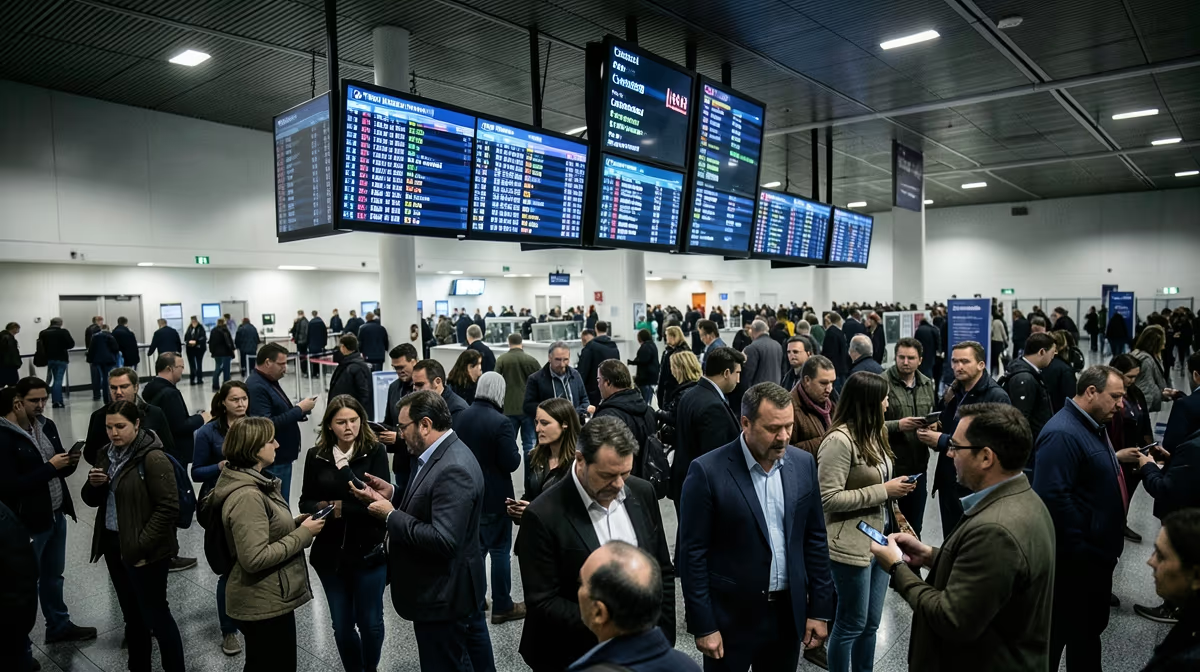
The disruption began early Tuesday morning as the airport struggled to manage the volume of air traffic with reduced personnel. Gatwick officials confirmed that a significant staffing shortfall in the control tower is directly impacting the daily flight schedule, with both arrivals and departures facing rolling cancellations throughout the day. This operational constraint has hamstrung the airport’s ability to handle its usual volume of planes, resulting in significant congestion.
Several major carriers, including easyJet and British Airways, have reported substantial operational difficulties as a result of the restrictions imposed on the airport's airspace. Passengers have been left to navigate long queues at terminal help desks, with many being advised to rebook flights for later in the week or seek alternative travel arrangements. Airport authorities have issued an apology for the inconvenience, citing an unprecedented level of sickness within the control tower teams. While operations are expected to resume a normal rhythm eventually, experts warn that the knock-on effects may impact flight schedules across the wider European network for the remainder of the week.
Key Facts
A significant number of flights to and from Gatwick have been cancelled or delayed, impacting both domestic and international travelers. The primary cause has been identified as air traffic control staff shortages, which forced a reduction in flight capacity. Airlines remain responsible for notifying passengers about status changes, and travelers are strongly encouraged to check airline websites before heading to the terminal. Normal operations are expected to resume once the necessary staffing and scheduling adjustments are fully implemented by the relevant authorities.
Why It Matters
This disruption matters because Gatwick is one of the busiest transport hubs in the United Kingdom, serving as a critical gateway for thousands of international and domestic travelers every day. When mass cancellations occur at such a scale, it creates a ripple effect that extends far beyond the tarmac. The situation leads to stranded passengers, increased pressure on alternative travel routes, and significant financial and emotional stress for those trying to reach their destinations. For the broader economy, these events highlight a systemic fragility in transport hubs that act as vital links in global supply chains, affecting regional tourism and the reliability of business travel.
Expert Analysis
The root cause of these disruptions points toward systemic critical infrastructure fragility. This is being exacerbated by a legacy air traffic control staffing crisis and the challenges of integrating outdated digital systems. While immediate concerns focus on staffing, analysts note that the industry is dealing with the consequences of historical operational limitations. There is also a notable parallel to the 2018 Gatwick drone incident, which previously exposed the lack of centralized emergency contingency planning for commercial airports. The current situation serves as an urgent case study in the necessity of robust resilience strategies to prevent routine operational hurdles from evolving into systemic gridlock.
Political And Geopolitical Implications
The situation has brought the tension between government privatization mandates and the regulatory oversight required to force investment in operational resilience into the public eye. Economically, the airport faces the fallout of significant losses in productivity and high compensation liabilities for airlines. Furthermore, the long-term erosion of the UK reputation as a reliable global transit hub is a primary concern for stakeholders. Geopolitically, the disruption to international logistics chains has the potential to impact post-Brexit trade flow and hinder diplomatic travel connectivity during critical European stability summits, highlighting the intersection between local staffing shortages and international mobility.
What Happens Next
The next 24 hours will be defined by an operational recovery phase, focusing on rebooking passengers and clearing the backlog of delayed flights. Minor disruptions are expected to continue due to staff scheduling and aircraft positioning. Over the next 72 hours, the industry expects a return to scheduled flight rotations. However, the root cause of the disruption will likely trigger increased scrutiny from aviation regulators, who may enforce stricter compliance audits on ground handling and staffing contingency plans. In the best-case scenario, a smooth recovery and a proactive communication strategy will satisfy passengers and regulators alike. Conversely, a worst-case scenario involves prolonged technical or staffing issues extending the disruption into the weekend, which would likely lead to widespread passenger unrest and potential legal challenges regarding compensation mandates.
Frequently Asked Questions
Q: How do I check if my flight from Gatwick is cancelled?
A: You can check your flight status by visiting the official London Gatwick Airport website and using the live flight tracker. Additionally, it is recommended to monitor your airline's mobile app or website for real-time notifications regarding any schedule changes.
Q: What should I do if my Gatwick flight is cancelled?
A: If your flight is cancelled, contact your airline immediately to discuss rebooking options or a refund. Under UK law, airlines are generally required to provide assistance, such as refreshments or accommodation if you are delayed overnight, depending on the circumstances of the cancellation.
Q: Are Gatwick flights currently being cancelled?
A: Flight cancellations at Gatwick can occur due to various reasons, including air traffic control restrictions, adverse weather, or technical issues. Always check the live arrivals and departures board on the Gatwick Airport website for the most current information about specific flights.
Q: Am I entitled to compensation for a cancelled Gatwick flight?
A: You may be entitled to compensation if the cancellation was within the airline's control and you were notified less than 14 days before departure. However, compensation is not mandatory if the disruption was caused by extraordinary circumstances such as extreme weather or industrial action.
Q: Who do I contact if my flight from Gatwick is cancelled?
A: You should contact your airline directly, as they are responsible for managing your booking, rebooking, and compensation claims. Gatwick Airport staff can provide general information, but specific flight issues must be handled by the carrier you booked with.
Q: Does Gatwick offer hotels if my flight is cancelled?
A: If your flight is cancelled and you face an overnight delay, the airline is responsible for providing you with hotel accommodation and transport. You should speak with a representative from your airline at the airport for assistance with these arrangements.
Conclusion
The ongoing situation at Gatwick serves as a reminder of the delicate balance required to maintain complex transportation infrastructure. While immediate efforts are centered on clearing the backlog of flights and assisting stranded passengers, the event has prompted a broader conversation regarding the need for long-term investment in staff resilience and digital modernization. As the airport transitions into its recovery phase, the focus for both travelers and stakeholders must remain on verified updates from official channels and direct communication with individual airlines. For now, the priority remains the stabilization of flight schedules and the restoration of normal, reliable travel operations.


.webp)

.webp)

