
Heat Dome Systems Are Trapping Extreme Temperatures Across the US
Introduction
The atmospheric ceiling over our heads is hardening, turning once-routine summer sunshine into a persistent, high-pressure trap that refuses to break. When temperatures soar to dangerous levels, many people ask what is a heat dome and why these events are becoming more frequent as part of changing climate change patterns.
What Happened
A heat dome is a meteorological phenomenon that occurs when a persistent high-pressure ridge parks itself over a large geographic area. This system acts effectively as a lid on a pot, trapping hot ocean air and forcing it downward toward the surface. As this trapped air descends, it undergoes compression, which increases its temperature further and prevents the normal migration of cooler air masses or moisture-bearing clouds.
The process often begins with significant shifts in sea surface temperatures, particularly in the Pacific. As these waters warm, they create a temperature gradient that pushes large volumes of warm air into the higher atmosphere. Once caught within the stagnant circulation of a high-pressure system, this air remains locked in place for days or even weeks. These events represent a significant shift in weather stability, with history noting the 1936 North American heat wave as an early example of the systemic failure such conditions can cause. By the 2021 Pacific Northwest heat dome, the phenomenon had cemented its status as a critical infrastructure threat to regions previously considered climate-resilient.
Key Facts
The mechanics of these events are rooted in high-pressure systems that cap the atmosphere, preventing the upward movement of air. This process, known as adiabatic warming, occurs as high pressure forces air downward, compressing it and raising ground-level temperatures. Because these systems are stationary, they block standard weather patterns, preventing clouds and storms from entering the region and allowing the sun to bake the land continuously.
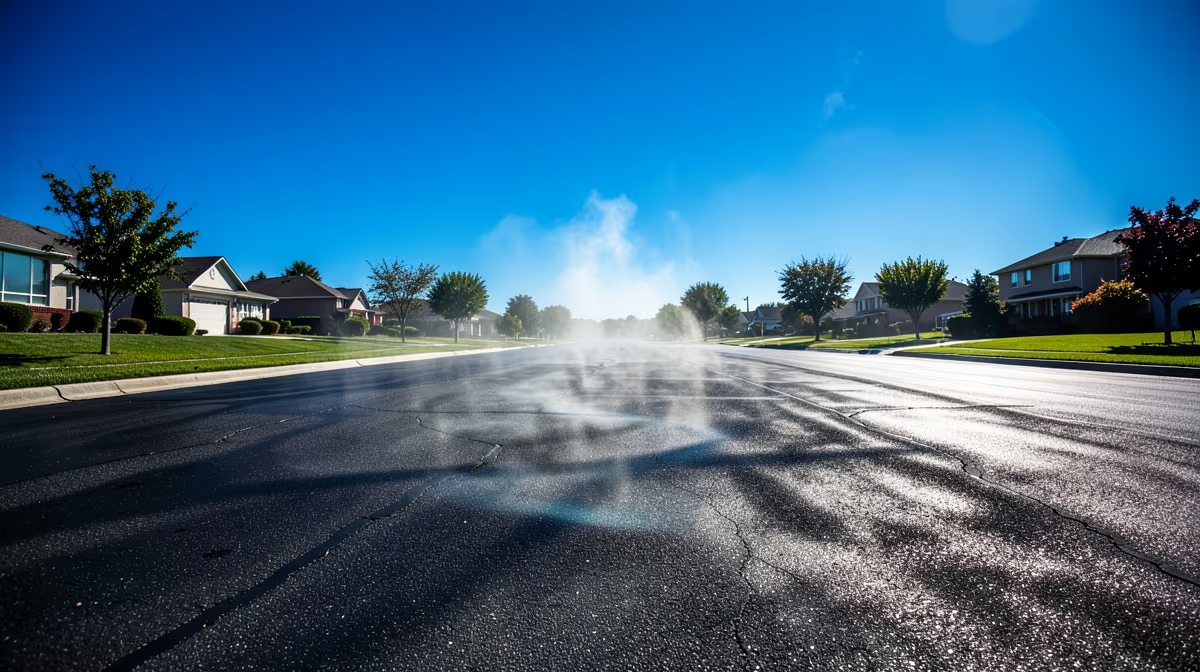
The ground itself becomes an active participant in this cycle. As the soil dries out due to the lack of precipitation and intense solar radiation, it loses its ability to cool the environment through evaporation. This creates a dangerous feedback loop where the ground absorbs more heat, further intensifying the air temperature. Furthermore, urban areas, characterized as urban heat islands, exacerbate these conditions; concrete and asphalt structures absorb solar energy during the daylight hours and slowly release it at night, effectively eliminating the possibility of natural overnight cooling.
Why It Matters
The primary public health threat posed by a heat dome is the total absence of nighttime relief. Human biology requires a period of recovery during lower nighttime temperatures, but in the grip of a stagnant high-pressure system, the body is denied this respite. This prolonged heat stress significantly elevates the risk of life-threatening conditions such as heat exhaustion and heat exhaustion and heatstroke. Vulnerable groups, including the elderly, children, outdoor workers, and those living in residences without reliable air conditioning, face the highest risk.
Beyond the immediate health concerns, these events place catastrophic strain on public infrastructure. As cooling demand surges simultaneously across entire regions, power grids are pushed to their limits, raising the specter of rolling brownouts during the most extreme temperature peaks. Economically, this creates a ripple effect: utility costs spike, outdoor labor productivity plummets, and supply chains face disruption. Agricultural output, sensitive to both heat and the lack of moisture, becomes a volatile variable in global commodity pricing, highlighting how atmospheric blocking translates directly into economic hardship.
Expert Analysis
The root cause of these events is a persistent high-pressure ridge creating a lid in the atmosphere, trapping hot air in a stagnant circulation pattern while compressing it through adiabatic warming. Analysts suggest that the increasing frequency and intensity of these events is forcing a re-evaluation of how societies handle climate-resilient infrastructure.
Historically, heat domes were isolated meteorological anomalies, but the current climate trajectory shows them becoming a routine occurrence. The economic disparity in cooling access is creating what some analysts describe as a thermal class system, where the ability to survive extreme temperatures is increasingly dictated by socio-economic standing. This divergence, coupled with the long-term degradation of urban heat islands, elevates the risk of domestic civil unrest. The inability of cities to maintain standard cooling levels during these events acts as a stressor on internal migration patterns and regional stability, complicating long-term urban planning and public health preparedness.
Political And Geopolitical Implications
The intensification of heat domes has fundamentally politicized infrastructure resilience. Debates are now emerging regarding the balance between federal climate-mitigation funding and the autonomy of local utilities. Specifically, there is significant friction over who bears the cost of grid hardening and how much authority municipalities should have when declaring emergency powers during weather-driven energy crises.
Geopolitically, the impact of frequent extreme heat in the United States extends to energy security and the stability of trade corridors. When a major economy faces prolonged disruptions to its domestic power grid and labor force, the resulting volatility influences international markets. The degradation of energy security due to extreme weather forces a shift in how nations view their internal stability, as the failure to protect the population from extreme heat becomes a benchmark for governmental effectiveness and regional resilience.
What Happens Next
In the next 24 hours, meteorological agencies are expected to expand excessive heat warnings as the high-pressure ridge stabilizes. This will likely result in record-breaking diurnal temperature peaks and dangerous overnight low temperatures that fail to provide relief to the affected populations.
Looking toward the next 72 hours, the heat dome is anticipated to expand its geographic footprint. This expansion will place severe pressure on grid operators, such as ERCOT and PJM, as residential and industrial cooling demand reaches seasonal highs. While the best-case scenario involves a breakdown in the atmospheric ridge that allows for a cold front or moisture-rich maritime air to penetrate the region, the worst-case scenario entails further intensification. In the worst-case, localized power grid failure could occur, leading to significant heat-related mortality rates and widespread infrastructure degradation due to thermal expansion. Forecasters anticipate the dome to persist for the immediate future due to the stagnant nature of the atmospheric block.
Frequently Asked Questions
Q: What is a heat dome?
A: A heat dome occurs when the atmosphere traps hot ocean air like a lid or cap on a pot. This creates a persistent high-pressure system that prevents heat from escaping, leading to dangerously high temperatures over a specific region.
Q: How does a heat dome form?
A: Heat domes form when strong high-pressure atmospheric conditions combine with influences from La Niña or other climate patterns. This high pressure forces air downward, which compresses and heats up as it sinks, creating an intense, long-lasting heatwave.
Q: How long do heat domes typically last?
A: Heat domes are known for their persistence and can remain over a region for several days to several weeks. Because the high-pressure system is effectively stationary, it blocks weather patterns that would normally bring cooler air, prolonging the extreme heat.
Q: Are heat domes dangerous?
A: Yes, heat domes are considered dangerous weather events because the extreme, prolonged temperatures can lead to heat exhaustion and heatstroke. They also increase the risk of wildfires and can place significant strain on power grids due to high air conditioning demand.
Q: What is the difference between a heatwave and a heat dome?
A: A heatwave is a general term for a period of abnormally hot weather, while a heat dome is the specific meteorological mechanism that causes one. A heat dome is essentially the high-pressure engine that drives and sustains a severe heatwave.
Q: Does climate change make heat domes worse?
A: Research suggests that climate change is increasing the frequency and intensity of heat domes globally. As average global temperatures rise, these high-pressure systems are able to trap more heat, leading to more extreme temperature records.
Conclusion
Heat domes are now a scientifically documented and routine component of our modern climate, driven by stagnant, high-pressure atmospheric blocking patterns. The transition from rare weather anomaly to recurring infrastructure threat necessitates a permanent upgrade to municipal emergency protocols and grid capacity. As the scientific community continues to study the direct links between human-caused climate change and the intensity of these ridges, the focus remains on the immediate risks to public health and the socio-economic disparities that exacerbate heat-related vulnerabilities. Protecting the most at-risk populations and ensuring the stability of critical energy infrastructure remain the most urgent priorities in the face of these enduring atmospheric events.


