
Iran Nuclear Deal Standoff Reaches a New and Dangerous Inflection Point
Introduction
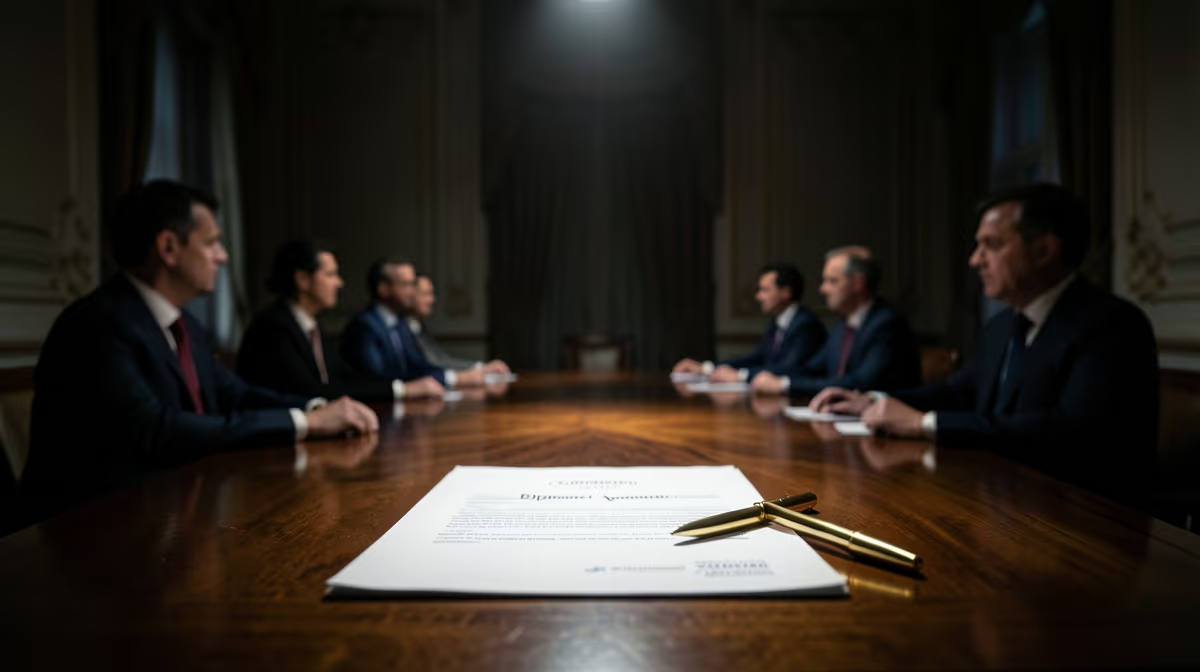
The delicate architecture of international nuclear non-proliferation is currently facing its most severe stress test in over a decade as diplomatic channels remain largely shuttered. The Iran deal remains a pivotal focus for global security as diplomatic efforts continue to navigate the complexities of sanctions relief and regional stability.
What Happened
The Biden administration and Iranian officials remain in a diplomatic stalemate regarding the potential revival of the 2015 Joint Comprehensive Plan of Action, known as the JCPOA, as U.S. officials shift focus toward secondary sanctions and regional containment strategies. Despite sporadic back-channel communications, the United States has signaled that a return to the 2015 agreement is currently off the table. Washington cites Iran’s continued expansion of its nuclear program—specifically the production of 60% enriched uranium—and Tehran’s alleged military support for Russia’s war in Ukraine as primary factors that have rendered the original framework obsolete.
Domestic political pressure in Washington has further complicated prospects for a new deal. A bipartisan coalition in Congress continues to demand stricter oversight and a broader scope that addresses Iran’s ballistic missile program and regional proxy activities, conditions that Tehran has consistently rejected as violations of its sovereignty. Meanwhile, the International Atomic Energy Agency continues to report limited access to Iranian nuclear sites. The agency has expressed ongoing concerns regarding the lack of transparency, warning that the breakout time required for Iran to produce enough fissile material for a nuclear weapon has reached historical lows, though no definitive evidence suggests a weaponization program is currently underway.
Key Facts
The 2015 agreement was signed by Iran, the U.S., UK, France, Germany, Russia, and China to limit Iran’s nuclear program in exchange for economic sanctions relief. The United States withdrew from the deal in 2018 under the Trump administration, leading to a policy of maximum pressure. Iran has since increased its uranium enrichment levels to 60%, significantly higher than the 3.67% limit set by the original agreement. The deal included a rigorous monitoring system led by the International Atomic Energy Agency, but talks to revive the agreement stalled in late 2022 following disagreements over agency investigations into undeclared sites. The Biden administration has now formally deprioritized formal negotiations for a return to the 2015 JCPOA in favor of targeted sanctions.
Why It Matters
The status of the Iran deal carries massive global consequences because it directly impacts regional stability in the Middle East and the global effort to prevent nuclear proliferation. If Iran were to obtain a nuclear weapon, it could trigger an arms race in the region, drawing other nations into a cycle of hostility. Beyond regional security, ongoing tensions affect global oil markets and international shipping lanes, which can impact the cost of goods and economic stability for everyday consumers. The situation also affects the Iranian citizens who face ongoing economic hardship due to the impact of international sanctions on their national economy.
Expert Analysis
The root cause of the current impasse lies in the structural friction between Iran's regional hegemony ambitions and the U.S. commitment to maintain the nuclear non-proliferation architecture in the Middle East. This issue serves as a domestic wedge issue in the United States, where the JCPOA is often treated as a litmus test for party loyalty, preventing a durable, bipartisan consensus regardless of the geopolitical cost. From an economic perspective, the volatility of global energy prices is exacerbated by the impact of extraterritorial sanctions on third-party nations, which increases pressure on the U.S. dollar as the primary vehicle for global trade enforcement. A hidden factor involves internal succession dynamics within the Iranian clerical establishment, which prioritize survival and ideological purity over short-term economic relief, thereby complicating any Western diplomatic calculus.
Political And Geopolitical Implications
The geopolitical landscape is shifting toward a multipolar order where Iran leverages deepening strategic partnerships with Russia and China to insulate itself from U.S.-led containment strategies. This environment mirrors the 1970s detente process with the Soviet Union, which similarly struggled to balance arms control objectives with global strategic rivalry. For the U.S. government, the challenge is maintaining its foreign policy agenda while managing the concerns of Middle Eastern nations that remain wary of regional security risks. The current state of gray zone limbo is characterized by failed back-channel diplomacy, heightened nuclear thresholds, and shifting regional alliances that leave little room for conventional diplomatic maneuvering.
What Happens Next
Over the next 24 hours, expect increased diplomatic posturing and formal statements from the White House regarding regional containment strategies. Within the next 72 hours, observers should anticipate enhanced monitoring of Iranian enrichment activities and the potential imposition of new targeted financial sanctions by the U.S. Treasury. Expert predictions suggest the current stalemate will likely persist with neither side formally abandoning the JCPOA framework, opting instead for a no deal, no war status quo. The best-case scenario involves back-channel negotiations yielding a temporary de-escalation agreement that limits enrichment in exchange for restricted humanitarian trade access. Conversely, the worst-case scenario entails a total collapse of indirect negotiations, leading to the expiration of IAEA monitoring access and a significant escalation in regional proxy conflicts.
Frequently Asked Questions
Q: What is the Iran nuclear deal?
A: The Iran nuclear deal, formally known as the Joint Comprehensive Plan of Action, is an agreement reached in 2015 between Iran and several world powers designed to limit Iran's nuclear program in exchange for the lifting of economic sanctions.
Q: Why did the US withdraw from the Iran nuclear deal?
A: In 2018, the Trump administration withdrew the United States from the JCPOA, arguing that the deal was flawed and failed to address Iran's ballistic missile program or its regional activities, subsequently reimposing heavy economic sanctions.
Q: Is the Iran nuclear deal still in effect?
A: The agreement is in a state of suspended animation. While it technically exists, the U.S. is no longer a party to it, and Iran has breached several restrictions on uranium enrichment in response to the reimposition of sanctions.
Q: What are the main goals of the Iran deal?
A: The primary objective was to extend the time it would take for Iran to produce enough fissile material for a nuclear weapon by placing strict limits on enrichment levels and centrifuge numbers.
Q: Are there ongoing negotiations to revive the Iran nuclear deal?
A: Attempts to revive the deal have occurred periodically since 2021 through indirect talks, but these negotiations are currently at a stalemate due to unresolved disagreements between Washington and Tehran.
Q: How do sanctions affect the Iran nuclear deal?
A: Sanctions serve as a tool for international pressure and a key bargaining chip; for Iran, the lifting of sanctions was the central incentive for the deal, while the U.S. uses the threat of sanctions to influence Iranian behavior.
Conclusion
The stalemate surrounding the Iran nuclear deal reflects a deeper transformation in Middle Eastern power dynamics and global diplomatic priorities. While the Biden administration has deprioritized formal negotiations in favor of targeted sanctions, the underlying challenge of preventing nuclear proliferation while managing regional instability remains unresolved. As international monitors face limited transparency and regional proxy tensions persist, the path forward remains uncertain. The status quo of a no deal, no war environment highlights the difficulty of aligning international security goals with the complex domestic and geopolitical interests of the involved stakeholders. Moving forward, the effectiveness of U.S. maritime security coalitions and the evolution of international sanctions will likely define the next phase of this long-standing diplomatic impasse.


