
Israel US Iran War Escalation Risks Major Regional Destabilization
Introduction
A subtle but dangerous shift in the Middle East has moved the region from a long-standing shadow war into a period of direct military confrontation that risks broader destabilization. The escalating israel us iran war narrative has brought global attention to the fragile state of regional security in the Middle East, forcing international powers to scramble for containment strategies.
What Happened
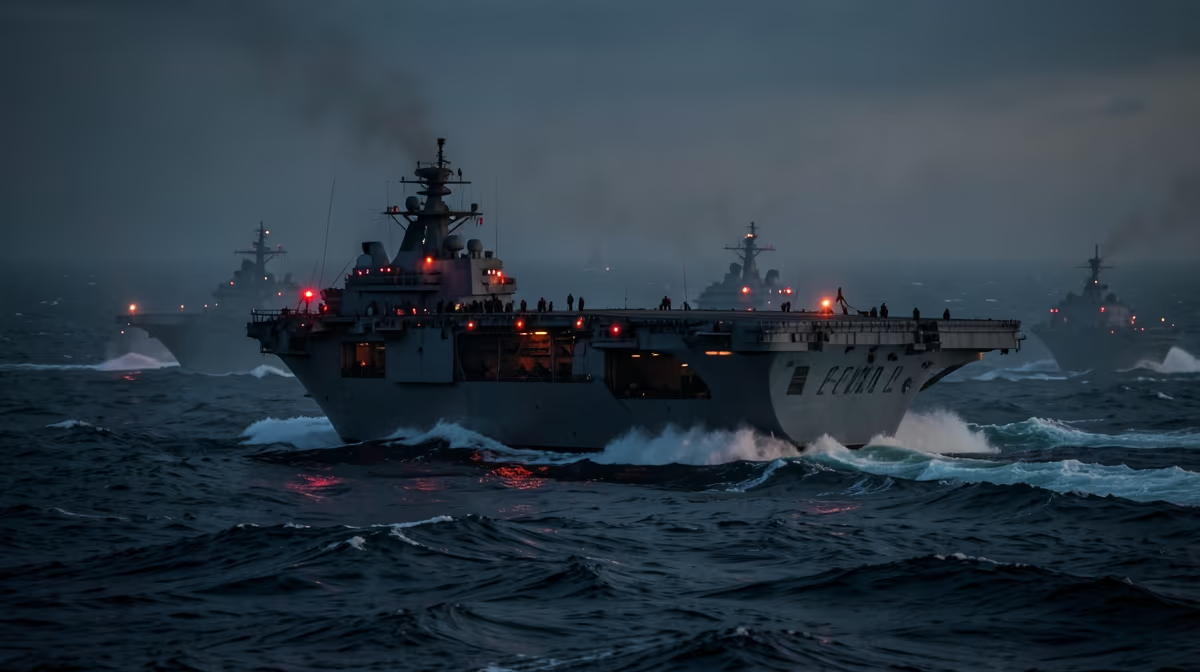
The Biden administration has announced the deployment of additional warships and fighter squadrons to the region, citing the need to protect American interests and provide defensive support to Israel. This move follows a series of direct and indirect confrontations involving Iranian Revolutionary Guard Corps-affiliated groups in Lebanon, Syria, and Yemen, which have drawn sharp warnings from Washington regarding the potential for an uncontrollable regional war. Israeli leadership has maintained that their military operations are focused on neutralizing threats to their northern border and preventing further destabilization by Tehran-backed forces. Meanwhile, diplomatic efforts are struggling to establish a containment framework, as both Iran and its network of regional partners continue to signal readiness for an asymmetric response should the intensity of airstrikes increase.
Key Facts
- Israel and Iran have moved from a shadow war to direct military confrontations.
- The United States maintains a significant military presence in the region to support Israel and deter further Iranian attacks, evidenced by the dispatch of carrier strike groups to the Eastern Mediterranean.
- Iran utilizes a network of regional allies, often referred to as the Axis of Resistance, to project power, while Israel continues a targeted military campaign against Hezbollah infrastructure in southern Lebanon.
- Global shipping companies have redirected vessels to avoid potential hazards in the Red Sea, and Iran has publicly warned that further Israeli military actions will be met with decisive responses.
Why It Matters
The potential for a direct war between these nations holds severe implications for the global economy. A conflict could cause a massive spike in global energy prices and disrupt international trade through critical maritime chokepoints like the Strait of Hormuz. For India, a stable Middle East is vital because millions of Indian citizens work there, and the region is a primary supplier of the energy required to fuel the nation's growing economy. Beyond these macro-economic concerns, the humanitarian crisis for civilians in Israel, Iran, Lebanon, and Gaza remains a central focus of international concern.
Expert Analysis
The root cause of this volatility lies in the structural struggle for regional hegemony, driven by the ideological clash between the Islamic Republic’s Axis of Resistance and the U.S.-Israel-Saudi security architecture. Analysts observe that this is further complicated by the transition from a unipolar American-led order to a fragmented multipolarity, where powers like Russia and China act as strategic backers of Tehran to challenge Western influence. A hidden angle in this conflict is the escalation of a gray zone cyber-kinetic war targeting critical infrastructure and supply chains, which remains largely unreported to prevent mass public panic. The situation mirrors the 1973 Yom Kippur War in terms of the fragility of regional alliances and the immediate necessity of an American airbridge for Israeli survival.
Political And Geopolitical Implications
Domestic political survival in Jerusalem and Washington, currently navigating sensitive election cycles and polarization, contrasts sharply with the regime consolidation strategies of Tehran. The geopolitical landscape is increasingly defined by this volatility, as the prospect of Iranian disruption in the Strait of Hormuz could trigger global stagflation. Diplomatic relations are currently strained, with U.S. Secretary of Defense Lloyd Austin stating that the U.S. remains committed to preventing a wider regional conflict while ensuring they have the capability to respond to any threat against forces or allies. Iranian Foreign Ministry officials have countered by blaming the U.S. and Israel for destabilizing the region through reckless military escalations.
What Happens Next
Over the next 24 hours, the region will likely see increased diplomatic backchannel communication between Washington and Tehran via intermediaries to prevent direct military escalation, alongside heightened intelligence monitoring of Iranian proxy movements. Within 72 hours, there is potential for targeted Israeli defensive maneuvers or cyber-operations if provocation occurs, likely accompanied by UN Security Council emergency consultations regarding regional stability. Experts predict a continued proxy-based shadow warfare with both sides attempting to avoid a full-scale direct conflict, though the risk of miscalculation remains high. The best-case scenario involves successful diplomatic de-escalation leading to a temporary ceasefire, while the worst-case scenario involves a direct military exchange that triggers a regional war and significant spikes in global energy costs.
Frequently Asked Questions
Is there a war between Israel, the US, and Iran?
Currently, there is no direct, full-scale war involving all three nations simultaneously. However, there is a long-standing pattern of indirect conflict, proxy engagements, and regional tensions involving Israel and Iran, with the United States providing significant military and diplomatic support to Israel.
Will the US join a war if Israel and Iran fight?
The United States maintains a strong security commitment to Israel and has historically deployed military assets to the region to deter attacks. While the U.S. aims to prevent a broader regional conflict, it has stated it would support Israel's right to defend itself if directly attacked by Iran.
What is the cause of tension between Israel and Iran?
The tension stems from Iran's ideological opposition to Israel, its support for regional proxy groups like Hezbollah and Hamas, and concerns over Iran's nuclear program. Israel views Iran's regional influence and military capabilities as an existential threat, leading to frequent covert and cyber operations between the two.
Could a conflict between Israel and Iran lead to World War 3?
While international experts monitor regional escalation closely, most analysts suggest that a localized conflict would not necessarily trigger a global war. However, a major escalation involving key global powers could destabilize energy markets and regional security, causing significant international concern.
What is the US stance on Iran's military actions?
The United States maintains a policy of containment regarding Iran, often imposing strict economic sanctions and strengthening its military presence in the Middle East. The U.S. frequently condemns Iran's support for militant groups and its missile programs, viewing these as destabilizing factors to regional peace.
How does the current Israel-Iran situation affect global security?
The ongoing tensions increase the risk of miscalculation, which could draw other regional powers and international allies into a wider conflict. This uncertainty impacts global oil prices, shipping lanes in the Persian Gulf, and the overall stability of diplomatic relations throughout the Middle East.
Conclusion
The situation in the Middle East remains highly volatile, characterized by a transition from shadow operations to direct military posturing. While international diplomatic efforts continue to push for de-escalation, the presence of increased U.S. naval assets and the persistence of cross-border fire indicate a fragile security environment. The immediate future will depend on the efficacy of back-channel communications and the ability of involved parties to prevent a miscalculation that could lead to broader regional consequences. Global observers and markets remain on high alert as this complex geopolitical situation continues to develop.
"


