
Ivory Coast Cocoa Crisis Puts Global Supply Chains at Serious Risk
Introduction
A West African nation stands at a dual crossroads, balancing the intense sporting passion of its citizens with the heavy responsibility of anchoring the global cocoa supply chain. As the global football community turns its eyes toward the upcoming tournament, the Ivory Coast national football team remains a focal point of discussion for fans tracking the World Cup 2026 qualification cycle. Beyond the pitch, the country, officially known as Cote d'Ivoire, is navigating a critical period of economic transition that mirrors its ambitious goals on the international stage.
What Happened
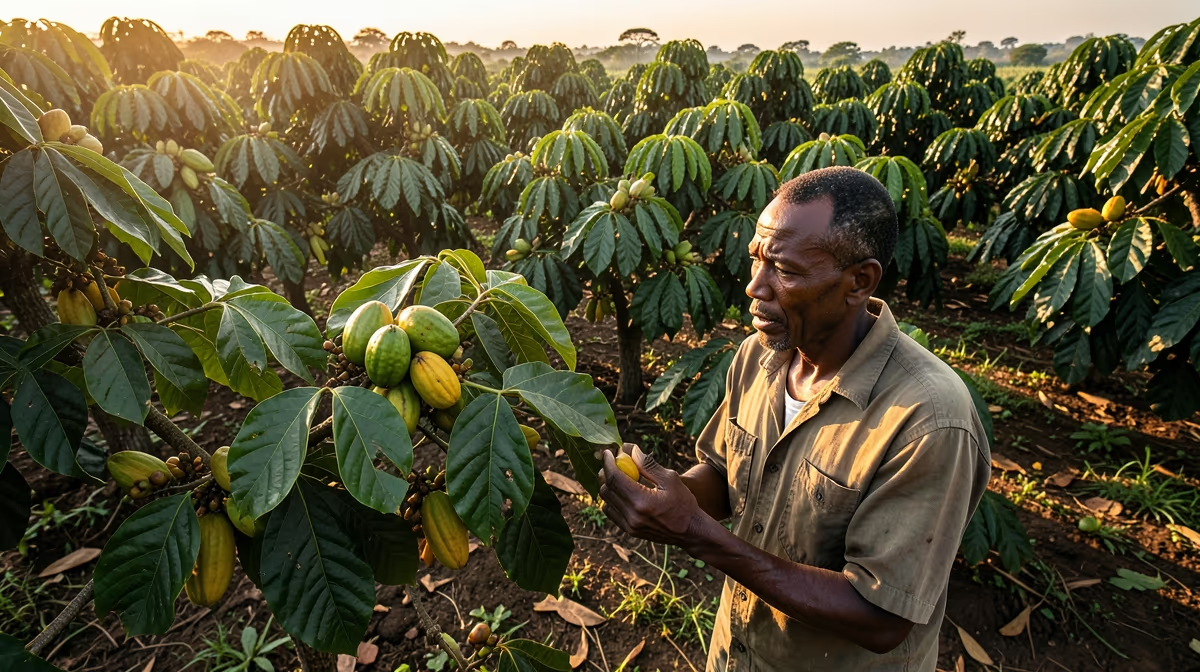
The Ivorian government has officially announced a national strategy to bolster the cocoa sector, aimed at mitigating the impacts of climate change and rising production costs for local farmers ahead of the 2024-2025 harvest season. Ivory Coast, the world's leading cocoa producer, is facing significant pressure as climate instability and plant diseases threaten annual yields. In response, the Coffee and Cocoa Council (CCC) has introduced new initiatives to modernize farming infrastructure and improve support mechanisms for smallholder cooperatives to ensure market stability. The regulatory body has confirmed it will maintain a strict oversight mechanism to ensure that the farmgate price remains competitive despite fluctuations in international commodity markets. This move is part of a broader economic roadmap designed to reduce poverty in rural areas while maintaining the country's dominance in the global chocolate supply chain. Economists note that while production levels remain critical for the national GDP, the transition toward more sustainable farming practices is essential for long-term viability. The government continues to seek international partnerships to improve traceability and ensure that cocoa exports meet evolving European Union environmental regulations.
Key Facts
The Ivory Coast is the world's largest producer and exporter of cocoa beans, an industry that accounts for approximately 15 percent of its national GDP. The country features two capital cities, with Yamoussoukro serving as the political center while Abidjan remains the economic hub. The official language is French, though dozens of native languages are also widely spoken, reflecting a diverse ethnic composition. As the largest economy in the West African Economic and Monetary Union, the nation has experienced significant infrastructure growth, including major port and bridge projects. The industry is governed by the Coffee and Cocoa Council, which regulates the domestic market price to protect producers.
Why It Matters
Because Ivory Coast supplies a massive portion of the world's cocoa, any shifts in its agricultural output or economic stability directly impact global chocolate prices and the livelihoods of millions of small-scale farmers. Furthermore, as an anchor of stability in West Africa, its progress or challenges serve as a barometer for the broader regional economy and geopolitical security. The primary groups affected include cocoa farmers, international chocolate manufacturers, regional trading partners in West Africa, and the local Ivorian population seeking employment and improved public services. For the international community, the country's ability to navigate these economic hurdles while maintaining internal stability is crucial for sustained regional trade.
Expert Analysis
The current economic landscape is shaped by a root cause involving the structural legacy of post-colonial political patronage systems and the recurring struggle for control over the global cocoa supply chain. Analysts observe that over-reliance on cocoa exports creates extreme vulnerability to global price volatility, hindering industrial diversification and exacerbating wealth inequality despite strong GDP growth figures. The government's current efforts to formalize the agricultural and mining sectors, alongside cautious political dialogue, represent an attempt to move past the historical constraints of a commodity-dependent economy. Experts predict that the government will likely prioritize fiscal consolidation and infrastructure investment to mitigate inflationary pressures while maintaining stability ahead of the 2025 electoral cycle.
Political And Geopolitical Implications
Cote d'Ivoire functions as a strategic linchpin for stability in West Africa, balancing influence between French security partnerships and the diversifying interests of regional powers like Turkey and China. The transition of the Ouattara administration into a third-term era has deepened societal polarization, testing the resilience of democratic institutions. Furthermore, the escalation of jihadist encroachment from the Sahel across the northern borders is creating a silent internal displacement crisis that threatens the stability of agricultural hubs. These challenges underscore the importance of the country's role in regional security cooperation and its ongoing efforts to integrate within the broader West African political framework.
What Happens Next
In the next 24 hours, the region will see increased monitoring of coastal security following recent maritime security directives and ongoing efforts to stabilize cocoa export logistics. Over the next 72 hours, the focus will shift to heightened diplomatic engagements centered on regional security cooperation and preparation for upcoming economic policy reviews. Looking toward the future, the best-case scenario involves the successful implementation of agricultural reforms leading to a significant surge in cocoa exports, bolstering foreign exchange reserves and economic growth. Conversely, the worst-case scenario involves escalating regional instability coupled with unfavorable climate conditions disrupting primary supply chains, which could lead to a contraction in GDP and increased social unrest.
Frequently Asked Questions
Q: What is the Ivory Coast known for?
A: The Ivory Coast, officially known as Côte d'Ivoire, is globally recognized as the world's largest producer and exporter of cocoa beans. It is also celebrated for its vibrant cultural diversity, rich musical traditions, and stunning coastline along the Gulf of Guinea.
Q: Is Ivory Coast a safe country to visit?
A: While major cities like Abidjan have seen significant development and increased tourism, travelers should remain cautious and stay informed about current travel advisories. Visitors are generally advised to practice standard safety precautions and avoid certain border regions due to potential security risks.
Q: What is the official language of the Ivory Coast?
A: The official language is French, which is used in government, education, and business. In addition to French, there are over 60 indigenous languages spoken throughout the country.
Q: What is the capital of the Ivory Coast?
A: Yamoussoukro is the official political and administrative capital. However, Abidjan remains the country's economic hub, largest city, and primary center for commerce and diplomatic activity.
Q: What currency is used in the Ivory Coast?
A: The country uses the West African CFA franc (XOF), which is pegged to the Euro and shared by several other countries within the West African Economic and Monetary Union.
Q: When is the best time to visit the Ivory Coast?
A: The best time to visit is during the dry season, which runs from November to March, when the weather is cooler and less humid.
Conclusion
Ivoy Coast remains a pivotal player in both the regional West African economy and the global agricultural market. By addressing the dual challenges of cocoa production resilience and national infrastructure development, the government aims to secure long-term prosperity. As the nation prepares for the 2025 electoral cycle, the continued focus on fiscal consolidation and regional stability will serve as the foundation for its future growth. Whether through its ambitions on the international football stage or its role as an economic anchor, the country continues to navigate a complex path toward modernization and regional leadership.


