
Strait of Hormuz Mine Clearing Efforts Signal Escalating Tensions
Introduction
A silent, invisible hazard lingers beneath the surface of the world’s most critical maritime corridor, threatening to disrupt the pulse of global energy markets. Strait of hormuz mine clearing operations have become a critical focus for international naval forces as tensions rise in the region, threatening global energy transit and raising fears of significant geopolitical escalation.
What Happened
The United States Fifth Fleet, headquartered in Bahrain, has intensified maritime surveillance and mine-clearing readiness operations in the Strait of Hormuz this week, citing heightened regional tensions and the ongoing threat of illicit mining activity in the critical international shipping chokepoint. U.S. naval forces are currently conducting routine patrols and specialized training exercises to ensure the continued freedom of navigation through the strait, a vital artery for approximately 20% of the world's global oil supply. These defensive maneuvers follow reports of increased Iranian naval activity, which officials say necessitate proactive measures to protect commercial vessels from the potential deployment of influence, acoustic, or contact mines.
Defense experts suggest that these exercises are not merely technical drills but a strategic signal of deterrence. By showcasing the integration of advanced sonar capabilities and unmanned underwater vehicles, the U.S. aims to reassure international shipping partners that the narrow waterway remains secure despite persistent threats of maritime sabotage. While officials stress that the maneuvers are standard defensive operations, they occur against a backdrop of ongoing diplomatic strain between Washington and Tehran. Military planners maintain that maintaining mine-countermeasure readiness is a fundamental requirement for maintaining regional stability and preventing the catastrophic economic fallout that would result from a closure of the strait.
Key Facts
- The Strait of Hormuz is widely recognized as the world's most important oil chokepoint.
- Nearly 20% of the world's total petroleum consumption passes through this narrow passage.
- Naval mine-clearing missions are conducted to keep these shipping lanes open for global trade, often utilizing international coalitions to ensure maritime security.
- Mine warfare is historically categorized as a denial of access strategy used to threaten regional stability.
- The current U.S. Fifth Fleet operations include advanced sonar and unmanned underwater vehicle training.
- Furthermore, the U.S. Navy maintains a permanent presence in the Persian Gulf to monitor maritime traffic, while Iran has previously threatened to close the strait in response to international sanctions.
Why It Matters
If the Strait of Hormuz were closed or deemed too dangerous for navigation, the global price of oil would likely spike immediately. Because so much of the world's energy supply passes through this narrow passage, any disruption creates a ripple effect that increases fuel and electricity costs for everyday consumers, including households in the United States. This situation directly affects global oil markets, international shipping companies, and countries dependent on Middle Eastern oil imports. For the militaries of nations operating in the Persian Gulf, the stakes involve both the physical safety of assets and the economic stability of the global trade network. The presence of sea mines creates uncertainty that forces maritime insurance premiums to rise, further complicating the logistics of energy transport.
Expert Analysis
The root cause of these activities lies in the strategic necessity to maintain the flow of global energy supplies against asymmetric denial capabilities. The situation reflects a projection of naval hegemony as a deterrent against Iranian grey zone warfare and regional hegemony. Economically, the volatility in global hydrocarbon pricing and maritime insurance premiums serves as a primary indicator of market anxiety. Geopolitically, the stability of the Persian Gulf remains a linchpin for global trade, influencing alliance cohesion between the U.S., Gulf Cooperation Council states, and transit-dependent Asian economies. A significant technological component involves the integration of unmanned underwater vehicles and AI-driven detection systems in naval mine-countermeasure operations, a modern evolution from historical conflicts like the 1980s Tanker War.
Political And Geopolitical Implications
The geopolitical landscape of the Persian Gulf is defined by a delicate balance between naval powers and regional actors. By leading mine-clearing initiatives, the U.S. reinforces its commitment to international maritime law and the freedom of navigation. This posture is essential for maintaining the security of transit-dependent economies. The ongoing activities serve as a signal to Iran, which maintains a posture of denying involvement in potential mining operations while simultaneously increasing harassment patrols. The integration of international coalitions, such as the International Maritime Security Construct, underscores the collaborative effort to prevent any single actor from dictating the terms of passage through this vital maritime corridor.
What Happens Next
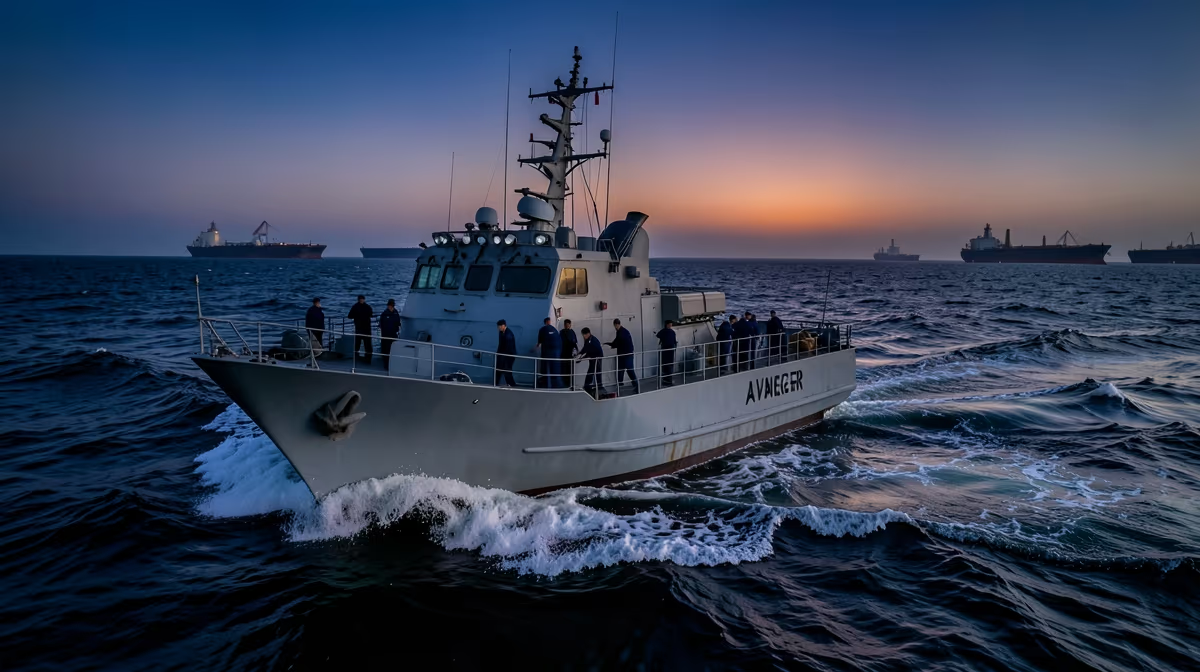
Over the next 24 hours, the U.S. Fifth Fleet is expected to increase aerial surveillance and naval positioning to assess the mine threat and verify navigation safety. Within the next 72 hours, the deployment of dedicated Mine Countermeasures assets, including MH-53E Sea Dragon helicopters and Avenger-class minesweepers, is anticipated to facilitate the clearing of safe lanes. The best-case scenario involves mines being neutralized without triggering a kinetic exchange, allowing shipping transit to resume under heightened naval escort. Conversely, the worst-case scenario involves a minesweeping vessel striking a secondary mine, potentially resulting in casualties and provoking a direct U.S. retaliatory strike on Iranian maritime infrastructure. Experts predict the U.S. will prioritize a multilateral clearing operation to minimize escalation.
Frequently Asked Questions
How does the US Navy clear mines in the Strait of Hormuz?
The US Navy utilizes a layered approach to mine clearing, involving airborne mine countermeasures like the MH-53E Sea Dragon helicopter and surface vessels equipped with advanced sonar systems. These assets are supported by unmanned underwater vehicles that can detect, classify, and neutralize submerged threats without putting divers at immediate risk.
Is the Strait of Hormuz vulnerable to sea mines?
Yes, the Strait of Hormuz is considered highly vulnerable to sea mines due to its narrow width and shallow depth, which creates a strategic chokepoint for global oil shipments. Military analysts frequently note that even low-tech, inexpensive mines could effectively disrupt maritime traffic if deployed by hostile actors in the region.
How long would it take to clear mines from the Strait of Hormuz?
Clearing mines from the Strait of Hormuz would be a complex and time-consuming operation, likely taking several weeks or even months depending on the density and sophistication of the minefield. Rapid clearing efforts would require a massive, multinational naval coalition to ensure the safety of commercial shipping lanes.
What role does the International Maritime Security Construct play in the Strait of Hormuz?
The International Maritime Security Construct is a multinational coalition led by the United States that aims to promote maritime security and ensure freedom of navigation in the Middle East. It specifically monitors for threats, including the deployment of sea mines, and coordinates response efforts to protect commercial vessels traversing the strait.
What are the biggest challenges in clearing sea mines in the Strait of Hormuz?
The primary challenges include the high volume of commercial traffic, the deep-water and shallow-water variations, and the potential for hostile interference during clearing operations. Additionally, the presence of various types of mines, ranging from contact mines to sophisticated influence mines, requires diverse and highly specialized countermeasure technology.
Has the US Navy successfully cleared mines in the Strait of Hormuz before?
Historically, the US Navy has conducted extensive mine clearance operations in the Persian Gulf during conflicts like the Iran-Iraq War in the 1980s. These operations demonstrated the military's capability to restore maritime access after significant mine threats were deployed, serving as a tactical blueprint for potential future engagements.
Conclusion
The current naval activities in the Strait of Hormuz underscore the high stakes of maritime security in the world’s most critical energy artery. With the U.S. Fifth Fleet actively deploying advanced countermeasure assets to monitor for and neutralize underwater threats, the focus remains on ensuring the unimpeded flow of global commerce. While the situation involves complex geopolitical maneuvering, the immediate path forward centers on maintaining defensive readiness and promoting international cooperation to prevent escalation. Stakeholders continue to monitor the region, where the balance between deterrence and diplomacy will dictate the security of global energy supplies in the coming days.


