
Strait of Hormuz Security Risks Are Reaching a Boiling Point
Introduction
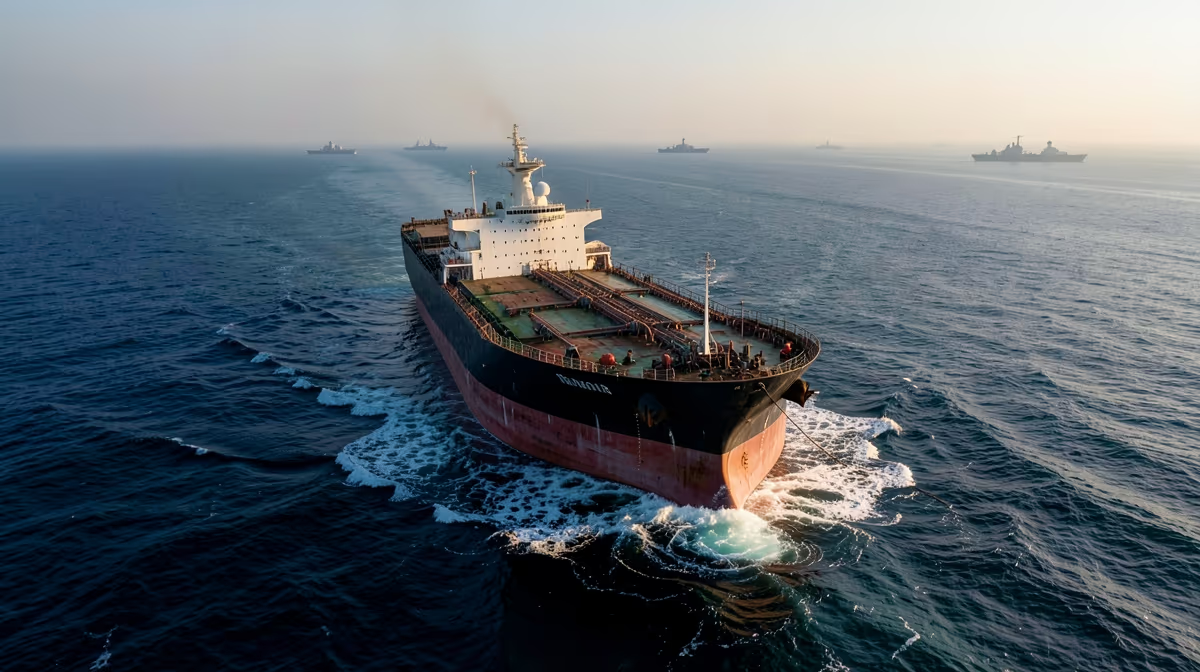
A silent, two-mile-wide stretch of water separates the Persian Gulf from the Gulf of Oman, holding the entire global economy in a precarious balance. The strait of hormuz remains the world's most critical maritime chokepoint, with recent developments involving Iran heightening concerns over global energy security and maritime trade.
What Happened
The geopolitical climate surrounding this vital waterway has shifted as tensions between Iran and Western naval coalitions persist. The Strait of Hormuz serves as the primary maritime outlet for roughly one-fifth of the world’s total oil consumption. During the past few months, the region has experienced an uptick in maritime security operations led by the United States and international partners. These efforts are a direct response to a series of vessel seizures and harassment incidents involving the Iranian Revolutionary Guard Corps.
While shipping continues to flow, the maritime environment has become increasingly volatile. Private maritime security firms have advised clients to maintain heightened vigilance and ensure constant communication with regional naval commands. Insurance premiums for vessels traversing the Persian Gulf have remained elevated as a direct consequence of this persistent friction. International diplomatic efforts to establish de-escalation channels remain ongoing, though direct talks have yet to yield a breakthrough. Current interactions are defined by gray zone tactics, where state actors utilize asymmetric naval assets to exert pressure while stopping just short of triggering a full-scale conventional military conflict.
Key Facts
The Strait of Hormuz is a narrow, essential waterway connecting the Persian Gulf to the Gulf of Oman and the Arabian Sea. It is unique in its geographic constraints, measuring only 21 miles wide at its narrowest point. Within this passage, shipping lanes for inbound and outbound tanker traffic are squeezed into corridors just two miles wide, separated by a buffer zone.
Approximately 20 percent of the world's total oil consumption passes through this transit point daily, amounting to over 20 million barrels. Because of this volume, the Iranian military frequently conducts naval exercises and patrols in these waters to exert influence. In response to these maneuvers, the United States maintains a consistent naval presence, with the Fifth Fleet headquartered in Bahrain, to ensure freedom of navigation for commercial vessels. Historical precedents for this tension include the 1980s Tanker War, which necessitated international naval escort missions and established the precedent for modern security architectures in the region.
Why It Matters
The Strait of Hormuz acts as the jugular vein of the global economy. When the flow of energy through this corridor is threatened by military posturing or blockades, the impact is felt far beyond the Middle East. Global oil importers, particularly those in Asia and Europe, face the immediate risk of supply chain disruptions.
For the average consumer, the risks are tangible. If tankers are unable to pass safely, the resulting constriction in global oil supply would cause prices at gas stations and utility bills to skyrocket. This inflationary pressure has the potential to trigger a broader economic recession. The shipping industry bears a heavy burden as well, as elevated insurance premiums and the threat of vessel detention increase the operational costs of global trade. From regional energy supply chains to the individual household budget, the instability in these waters serves as a constant, high-stakes variable in global economic health.
Expert Analysis
The root cause of this instability lies in the structural dependence of the global energy market on a singular, narrow maritime chokepoint. This point is controlled by a regional power with significant asymmetric warfare capabilities, creating a natural point of friction. The Strait effectively functions as a primary lever for Iran to project influence against Western sanctions, using the threat of potential closure as an existential bargaining chip.
From an economic perspective, global energy prices are exceptionally sensitive to any perception of insecurity. The geopolitical angle is framed by the collision of U.S. naval assets, which prioritize the protection of free transit, and Iranian-aligned networks that utilize the geography to assert dominance. Beyond the visible naval maneuvers, there exists a hidden fiscal layer: the diversion of shipping insurance premiums and the rise of illicit ship-to-ship transfers designed to circumvent international sanctions. These activities remain critical, under-discussed fiscal flows that exacerbate the complexity of managing the security of the region.
Political And Geopolitical Implications
The situation is characterized by a persistent geopolitical stalemate. The U.S. Fifth Fleet has characterized the actions of the Iranian Revolutionary Guard Corps as contrary to international law and disruptive to regional security. Conversely, the strategic importance of the Strait ensures that it remains the focal point for international diplomacy. As maritime security expert Dr. Aris Vovos noted, market anxiety has become a permanent fixture of the global landscape as long as this stalemate persists. The strategic rivalry between Iran and Western powers ensures that the waterway remains a central site of tension, where every naval maneuver is scrutinized for signs of further escalation or potential diplomatic progress.
What Happens Next
In the next 24 hours, stakeholders expect increased maritime surveillance and a heightened alert status for tankers transiting the Strait due to ongoing regional military exercises. Looking toward the next 72 hours, analysts anticipate continued naval posturing by Iranian forces, with a potential for localized electronic interference or the drone shadowing of commercial vessels.
The expert consensus suggests that the situation will remain defined by gray zone tactics. A best-case scenario involves the success of diplomatic back-channels, leading to a temporary cessation of hostile naval posturing and the stabilization of insurance rates. Conversely, the worst-case scenario involves a miscalculation during a naval encounter, such as a physical collision or the detention of a commercial vessel, which could trigger a rapid escalation and the closure of the chokepoint.
Frequently Asked Questions
Why is the Strait of Hormuz so important?
It is considered one of the world's most critical maritime chokepoints because roughly 20 to 30 percent of all traded oil passes through this narrow waterway daily, making it vital to global energy security and economic stability.
Where is the Strait of Hormuz located?
It is located between Oman and Iran, connecting the Persian Gulf to the Gulf of Oman and the Arabian Sea. It is the only sea passage from the Persian Gulf to the open ocean.
How wide is the Strait of Hormuz?
At its narrowest point, it is approximately 21 miles wide. However, the shipping lanes in either direction are only two miles wide, separated by a buffer zone to manage vessel traffic.
Who controls the Strait of Hormuz?
The Strait is an international waterway, meaning ships from all nations have the right of transit passage under international maritime law. However, Iran maintains a significant military presence along the northern coast and frequently claims authority over the waters, leading to regional tensions.
What would happen if the Strait of Hormuz were closed?
A closure would likely cause a massive spike in global oil prices due to the immediate disruption of energy supplies. Many nations would struggle to find alternative routes, potentially triggering severe inflationary pressure and global supply chain crises.
Which countries rely most on the Strait of Hormuz?
Countries that rely most heavily on the Strait for oil exports include Saudi Arabia, Iraq, the United Arab Emirates, Kuwait, and Qatar. Major importers that depend on this route include large economies like China, India, Japan, and South Korea.
Conclusion
The stability of the Strait of Hormuz remains a central pillar of global economic security. While the waterway continues to facilitate the transit of over 20 million barrels of oil per day, the environment is increasingly defined by complex naval interactions and persistent regional tensions. The ongoing presence of multinational naval patrols continues to act as a buffer, ensuring that the critical flow of energy is maintained despite the heightened risks. Moving forward, the situation requires close monitoring of maritime insurance mandates and the frequency of interactions between state naval forces and commercial shipping. The path toward long-term security remains tied to the success of international diplomatic channels in managing this delicate geopolitical balance.
" } ]


