
Strait of Hormuz Tensions Signal a Major Global Economic Shift
Introduction
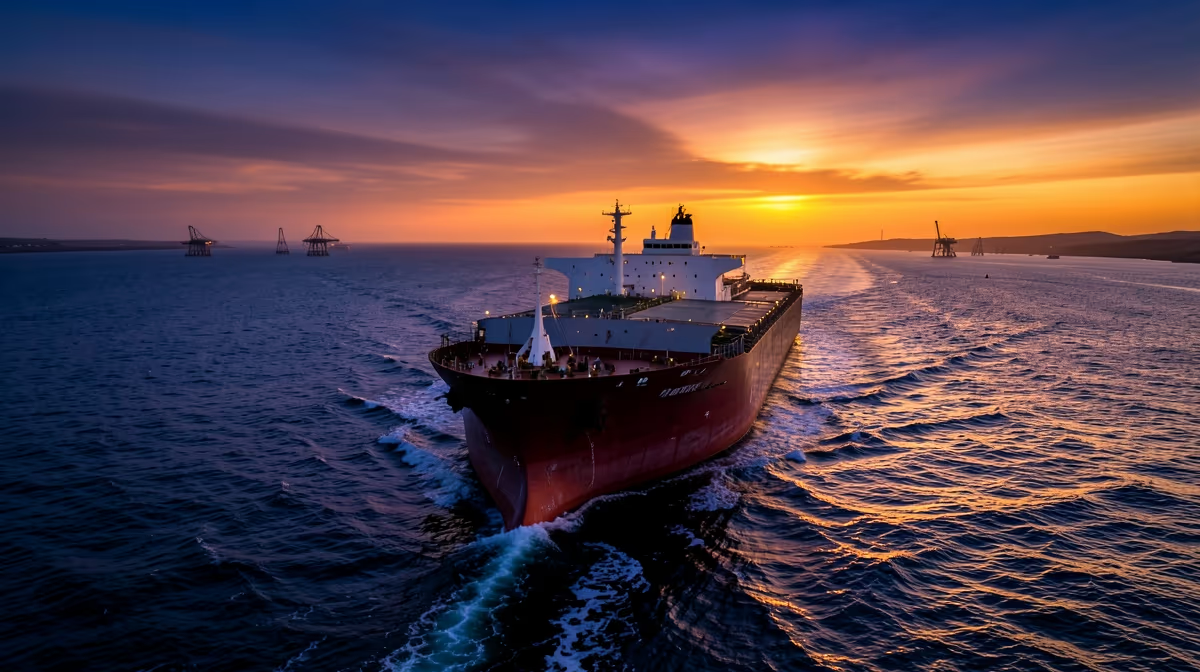
A mere twenty-one miles of water separates nations and fuels the engine of the global economy, yet this narrow maritime artery remains one of the most volatile zones on the planet. The strait of hormuz remains the world's most critical artery for energy, as disruptions in this global trade chokepoint could send shockwaves through international markets. As naval powers maneuver and regional tensions persist, the ability to maintain the free flow of commerce through this gateway has become a defining challenge for international security and economic stability.
What Happened
The current security climate in the region follows a series of vessel seizures and maritime harassment incidents involving the Islamic Revolutionary Guard Corps Navy. These actions have prompted the United States Fifth Fleet, which operates out of Manama, Bahrain, to increase its presence. This defensive posture includes the deployment of additional guided-missile destroyers and aircraft to ensure that international waters remain open to commercial shipping.
These developments occur within a historical context of maritime instability that dates back to the tanker wars of the 1980s. While current events involve modern drone-based surveillance and illicit cargo seizures, the fundamental friction remains a recurring pattern in the region. Recent diplomatic efforts have focused on establishing communication protocols to prevent tactical miscalculations, even as naval assets from the United States and Iranian forces maintain a high degree of readiness in the vicinity of the Gulf of Oman and the Persian Gulf.
Key Facts
The geography of the region is defined by its extreme constraints. The Strait of Hormuz is a narrow waterway less than twenty-one miles wide at its tightest point, with designated shipping lanes only about two miles wide in either direction. Despite these limited dimensions, it serves as the only sea passage connecting the oil-rich Persian Gulf to the open ocean.
Statistics highlight the economic gravity of this area. Approximately 20 percent to 30 percent of the world's total petroleum liquids consumption passes through the strait each day. This transit route is vital for global energy security, as it facilitates the bulk of crude oil exports from major producers such as Saudi Arabia, Kuwait, and the United Arab Emirates. The U.S. Fifth Fleet remains the primary maritime security force in the area, tasked with monitoring these vital shipping lanes against interference.
Why It Matters
The significance of the Strait of Hormuz extends to every corner of the global economy. As an essential oil artery, the waterway is directly linked to the price of gasoline, electricity, and heating oil. Should the flow of tankers be interrupted or significantly slowed, the immediate result would be a sharp spike in global energy costs. This volatility would impact not only the U.S. economy but also nations heavily dependent on Middle Eastern energy imports, including China, Japan, and South Korea.
Beyond direct energy costs, the situation affects the broader logistics of international trade. Rising maritime insurance premiums following security incidents serve as an additional tax on global goods, complicating supply chains that are already sensitive to geopolitical shocks. For policymakers, the goal is to prevent a scenario where local maritime disputes escalate into a broader conflict that could necessitate a complete shutdown of regional tanker traffic.
Expert Analysis
The root cause of the current tension is the strategic necessity of maintaining global energy supply chains while regional powers assert influence over a critical maritime chokepoint. From a political perspective, the strait serves as a perpetual leverage point for Iran to counter international sanctions and navigate regional military encirclement. The geopolitical reality is a high-stakes chess match between U.S. naval force projection and Iran’s asymmetric anti-access and area-denial capabilities.
This environment is further complicated by the intersection of traditional naval presence and modern technological warfare. The struggle for dominance in the Gulf now involves underwater sensor networks and cyber-warfare capabilities, where data dominance is as critical as physical presence. Historical parallels to the 1987-1988 Tanker War serve as a reminder of how quickly regional standoffs can transition into direct naval intervention, making current, evidence-based de-escalation efforts essential to prevent a return to such conditions.
Political And Geopolitical Implications
The geopolitics of the Strait of Hormuz are characterized by a fragile balance of power. The United States and its partners seek to uphold freedom of navigation, while regional actors use the threat of disruption to signal their opposition to external military presence and economic restrictions. This dynamic forces nations to dedicate significant defensive resources to maintain stability. The reliance of the global economy on this specific geography ensures that any increase in friction is felt by markets globally, effectively turning regional naval exercises into high-stakes geopolitical signals that influence international alliance stability and energy security policies.
What Happens Next
The immediate outlook for the next 24 hours involves continued aerial surveillance and naval posturing by the U.S. Fifth Fleet in response to Iranian military drills near the strait. Over the next 72 hours, observers anticipate potential localized maritime harassment incidents alongside an increase in diplomatic communication aimed at de-escalating tensions.
Expert predictions suggest the situation will likely remain in a state of managed friction. In this scenario, minor escalations continue without crossing the threshold into full-scale kinetic conflict, largely due to the high economic stakes for all participating parties. While a best-case outcome would involve back-channel diplomacy leading to a temporary suspension of provocative naval exercises, the worst-case scenario involves a tactical miscalculation during a close-encounter intercept. Such an event, resulting in the accidental sinking of a vessel, could trigger an immediate military confrontation and a closure of the shipping lane, with severe implications for the global economy.
Frequently Asked Questions
Why is the Strait of Hormuz so important?
It is a critical maritime chokepoint through which approximately 20 percent to 30 percent of the world's total petroleum liquids pass daily, making it the primary sea route for oil exports from major Gulf producers.
Where is the Strait of Hormuz located?
It is a narrow waterway located between Iran to the north and Oman and the UAE to the south, connecting the Persian Gulf to the Gulf of Oman and the Arabian Sea.
How wide is the Strait of Hormuz?
It is less than 21 miles wide at its tightest point, with shipping lanes in either direction approximately two miles wide, separated by a buffer zone.
What percentage of the world's oil passes through the Strait of Hormuz?
Approximately 20 percent to 30 percent of the world's total petroleum liquids consumption passes through the strait each day.
Who controls the Strait of Hormuz?
The strait is bordered by Iran, Oman, and the UAE. While international law protects the right of transit passage, Iran has periodically threatened to close it in response to geopolitical pressure.
What would happen if the Strait of Hormuz were blocked?
A closure would cause a massive spike in global oil prices and severe disruptions to international supply chains, as there are few viable alternative pipeline routes for the volume of energy currently moved through the strait.
Conclusion
The Strait of Hormuz remains a vital link in the global energy infrastructure, requiring constant international attention to ensure the safety of maritime transit. While the current environment is defined by managed friction and a high degree of naval surveillance, the reliance of the global economy on this narrow passage ensures that the stakes for stability remain exceptionally high. As military forces continue to operate in the region, the focus remains on preventing tactical miscalculations and maintaining open communication channels. The path forward is marked by a delicate balance between defensive posturing and diplomatic engagement, with international security professionals continuing to monitor the waterway to preserve the flow of energy that sustains the global market.
"]


