
Strait of Hormuz Tensions Signal a Major Shift in Global Energy Flow
Introduction
Twenty percent of the world's daily oil consumption passes through a narrow corridor so critical to the global economy that even a whisper of disruption sends shockwaves through international markets. The strategic iran hormuz strait has once again become the focal point of geopolitical escalation as global markets react to the potential that iran closes hormuz shipping lanes, threatening the delicate equilibrium of global energy security.
What Happened
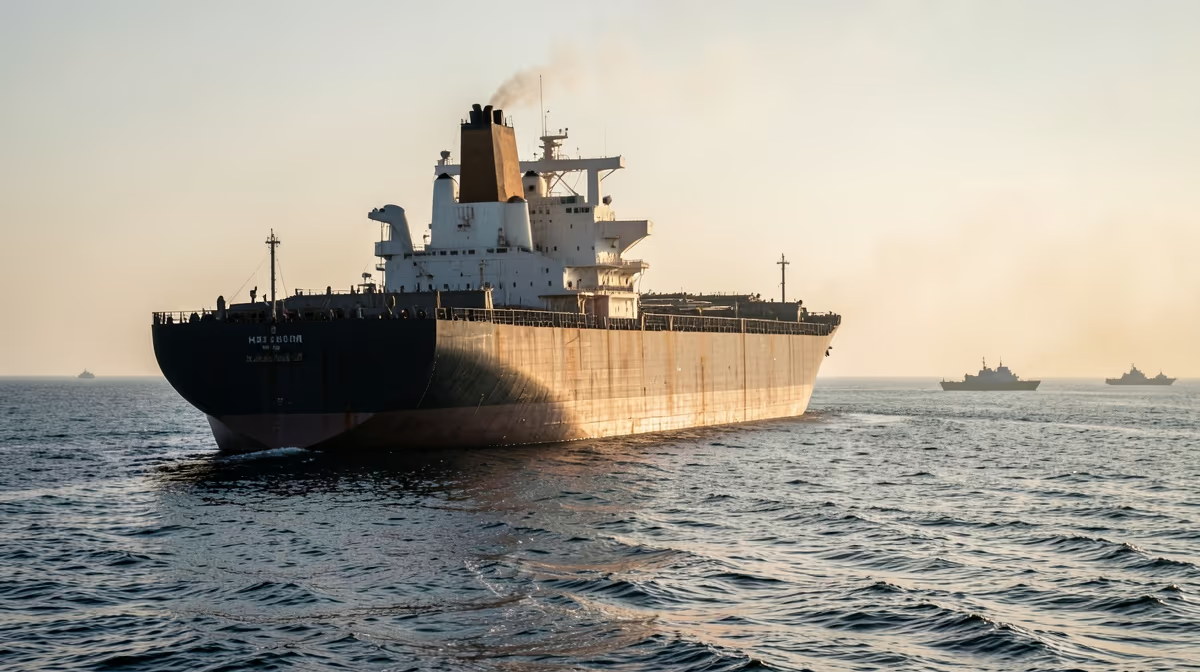
The maritime landscape in the Persian Gulf has undergone a marked shift following a series of incidents involving commercial vessels and increased naval maneuvers by the Islamic Revolutionary Guard Corps (IRGC). This strategic chokepoint, a narrow passage between Iran and Oman, is witnessing a rise in surveillance activities and close-approach maneuvers by Iranian forces. These incidents have targeted commercial shipping, raising immediate concerns among Western officials regarding the safety of international maritime trade routes.
In response to this instability, the United States has bolstered its defensive posture in the region. U.S. Central Command has deployed additional naval assets, including guided-missile destroyers and maritime patrol aircraft, to monitor the transit lanes. Officials maintain that these deployments are strictly defensive and designed to deter unauthorized interceptions that threaten the freedom of navigation. While diplomatic channels remain open, the volatility in the region is reflective of broader tensions, with maritime harassment acting as a tool for Tehran to exert influence amidst international sanctions.
Key Facts
The geography of the region defines its vulnerability. At its narrowest point, the waterway is only 21 miles wide, with shipping lanes divided into two-mile-wide channels for inbound and outbound traffic to avoid collisions. This geography is overseen by significant Iranian military installations, which allow for constant monitoring of the maritime corridor. International law, specifically the UN Convention on the Law of the Sea, guarantees the right of transit passage for all vessels through international straits, yet the area remains a constant site of friction. The U.S. Fifth Fleet, based in nearby Bahrain, serves as the primary maritime force tasked with ensuring these waters remain open to global trade.
Why It Matters
The global economy is uniquely dependent on this specific maritime corridor. Because the Strait of Hormuz is the primary transit route for oil and liquefied natural gas from the Persian Gulf, any instability here acts as an immediate tax on global energy prices. A disruption would trigger a sudden drop in oil availability, causing gas prices to soar and potentially destabilizing economies already facing inflationary pressure. The impact extends to major global importers, including China, India, Japan, and various European nations, all of which rely on this steady flow of energy. For shipping companies and international oil firms, the rising tension translates into increased operational risks and higher insurance premiums, which are eventually passed down to the global consumer.
Expert Analysis
The root cause of these tensions is tied to the preservation of the Islamic Republic's survival. By utilizing the strait as a strategic lever, Tehran aims to deter Western-led regime change or military escalation while forcing international recognition of its regional hegemony. The economic angle is equally deliberate; control over the flow of nearly a third of global oil consumption creates a volatile energy market where even the credible threat of closure acts as a powerful diplomatic tool. Geopolitically, this is a maritime security dilemma involving Iran's asymmetric naval capabilities—such as fast-attack craft and drone interdiction—against the established presence of the U.S. Navy. This creates a state of gray zone warfare, where incidents occur beneath the threshold of open conventional conflict, echoing the instability seen during the 1980s Tanker War.
Political And Geopolitical Implications
The strait functions as the primary pressure point for Iran to extract concessions regarding nuclear sanctions and arms embargos. By challenging the freedom of navigation, Tehran effectively internationalizes its local disputes, forcing global powers like the United States and the United Kingdom to dedicate resources to regional security. The political stakes are high, as any miscalculation by either side could lead to a localized skirmish, necessitating regional mobilization. This dynamic has drawn in neighboring Arab states and global powers alike, making the security of the strait a central pillar of international foreign policy.
What Happens Next
The immediate outlook suggests continued volatility. Within the next 24 hours, expect increased naval posture and reconnaissance flights by IRGC forces in response to regional pressures. Over the next 72 hours, analysts anticipate heightened monitoring of commercial tanker traffic, which will likely lead to localized electronic interference and a further rise in maritime transit insurance premiums. The expert consensus is that Iran will maintain a strategy of gray zone coercion to demonstrate leverage without triggering a full-scale direct military confrontation. While the best-case scenario involves back-channel de-escalation that allows for safe passage, the worst-case scenario remains a miscalculation or accidental collision leading to a sharp, temporary spike in energy markets and regional mobilization.
Frequently Asked Questions
Why is the Strait of Hormuz so important?
It is one of the world's most critical maritime chokepoints, serving as the primary oil transit route from the Persian Gulf. Roughly 20 percent of the world's total oil consumption passes through this route daily.
What happens if Iran closes the Strait of Hormuz?
A closure would cause a massive spike in global oil prices and severe disruptions to energy supply chains. Because there are few viable alternatives, it would be viewed as an act of economic warfare.
How wide is the Strait of Hormuz?
At its narrowest point, the strait is approximately 21 miles wide, with narrow two-mile-wide shipping channels for inbound and outbound traffic.
Does Iran have the legal right to close the Strait of Hormuz?
Under the UN Convention on the Law of the Sea, international vessels have the right of transit passage. Legal experts generally agree that Iran cannot legally block navigation for foreign ships.
How does the US military maintain security in the Strait of Hormuz?
The U.S. maintains a significant naval presence, primarily through the Fifth Fleet in Bahrain. They conduct regular patrols and provide escorts for commercial vessels to ensure freedom of navigation.
What is the role of the IRGC in the Strait of Hormuz?
The Islamic Revolutionary Guard Corps Navy operates defensive systems and fast-attack craft. They monitor naval activity and have been involved in the seizure of commercial tankers to exert geopolitical leverage.
Conclusion
The situation in the Strait of Hormuz remains a precarious balancing act between regional power projection and global energy security. While verified reports indicate a documented increase in naval interactions and military surveillance, the core transit of energy supplies continues despite rising costs and heightened insurance premiums. The international community, led by U.S. naval assets, remains focused on deterring further interference to prevent a significant disruption to global trade. As diplomatic efforts proceed, the immediate future will likely be defined by continued gray zone maneuvers rather than full-scale conflict, though the risk of accidental escalation persists as long as the strategic stalemate in the Persian Gulf remains unresolved.


