
Ukraine Drone Attack Moscow Marks a Massive Shift in Conflict Stakes
Introduction
A profound shift in the geography of the Russia-Ukraine war is playing out across the skyline of the Russian capital as the long-standing assumption of home-front immunity evaporates. The recent ukraine drone attack moscow represents a pivotal escalation that forces the conflict out of the occupied territories and directly into the corridors of Russian political and financial power.
What Happened
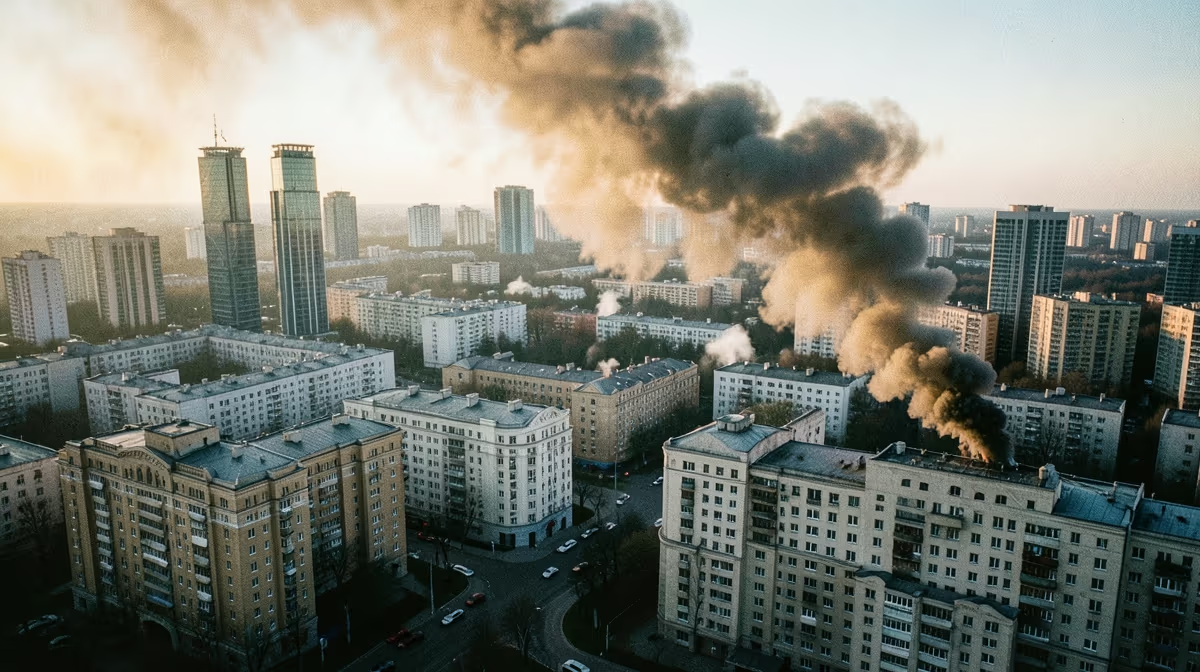
In the early hours of Tuesday, a wave of unmanned aerial vehicles descended upon the Moscow metropolitan region, triggering one of the most significant aerial confrontations since the conflict began in 2022. Russian air defense systems were activated across multiple districts, including Podolsk, as officials reported the interception of dozens of incoming threats. Despite the intensity of the defensive response, falling debris resulted in structural damage to residential apartment buildings and sparked isolated fires in various suburbs.
Moscow Mayor Sergei Sobyanin publicly characterized the event as one of the most massive attempts to strike the capital using drone technology. Simultaneously, the Russian Ministry of Defense issued a formal statement labeling the operation a terrorist attack by the Kyiv regime, asserting that their strategic air defense grid successfully identified and neutralized the vast majority of the incoming drones before they could penetrate the central government districts. While emergency services were deployed to address localized fires and safety concerns, there were no reports of mass casualties or fatalities at the time of the event. Regional authorities are currently conducting thorough damage assessments to determine the full extent of the structural impact on civilian housing.
Key Facts
The incident serves as a clear indication of how drone warfare is changing the Russia-Ukraine war. Multiple drones targeted residential and business districts, with the primary defense effort falling to Russian air defense systems that intercepted the majority of the incoming hardware. While the debris caused localized facade and glass damage, the lack of significant casualties highlights the precision and scale of the defense response. This event is not an isolated incident but rather follows a consistent pattern of increasing drone activity deep inside Russian borders throughout 2023 and 2024. The Russian government maintains its stance of classifying these strikes as hostile, illegitimate acts.
Why It Matters
The symbolic weight of these strikes cannot be overstated, as they dismantle the perception of domestic security for the Russian elite and the general public. By bringing the reality of the war to the doorstep of Moscow, Ukrainian strategy appears focused on demonstrating that the invasion has tangible consequences for the Russian interior. This shift forces a change in the daily lives of residents, impacting city operations and local perceptions of the conflict. For the international community, the strikes underscore the evolving nature of modern warfare, where asymmetric tactics are used to stretch national air defense capabilities and force a reallocation of assets away from frontline positions. The long-term impact on public support for the war remains a critical variable for both sides.
Expert Analysis
The root cause of these operations lies in the strategic necessity for Ukraine to degrade Russian air defense capabilities while compelling the Kremlin to shift military assets away from occupied frontline territories. Analytically, this is a calculated effort by Kyiv to erode the Kremlin's domestic narrative of stability and normalcy. By forcing Russian citizens to confront the reality of the conflict, the strikes create long-term social friction and psychological pressure on the current leadership. Historical parallels can be drawn to the 1942 Doolittle Raid on Tokyo; while the material damage is localized, the strategic objective of shattering the illusion of immunity is paramount. From an economic perspective, these strikes contribute to heightened insurance premiums for Black Sea shipping and necessitate massive, ongoing domestic expenditures for the development of multi-layered air defense systems around key industrial and government infrastructure.
Political And Geopolitical Implications
The geopolitical landscape remains tense as these strikes test the boundaries of red lines established by Western allies regarding the use of long-range weaponry on internationally recognized Russian soil. While Kyiv maintains a policy of official ambiguity, the strikes pressure the Kremlin's internal stability and force a recalibration of how Russia presents the war to its own population. There is a persistent effort by the Russian government to frame these events as acts of terrorism to galvanize internal support, while Western nations remain cautious, balancing their desire to support Ukraine with the necessity of avoiding direct, uncontrolled NATO-Russia escalation.
What Happens Next
The next 24 hours are likely to see heightened surveillance of the Ukrainian border regions by Russian forces, accompanied by increased air defense alerts across Moscow and official rhetoric framing the event as a provocation. Moving into the 72-hour window, intelligence observations suggest a potential for Russian retaliatory strikes against Ukrainian energy infrastructure or command centers. The broader expert prediction points to a cycle of tit-for-tat escalation. In a best-case scenario, international diplomatic pressure could lead to a de-escalation of aerial strikes on civilian-dense areas and encourage backchannel communication. Conversely, a worst-case scenario involves a high-profile strike resulting in significant civilian casualties, which could trigger a Russian asymmetrical response, potentially involving tactical nuclear signaling or a direct strike on a NATO-affiliated logistics hub.
Frequently Asked Questions
Has Ukraine launched drone attacks on Moscow?
Yes, Ukraine has conducted multiple drone strikes targeting Moscow and surrounding regions throughout the ongoing conflict. These attacks often aim to strike military or strategic infrastructure within the Russian capital.
Why are drones attacking Moscow?
The drone strikes are part of Ukraine's broader military strategy to bring the reality of the war to Russian territory. By targeting Moscow, Ukraine aims to disrupt logistical capabilities and pressure the Russian leadership.
Does Russia have defenses against drone attacks in Moscow?
Yes, Russia employs extensive air defense systems and electronic warfare capabilities to protect Moscow from incoming drones. Despite these efforts, some drones have successfully bypassed defenses, leading to explosions in residential and government districts.
What is the impact of drone attacks on Moscow residents?
These attacks have caused disruptions to city life, including temporary closures of major airports and damage to high-rise buildings. While casualties have been relatively low, the incidents have increased the psychological impact of the war on the local population.
Does Ukraine claim responsibility for the drone attacks in Moscow?
Ukraine generally maintains a policy of official ambiguity regarding specific attacks deep within Russian territory. However, officials often indicate that such actions are a legitimate response to Russia's ongoing invasion.
How frequent are drone strikes on Moscow?
The frequency of drone strikes on Moscow fluctuates depending on the intensity of the conflict and frontline developments. While not a daily occurrence, there have been waves of intense activity followed by periods of relative calm.
Conclusion
The drone strikes on Moscow confirm a definitive shift in the operational theater of the Russia-Ukraine war, moving the conflict from the frontline directly into the Russian interior. While the structural damage remains localized and casualties have been avoided thus far, the psychological and strategic implications continue to develop. Both the tactical evolution of drone warfare and the corresponding geopolitical reactions suggest a period of heightened volatility. As the situation remains fluid, global observers are focused on the potential for retaliatory escalation and the long-term impact of these strikes on the domestic stability of the involved parties.


