
US Iran War Risks Are Rising As Naval Movements Intensify Rapidly
Introduction
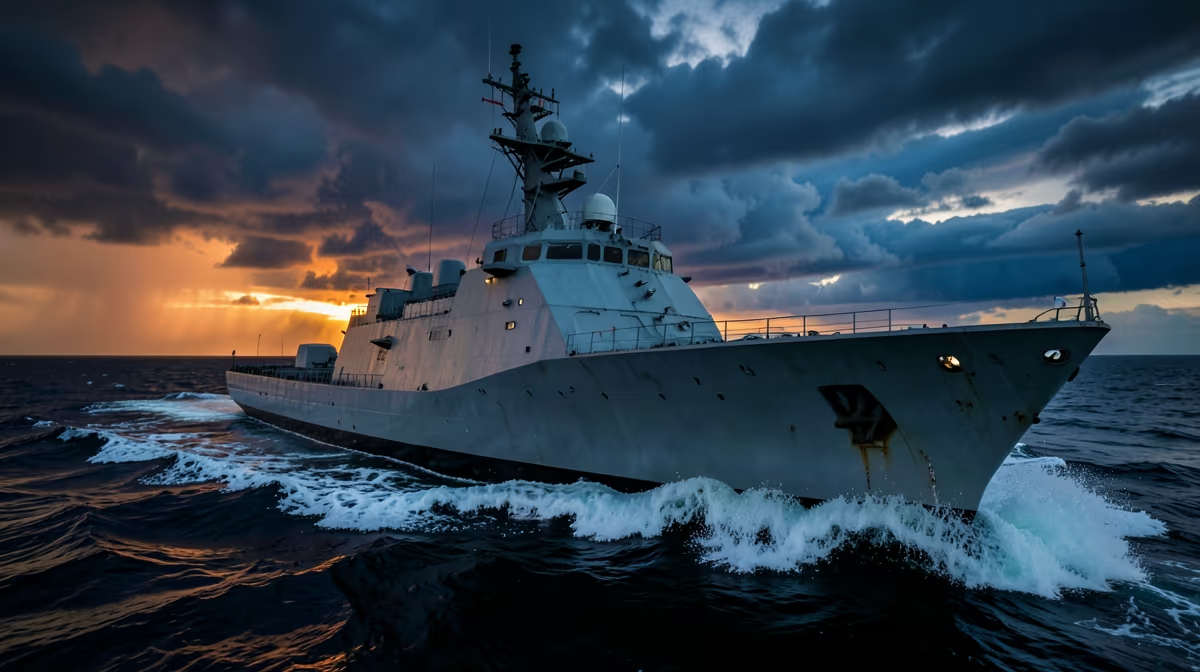
Naval movements in the Persian Gulf are intensifying as diplomatic channels struggle to contain a volatile cycle of military posturing between Washington and Tehran. The possibility of a US Iran war has sparked significant concerns regarding middle east security and the stability of the global oil market, leaving world powers to assess the risks of an uncontrolled escalation.
What Happened
The situation has shifted from long-standing proxy frictions to a state of heightened direct military signaling. This week, reports confirmed increased military posturing in the region, prompting an urgent response from international observers and national governments. The Indian Ministry of External Affairs has initiated contingency planning to safeguard the lives of the Indian diaspora residing in the Middle East. Intelligence agencies are currently monitoring naval maneuvers in the region, evaluating potential risks to essential maritime shipping lanes. While no formal state of war exists, the exchange of retaliatory rhetoric and the movement of air and naval assets have moved the conflict beyond the established diplomatic norms of recent decades.
Key Facts
The core of the current tension lies in the intersection of Iran’s regional influence and the enforcement of US sanctions. Both nations have deployed significant naval and air assets to the region, leading to localized skirmishes. The Strait of Hormuz, a critical maritime chokepoint, serves as the transit path for a massive percentage of the global oil supply, including a significant portion of India’s energy imports. International organizations have issued calls for restraint, noting that the history of these tensions dates back to the 1979 Iranian Revolution. The current cycle of escalation is marked by the weaponization of non-state proxy networks and a focus on shadow maritime operations that challenge traditional security architectures.
Why It Matters
For the average citizen, the primary concern remains the direct impact on the cost of living. A sustained conflict threatens the stability of energy supply chains, which would trigger a spike in global crude oil prices and exacerbate inflationary pressures within the Indian economy. Beyond the economic indicators, the safety of the Indian diaspora—numbering in the millions across the Gulf—is a paramount concern for New Delhi. Remittances from these workers are vital to the national economy, and any widespread instability jeopardizes the physical safety of these citizens. Furthermore, the disruption of trade routes at the Strait of Hormuz would cause widespread volatility in global financial markets, affecting industries ranging from logistics to commodities trading.
Expert Analysis
The root cause of this instability is the enduring ideological friction between the US-backed regional security architecture and Iran’s vision of an anti-hegemonic Islamic axis. Analysts emphasize that while rhetoric is aggressive, a full-scale kinetic war remains unlikely, as both parties understand the catastrophic costs of a direct, total conflict. The current behavior suggests a strategy of calculated psychological warfare rather than an immediate move toward invasion. The political divergence within the United States, influenced by internal election cycles, acts as a lever for Tehran’s decision-making. Furthermore, the use of cyber-warfare and non-state proxy networks allows actors to exert pressure and cripple infrastructure without triggering traditional NATO-style escalation clauses, creating a complex and dangerous environment for regional stability.
Political And Geopolitical Implications
A direct conflict forces regional actors to abandon neutrality, potentially destabilizing the Abraham Accords and shifting the focus of the global pivot toward the Indo-Pacific. For India, the situation creates a difficult diplomatic balancing act. New Delhi maintains a longstanding strategic partnership with Washington but also relies on Iranian energy and the development of the Chabahar Port as a central element of its connectivity strategy with Central Asia. To protect its national interests, India is advocating for regional de-escalation. Meanwhile, the prospect of prolonged conflict has accelerated discussions among BRICS nations regarding de-dollarization as a means to bypass potential sanctions and insulate their economies from regional volatility.
What Happens Next
In the next 24 hours, the focus remains on diplomatic backchannel communications and the observation of heightened naval postures in the Persian Gulf. Localized troop alerts are expected as standard defensive protocols. Over the next 72 hours, the region may see targeted intelligence-sharing between the US and its regional partners, accompanied by formal public warnings designed to enhance deterrence measures. Analysts suggest a range of outcomes: the best-case scenario involves successful third-party mediation leading to a regional ceasefire and the normalization of maritime transit. Conversely, the worst-case scenario involves an unintended military miscalculation that triggers a wide-scale regional conflict, severe disruption of oil supply chains, and significant economic inflation.
Frequently Asked Questions
Is there a war between the US and Iran right now?
Currently, there is no direct, declared war between the United States and Iran. While both nations have engaged in periods of heightened military tension and proxy conflicts, they have avoided direct large-scale combat operations.
Why is there tension between the US and Iran?
Tensions between the two countries stem from decades of geopolitical rivalry, issues regarding Iran's nuclear program, and conflicting regional interests in the Middle East. Economic sanctions and disagreements over foreign policy in countries like Iraq and Syria have further strained diplomatic relations.
Could a war between the US and Iran start?
While experts frequently discuss the risks of escalation due to miscalculations or regional incidents, both nations have historically shown a preference for avoiding an all-out direct conflict. However, the potential for proxy warfare or localized skirmishes remains a significant concern for global stability.
What would be the impact of a US-Iran war on India?
A conflict between the US and Iran would likely lead to a sharp spike in global crude oil prices, which would negatively impact India's inflation and trade deficit. Furthermore, it could jeopardize the safety of the large Indian diaspora working in the Persian Gulf region.
Are the US and Iran currently in direct military conflict?
The US and Iran are not in a state of declared war, but they have engaged in various indirect confrontations and naval standoffs. These incidents are generally contained rather than representing the onset of a full-scale military invasion or war.
How do US-Iran relations affect global oil prices?
Global oil prices are highly sensitive to developments in the Persian Gulf, as a significant portion of the world's oil supply passes through the Strait of Hormuz. Any threat of military confrontation in this region often causes markets to react with volatility due to fears of supply chain disruptions.
Conclusion
The situation in the Middle East remains fluid, with both military posturing and high-level diplomacy defining the current landscape. While the risk of a full-scale war is recognized as a threat to global economic and energy stability, the current reliance on shadow tactics and proxy operations highlights a preference for managed conflict over total war. India continues to emphasize the necessity of restraint to protect its energy security and the safety of its nationals. Moving forward, the effectiveness of international mediation and the restraint of regional naval assets will be the primary determinants in preventing further escalation.


