
Weather Patterns Across India Are Signaling a Shift Nobody Predicted
Introduction
A silent, volatile transformation is reshaping the Indian subcontinent, turning traditional seasonal cycles into a high-stakes test of national resilience. As the monsoon progresses, understanding the current weather in India has become more than a routine check for the daily forecast; it is now a critical necessity for navigating the escalating risks of our shifting climate patterns.
What Happened
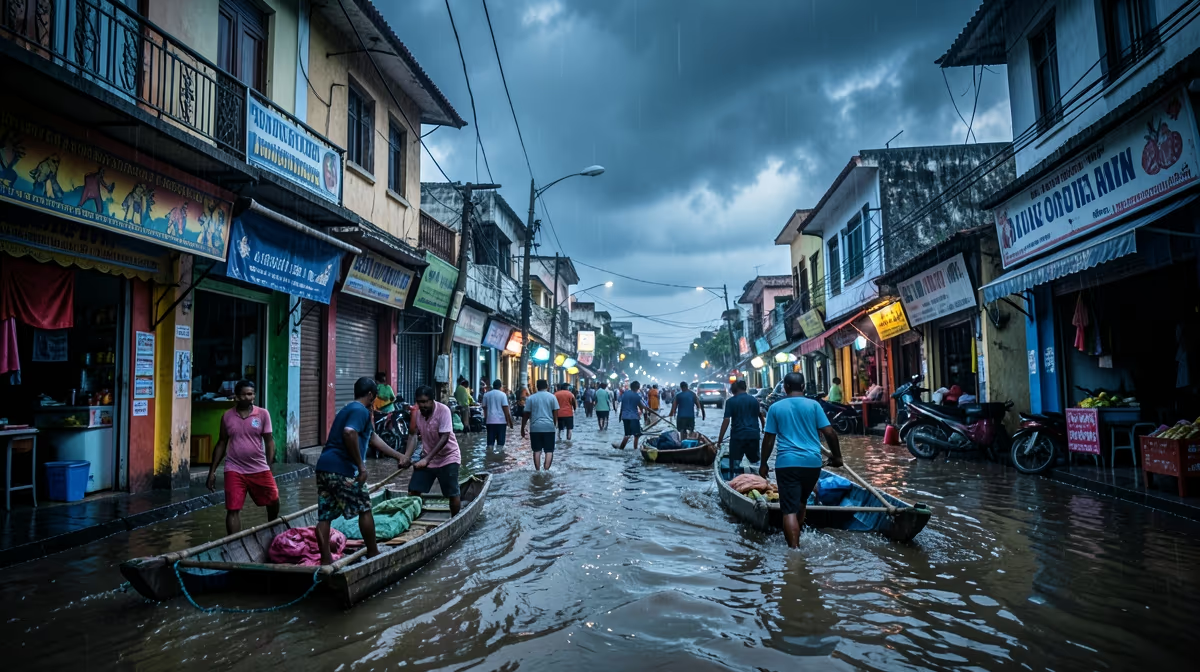
The India Meteorological Department has issued a red alert for heavy to extremely heavy rainfall across several coastal districts of Karnataka and Kerala, effective Wednesday through Friday, as a cyclonic circulation strengthens over the Arabian Sea. This intensification of monsoon conditions has triggered urgent flood warnings in low-lying areas of the southern peninsula. Local administrations have been directed to prepare for potential landslides and waterlogging, with emergency response teams staged in districts including Udupi, Dakshina Kannada, and Pathanamthitta. As a precautionary measure, schools and colleges in several affected regions have been ordered to remain closed.
Meteorologists report that an offshore trough at mean sea level, extending along the South Gujarat-Kerala coast, is driving this intense precipitation. Residents are being advised to avoid coastal zones and refrain from travel in mountainous regions where visibility is restricted by thick fog and torrential rain. Authorities are currently monitoring water levels in major dams to manage potential outflow. National Disaster Response Force contingents have been deployed to high-risk zones with rescue gear, while power supplies remain intermittent in rural sectors due to precautionary grid shutdowns. Fishing activities have been suspended across the eastern Arabian Sea until further notice to prevent maritime incidents during these squally conditions.
Key Facts
The current meteorological landscape is defined by several verified developments. Severe heatwave conditions are simultaneously affecting parts of Northern India, while the southwest monsoon is actively bringing heavy rainfall to coastal regions. The India Meteorological Department utilizes a color-coded alert system to communicate risk levels to the public. These temperature fluctuations are placing significant strain on electricity demand and water availability, while flash flood warnings remain in effect for several low-lying districts. The current weather system is specifically driven by a combination of an offshore trough and a strengthening cyclonic circulation.
Why It Matters
Extreme weather events carry immediate consequences for daily life, agricultural productivity, and the stability of urban infrastructure. Frequent heatwaves and sudden, heavy flooding threaten to overwhelm power grids, damage standing crops, and exacerbate the risk of waterborne diseases. For the agricultural sector, the monsoon is the lifeblood of food security; however, the shift toward erratic patterns complicates the planting and harvesting cycles. For urban planners, the challenge lies in managing aging infrastructure against the backdrop of record-breaking deluges. These factors make accurate forecasting a vital tool for disaster management and community safety, as the population—ranging from rural farmers to commuters in dense metropolitan centers—remains highly sensitive to these atmospheric shifts.
Expert Analysis
The root cause of these phenomena is a complex convergence of anthropogenic climate change exacerbated by rapid, unplanned urbanization and the historic collapse of traditional water management systems. Historical parallels can be drawn to the 1876-1878 Great Famine, where climatic volatility combined with extractive policies created systemic collapse. Looking at the timeline, the 1990s and 2000s marked the initial shift in monsoon intensity and heatwave frequency. By the period between 2010 and 2023, there was a progressive increase in flash floods and multi-year drought cycles. Today, the nation is transitioning toward a volatile new normal, characterized by unpredictable atmospheric rivers and permanent water stress. A hidden dimension of this crisis is the rapid depletion of groundwater tables, a problem often masked by record-breaking monsoon rainfall data that reflects surface conditions but ignores deep-aquifer exhaustion.
Political And Geopolitical Implications
The situation has created tangible friction between the center and various states regarding disaster relief funding and the politicization of drought management in agrarian-dependent constituencies. Economically, the country faces severe disruptions to agricultural supply chains, which exert inflationary pressure on essential food commodities and necessitate increased expenditure on emergency infrastructure repair. On the geopolitical front, there is an increase in regional instability within South Asia, largely stemming from transboundary river water management disputes and climate-induced migration patterns that challenge existing regional security frameworks.
What Happens Next
In the next 24 hours, monsoon troughs are expected to intensify over Northwest India, leading to increased cloud cover and scattered thunderstorms in Rajasthan and Punjab. Over the next 72 hours, a low-pressure area is forecast to track across Central India, bringing widespread moderate to heavy rainfall to Madhya Pradesh and Maharashtra. The monsoon is entering a vigorous phase, and experts anticipate significant water accumulation in urban centers and a surge in reservoir levels across central catchment areas. In the best-case scenario, consistent, moderate rainfall will facilitate healthy agricultural output without triggering flash floods. Conversely, the worst-case scenario involves intense convective activity leading to severe urban waterlogging in metropolitan hubs like Mumbai and Delhi, and flash flooding in mountainous regions.
Frequently Asked Questions
What is the current weather forecast for India?
A: The weather across India varies significantly due to its diverse geography and ongoing seasonal transitions. For the most accurate and localized forecast, it is recommended to check the official India Meteorological Department website or reliable weather apps that provide real-time updates based on your specific city.
When does the monsoon season start in India?
A: The Southwest Monsoon typically arrives in Kerala on the southern coast around June 1st each year. From there, it gradually advances across the rest of the Indian subcontinent, usually covering the entire country by mid-July.
Which is the hottest month in India?
A: May is generally considered the hottest month across most parts of India, preceding the arrival of the monsoon rains. During this period, many regions experience extreme heat waves with temperatures frequently soaring above 40°C.
Is it cold in India during December?
A: Yes, December is winter in India, and it can get quite cold, especially in Northern India and the Himalayan regions. While coastal and southern parts of the country remain mild and pleasant, northern states often experience near-freezing temperatures and heavy fog.
What are the four major seasons in India?
A: According to the India Meteorological Department, the four official seasons are winter, which lasts from January to February, and summer, which spans from March to May. This is followed by the rainy monsoon season from June to September, and the post-post-monsoon period from October to December.
Where can I find reliable weather alerts for India?
A: You can find official and reliable weather alerts through the India Meteorological Department website and their dedicated mobile applications. Additionally, major news outlets and national weather services provide timely updates regarding cyclones, heavy rainfall, and heat wave warnings.
Conclusion
The current weather landscape in India reflects a broader, systemic shift toward climatic volatility. With red alerts in place for coastal Karnataka and Kerala and an active monsoon cycle moving toward Central India, the immediate priority remains the safety of populations in flood-prone and mountainous regions. As national agencies like the India Meteorological Department and the National Disaster Management Authority continue their efforts, the long-term imperative lies in addressing the infrastructure and water management failures that amplify these environmental risks. Residents are urged to maintain vigilance, adhere to official warnings, and prepare for the continued variability that defines this season.


.webp)

.webp)

