
Xbox Series X Price Changes Are Signaling a Shift for All US Gamers
Introduction
The gaming industry is currently navigating a period of unprecedented economic turbulence, prompting a re-evaluation of how premium hardware is valued by both corporations and consumers. With ongoing shifts in the gaming industry inflation landscape, many consumers are closely watching for an official announcement regarding an xbox series x price increase in the US market. While the cost of production and logistics continues to climb, the balance between accessibility and profitability has become the defining tension for major console manufacturers.
What Happened
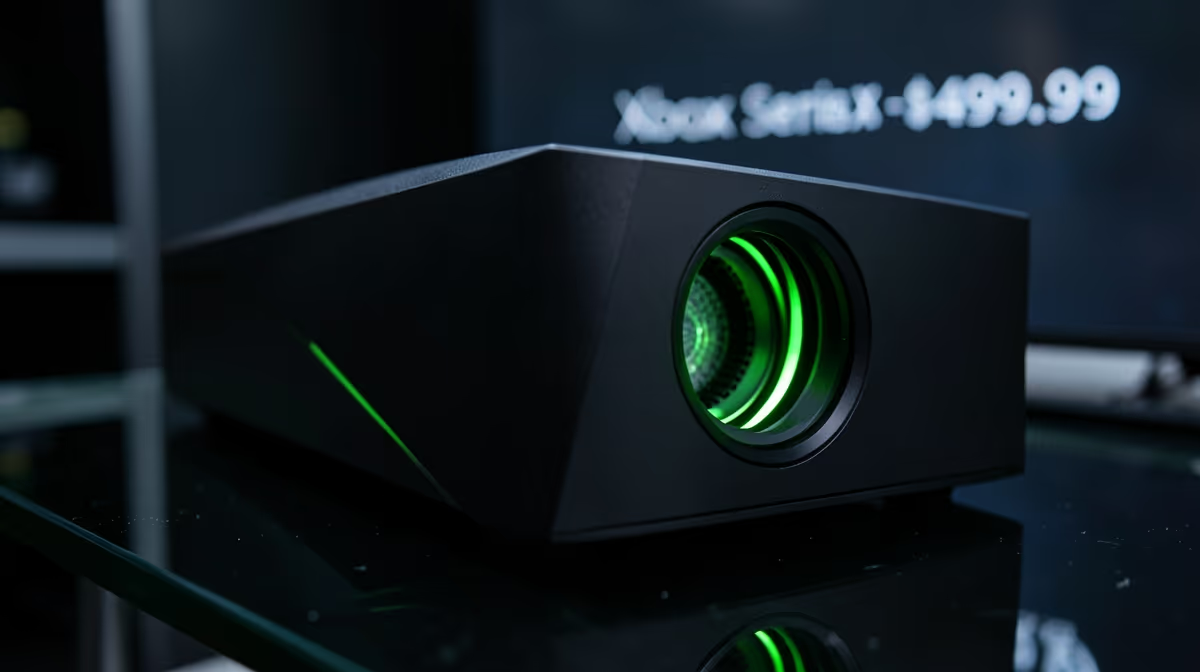
Microsoft has maintained the price of the Xbox Series X at its original $499 launch MSRP since November 2020. Over the past three years, the company resisted the broader trend of console price hikes seen among its primary competitors, such as Sony with the PlayStation 5. However, as international markets experienced incremental adjustments due to local economic conditions and fluctuating currency exchange rates, the pressure on the US market has intensified. While Microsoft has not implemented a definitive nationwide hike to $549 for the base console, the company has officially confirmed that it is adjusting prices to reflect competitive conditions in each market. This move effectively closes the chapter on the era of fixed launch pricing, as the gaming giant pivots its hardware strategy toward a model more resilient to global inflationary pressures.
Key Facts
The Xbox Series X is currently marketed at an MSRP of $499.99 in the United States, a price point held steady since the November 2020 launch. While rumors of a move to $549.99 have circulated, the primary takeaway for consumers is that Microsoft has shifted its policy toward variable pricing based on regional economic conditions. The Xbox Series S, representing the lower-tier digital option, remains at its original, lower price point. These adjustments follow a broader pattern in the gaming industry, where manufacturing costs for semiconductors and supply chain logistics have forced competitors to raise their baseline hardware costs. Microsoft spokesperson Kari Perez has explicitly stated that the company has held prices for many years but is now adjusting them to better reflect the current competitive landscape in each specific region.
Why It Matters
For the average consumer, this pivot represents a shift in the economics of home entertainment. As household budgets remain under the strain of broader inflation, the cost of entering the premium console market becomes a critical decision point. A price increase, whether direct or through the phasing out of older SKUs, risks alienating a portion of the gaming audience. If the price of high-end hardware rises, potential buyers may delay their purchases or opt for the less powerful Series S, which in turn could slow the growth of the premium console ecosystem. Furthermore, the reliance on high-end hardware for developers means that any dip in hardware adoption could influence future software development cycles, effectively creating a ripple effect across the entire digital entertainment industry.
Expert Analysis
The root cause of this pricing tension is the normalization of subscription-based hardware-as-a-service models designed to offset stagnant physical console margins. Microsoft is facing rising semiconductor costs and the hardening of global supply chains, which are no longer absorbing the costs of high-performance components. There is a strategic move toward a platform-state power structure, where the ecosystem’s value is increasingly tied to the Game Pass subscription rather than the upfront sale of the console itself. By adjusting hardware pricing, Microsoft is effectively protecting its margins while pushing users toward a recurring revenue model. This transition mirrors historical shifts in the gaming industry, specifically the mid-2000s era where price wars gave way to the development of controlled, digital-first walled gardens.
Political And Geopolitical Implications
The gaming hardware market is increasingly sensitive to the geopolitical climate, particularly regarding the manufacturing of advanced semiconductors. Reliance on TSMC and East Asian chip fabrication centers makes console pricing hypersensitive to US-China trade tensions. Potential bottlenecks in the Taiwan Strait could lead to further supply chain disruptions, forcing companies like Microsoft to pass the cost of logistics onto the consumer. Additionally, the recent consolidation of the industry via mergers suggests a move toward a more centralized power structure. As Microsoft reallocates capital to address increased CAPEX in AI infrastructure, there is an inherent pressure to maintain double-digit revenue growth within the gaming division, leading to more aggressive pricing tactics as a tool for shareholder value.
What Happens Next
The next 24 hours will likely see heightened social media speculation and community backlash as gamers react to potential hardware pricing adjustments. Within 72 hours, it is expected that Microsoft public relations will provide further clarifications to address these concerns and solidify their regional pricing strategy. Industry analysts predict that rather than announcing a simple, universal price hike for the Series X, Microsoft will likely lean into Xbox All Access bundles or begin phasing out current hardware in favor of a refreshed, mid-gen version. The best-case scenario for the consumer is that Microsoft maintains the current MSRP while relying on value-add services to weather inflation. The worst-case scenario remains a formal and direct price increase, which could lead to significant brand erosion and a shift in market share toward the PlayStation 5.
Frequently Asked Questions
Has the Xbox Series X price increased in the US?
As of now, Microsoft has not officially increased the retail price of the Xbox Series X in the United States. The console maintains its original manufacturer's suggested retail price of $499.99.
Why did the Xbox Series X price go up in some regions?
While the US price has remained stable, Microsoft previously announced price adjustments for the Xbox Series X in various international markets. These changes were largely attributed to local economic conditions and fluctuating currency exchange rates.
Is the Xbox Series X getting a price hike soon?
Microsoft has not announced any plans to increase the price of the Xbox Series X in the US. However, tech hardware pricing is subject to change based on manufacturing costs and market demand.
Will buying an Xbox Series X cost more in the future?
There is no current information suggesting that the price will increase for US consumers. If you are looking to purchase one, the current retail price remains consistent across major authorized retailers.
Did the Xbox Series S price increase along with the Series X?
No, the Xbox Series S has not seen a price increase in the US market. The console continues to be sold at its standard MSRP.
Are there different Xbox Series X prices depending on the store?
While the official MSRP is $499.99, some third-party resellers may list the console at higher prices. It is recommended to purchase through major authorized retailers.
Conclusion
The current state of Xbox hardware pricing reflects a calculated response to a complex global economic environment. While the US market has remained insulated from a direct MSRP increase for the Xbox Series X, the broader industry trend suggests that the era of stagnant hardware pricing is coming to a close. Microsoft is navigating the delicate balance between maintaining market share and protecting profit margins, with future strategies likely favoring subscription bundles over pure hardware sales. As the industry continues to evolve, consumers should prioritize purchasing through authorized channels to avoid secondary market premiums while keeping a close watch on official Microsoft communications for further developments regarding their hardware strategy.
" } ]


.webp)

.webp)

