
FIFA World Cup 2026 Readiness Is Uncovering Massive Hidden Challenges
Introduction
The transformation of the American sports landscape is no longer a distant projection but an unfolding reality driven by the most expansive athletic tournament in modern history. As the FIFA World Cup 2026 prepares to descend upon North America, the scale of this undertaking represents a fundamental shift in how global sporting events intersect with domestic infrastructure and economic planning.
What Happened
The tournament is set to make history as the first to be hosted across three nations, with the United States serving as the primary anchor for the event. Following the confirmation of the tournament schedule in February 2024, it was established that the U.S. will host 78 of the 104 total matches. This logistical framework spans 16 host cities across the U.S., Canada, and Mexico.
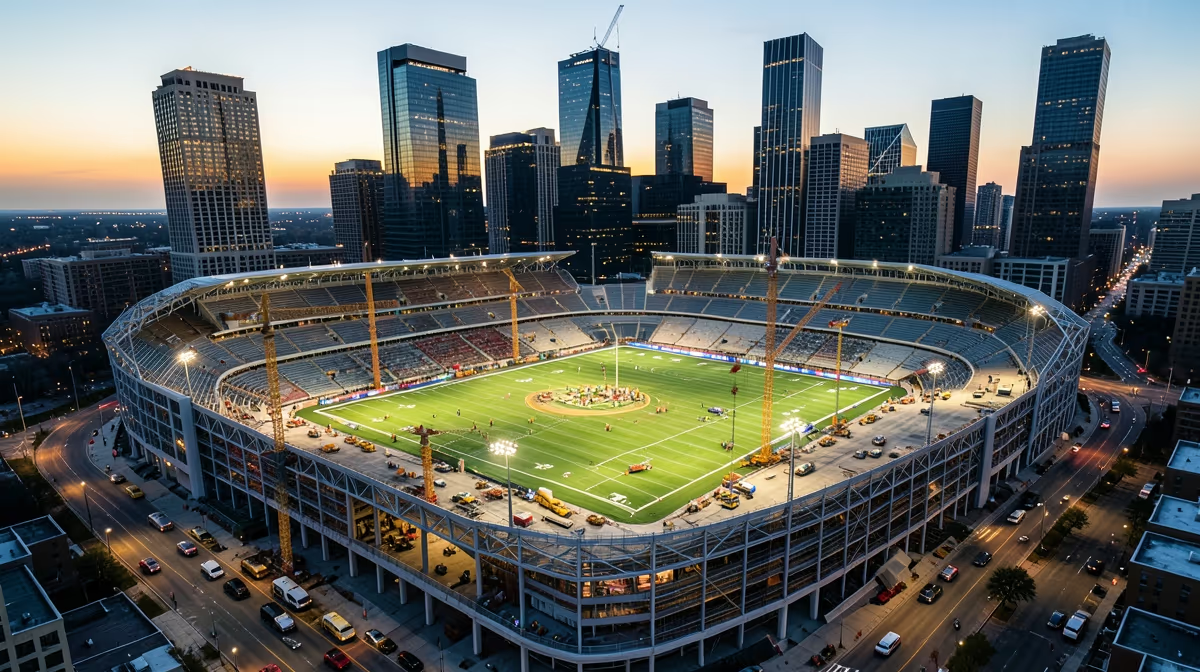
The tournament begins on June 11, 2026, at Estadio Azteca in Mexico City, but the operational focus shifts rapidly to American venues. Eleven cities in the United States, including Los Angeles, Miami, and Atlanta, have been designated as hubs. These locations are currently in the final infrastructure phase, retrofitting stadiums to meet stringent FIFA requirements regarding pitch dimensions and facility capacities. The tournament will reach its conclusion on July 19, 2026, with the final match at MetLife Stadium in New Jersey.
Key Facts
The 2026 tournament marks the first time the World Cup will feature 48 teams, a significant expansion from the previous 32-team format. This increase aims to broaden global participation and broadcasting reach.
Matches are spread across 39 days, making this the longest FIFA World Cup in history. The United States will host the majority of the matches, utilizing major metropolitan venues. Each host city is currently managing the development of transportation networks and fan zones to accommodate millions of international spectators. Infrastructure upgrades are focusing on public transit expansion and the enhancement of hospitality systems to support the influx of travelers.
Why It Matters
For host cities and the broader national economy, the event serves as a catalyst for significant financial activity. Estimates suggest the tournament will provide an economic boost measured in the billions through hospitality, tourism, and direct event spending. Beyond immediate revenue, the event acts as a bridge for the commercialization of soccer, mirroring the historical trajectory of the 1994 World Cup, which is widely credited with the professionalization of the sport in the United States.
Local businesses and public sectors face the challenge of managing immense operational scale, ranging from cybersecurity for event systems to the integration of urban transportation. For the millions of fans and international travelers, the tournament represents a rare opportunity to engage with the world’s most popular sport on home soil, positioning the region as a central hub for future international sporting events.
Expert Analysis
The root cause of this massive logistical undertaking is the consolidation of FIFA's commercial power through the 48-team expansion, which necessitates the unparalleled scale of the U.S. market. Economically, the strategy relies on leveraging existing National Football League and Major League Baseball stadium infrastructure. This approach minimizes capital expenditure while maximizing commercial ticket revenue and global broadcast rights, creating a new precedent for the profitability of privatized public events.
While the U.S. is positioned for an unprecedented surge in sports tourism, experts anticipate that operational friction will persist. The geographic diversity of the 16 host cities and the challenges of managing events across different time zones present complex logistical hurdles. Success remains contingent upon the integration of public transit and seamless stadium operations, while potential worst-case scenarios involve significant logistical bottlenecks and the strain on local law enforcement in major metropolitan areas.
Political And Geopolitical Implications
The tournament functions as a strategic projection platform for the United States to reassert global cultural influence. By aligning the interests of the U.S., Mexico, and Canada, the event serves to solidify a continental economic bloc and demonstrate logistical dominance to international observers.
This regional cooperation is coupled with a focus on internal governance hurdles, including the management of security state dynamics during a high-profile global event. Furthermore, the integration of advanced biometric surveillance and AI-driven crowd management systems represents a new standard for global sporting events, raising ongoing discussions regarding the balance between security, privacy, and the management of large-scale public gatherings.
What Happens Next
In the next 24 hours, FIFA executives are expected to finalize logistical details regarding stadium security protocols and fan-fest capacity for the 16 host cities. As the timeline advances toward the next 72 hours, observers should expect an increased focus on infrastructure readiness reports for stadiums in New York/New Jersey and Los Angeles. These developments will be accompanied by ongoing discussions regarding training site allocations for the participating nations. Future milestones will include the finalization of ticket pricing tiers and the announcement of official team base camp assignments.
Frequently Asked Questions
Where is the 2026 FIFA World Cup being held?
The 2026 FIFA World Cup will be co-hosted by three countries: the United States, Canada, and Mexico. This historic tournament will feature matches across 16 different host cities throughout North America.
When does the 2026 World Cup start?
The 2026 World Cup is scheduled to begin on June 11, 2026, with the opening match taking place at the Estadio Azteca in Mexico City. The tournament will conclude with the final match on July 19, 2026.
How many teams will play in the 2026 World Cup?
The 2026 tournament will feature an expanded format with 48 teams competing, up from the previous 32-team structure. This change increases the total number of matches, providing more opportunities for nations to qualify.
Where will the 2026 World Cup final be played?
The final match of the 2026 FIFA World Cup will be held at MetLife Stadium in East Rutherford, New Jersey, serving the New York City area.
How can I buy tickets for the 2026 World Cup?
Tickets for the 2026 World Cup will be sold exclusively through the official FIFA website. Fans are encouraged to register their interest on the FIFA ticketing portal to receive updates regarding official sale windows.
What are the US host cities for the 2026 World Cup?
The United States will host matches in 11 cities, including Atlanta, Boston, Dallas, Houston, Kansas City, Los Angeles, Miami, New York/New Jersey, Philadelphia, San Francisco, and Seattle.
Conclusion
The FIFA World Cup 2026 represents a landmark moment for North American infrastructure and global sports economics. With 104 matches scheduled across 16 cities, the tournament creates a massive logistical footprint that challenges host nations to optimize urban transit and security frameworks. As the final phases of stadium retrofitting and operational planning continue, the focus shifts toward ensuring that the long-term economic gains match the scale of this international event. The successful execution of this tournament will likely solidify the region’s status as a premier destination for future global spectacles, provided that the operational complexities are managed with the precision required for an event of this magnitude.
"


.webp)

.webp)

