
FIFA World Cup 2026 Plans Trigger Major Shifts in North America
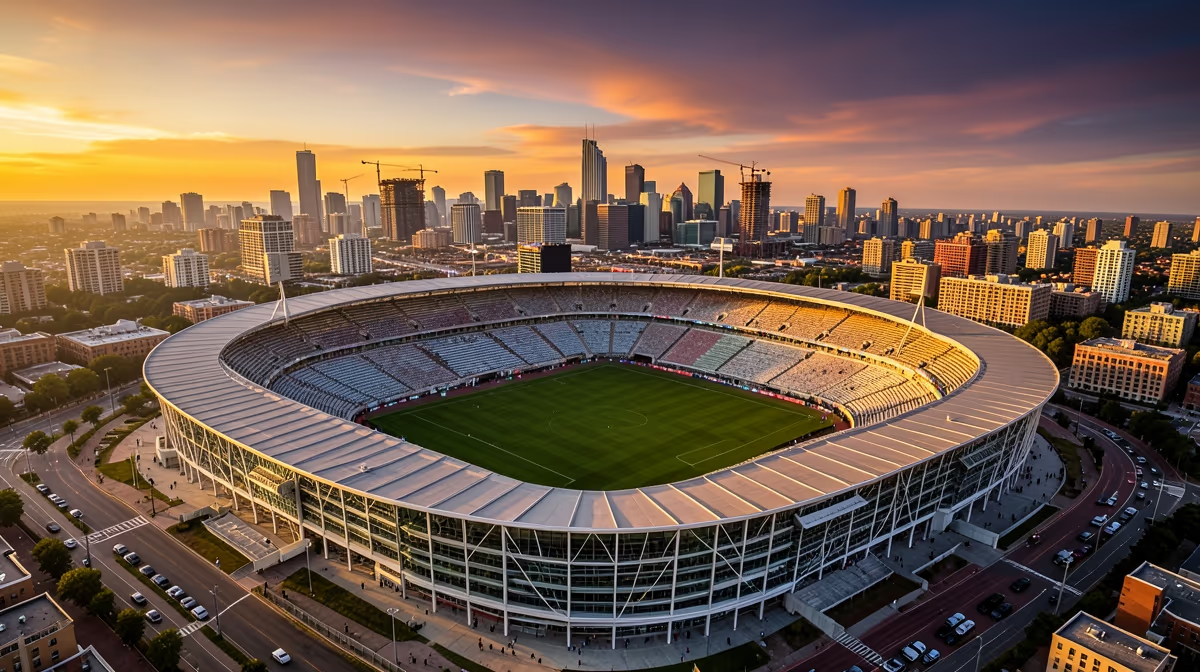
The landscape of international sports is undergoing a tectonic shift as North America prepares to host the largest iteration of the world's most watched event. The FIFA World Cup 2026 is set to bring unprecedented excitement to North America as the global tournament returns to the United States, promising to redefine the logistical and economic parameters of mega-events.
A New Era for the World Cup
The upcoming tournament marks a historic milestone as it moves away from the traditional 32-team format to a massive 48-team structure. This expansion, which results in 104 matches, represents a significant evolution for the FIFA World Cup 2026, aimed at increasing global participation and maximizing the event's reach. The tournament is scheduled to run from June 11 to July 19, 2026, with the opening match slated for Estadio Azteca in Mexico City and the grand final hosted at MetLife Stadium in New Jersey. By spreading the competition across 16 cities in the United States, Canada, and Mexico, the tournament functions as a tri-national collaboration that integrates North American logistics and infrastructure into a unified global platform.
The Strategic and Economic Pivot
From an analytical perspective, the selection of North America for this tournament is not coincidental. It stems from a clear root cause: the consolidation of global sports entertainment assets to leverage North American commercial dominance while counteracting shifting viewership patterns in traditional European markets. The tournament serves as a mechanism to solidify U.S. influence within the governance structures of international football. Economically, the move toward high-margin corporate hospitality and luxury seating suggests a shift in priorities, focusing on long-term revenue maximization. This approach mimics the successful model of the 1984 Los Angeles Summer Olympics, which demonstrated how private-sector funding and corporate sponsorship could provide a blueprint for hosting sustainable international events.
Logistical and Security Challenges
Hosting such a massive event in the United States, Canada, and Mexico necessitates an unprecedented level of inter-agency cooperation. As host cities prepare for the influx of international visitors, the focus has shifted toward transport infrastructure and border control protocols. Officials and local organizing committees in cities such as New York/New Jersey and Los Angeles are currently finalizing plans to manage the strain on public transit systems. Beyond transportation, the security assessment for the tournament includes the integration of advanced biometric systems and data-driven monitoring within stadium venues. This development is setting a potential precedent for how large-scale public gatherings will be managed globally in the future, balancing the need for safety with the logistical realities of urban crowd control.
Infrastructure and Development Goals
The tournament acts as an accelerant for urban modernization. U.S. host cities are leveraging the event to solidify long-term strategies for regional transit and hospitality, aiming to leave a lasting impact on local infrastructure. For the 11 U.S. host cities—Atlanta, Boston, Dallas, Houston, Kansas City, Los Angeles, Miami, New York/New Jersey, Philadelphia, San Francisco, and Seattle—the benefits are viewed through the lens of economic stimulation. However, the path forward is not without risk. Experts note that a worst-case scenario involves significant logistical failures, strained public transportation, and security costs that could lead to local budget deficits. Conversely, the best-case outcome envisions a seamless operational execution that results in record-breaking revenue and a permanent elevation of the sport's profile within the American market.
The Future Outlook
Looking toward the immediate timeline, stakeholders expect consistent updates regarding tournament logistics and ticketing protocols. Within the next 24 hours, officials and local organizers are expected to release specific details concerning the expanded tournament structure and localized entry requirements for fans. Following this, the next 72 hours will likely see major transit plans surface as cities refine their capacity to handle the surge in international traffic. These developments are critical as the U.S. Soccer Federation leadership and international stakeholders work to ensure that the tournament remains the cornerstone of the FIFA 2026-2030 commercial cycle.
Frequently Asked Questions
Where is the 2026 FIFA World Cup being held?
The 2026 FIFA World Cup will be co-hosted by the United States, Canada, and Mexico. This historic tournament will feature matches across 16 different host cities in North America.
When does the 2026 FIFA World Cup start?
The tournament is scheduled to kick off on June 11, 2026, with the opening match taking place at the Estadio Azteca in Mexico City. The final match will be held on July 19, 2026, at MetLife Stadium in New Jersey.
How many teams will compete in the 2026 World Cup?
The 2026 tournament will expand to include 48 teams, an increase from the previous 32-team format. This change allows for more nations to participate and results in a total of 104 matches being played throughout the event.
Where can I buy tickets for the 2026 World Cup?
Tickets for the 2026 FIFA World Cup will be sold exclusively through FIFA's official ticketing platform. Fans are encouraged to register their interest on the official FIFA website to receive updates regarding sales phases and pricing.
Which US cities will host 2026 World Cup games?
The United States will host matches in 11 cities, including Atlanta, Boston, Dallas, Houston, Kansas City, Los Angeles, Miami, New York/New Jersey, Philadelphia, San Francisco, and Seattle. Each of these venues was selected based on their world-class stadium infrastructure and ability to accommodate large crowds.
Will the 2026 World Cup final be in the US?
Yes, the final match of the 2026 FIFA World Cup is scheduled to be held in the United States. The championship game will take place at MetLife Stadium in East Rutherford, New Jersey, on July 19, 2026.
Conclusion
The FIFA World Cup 2026 stands as a monumental endeavor that seeks to transform the sporting and economic landscape of North America. With the expansion to 48 teams and the selection of 16 host cities across three nations, the tournament is poised to deliver a unique blend of global football competition and localized infrastructure growth. While the scale of the event introduces significant logistical and financial complexities, the roadmap for execution is becoming increasingly clear. As the host nations continue their preparations, the focus remains on ensuring operational readiness, managing security, and maximizing the long-term impact on the host communities. Stakeholders, fans, and policy observers should expect continued updates regarding ticketing and site-specific transit plans as the countdown to June 2026 progresses.


.webp)

.webp)
