
Sonam Wangchuk Hunger Strike Escalates as Ladakh Tensions Reach Peak
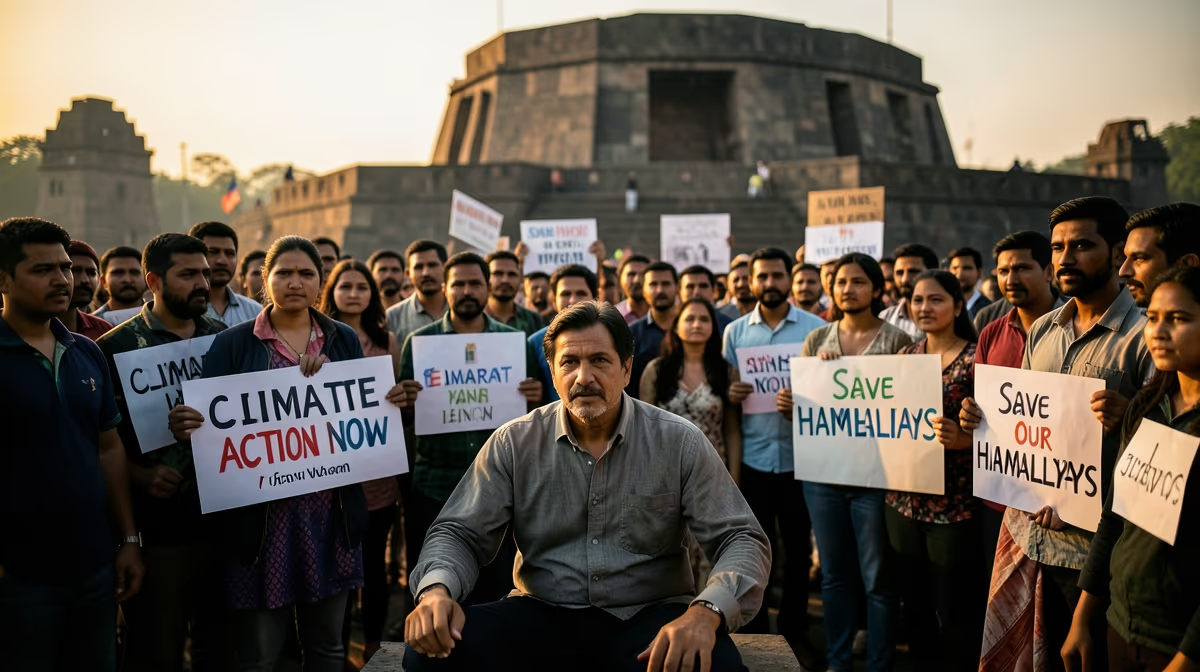
The Sonam Wangchuk hunger strike has gained national attention as the renowned climate activist leads Ladakh protests for constitutional safeguards, drawing crowds to Jantar Mantar to demand action on India environmental policy. This high-stakes mobilization underscores a mounting tension between the drive for large-scale infrastructure development and the urgent need to protect the fragile Himalayan ecology in one of the world's most sensitive border zones.
Roots of the Regional Autonomy Struggle
The primary catalyst for this unrest is the 2019 reorganization of the former state of Jammu and Kashmir, which resulted in Ladakh being established as a Union Territory without a legislative assembly. Residents and local leaders, including Sonam Wangchuk, argue that this administrative shift left the region vulnerable to industrial exploitation, potentially compromising its fragile high-altitude environment. The root cause of the current friction is a demand for inclusion under the Sixth Schedule of the Indian Constitution. This constitutional provision is specifically designed to provide tribal areas with legislative and judicial autonomy, allowing local communities to exercise control over their land, resources, and governance. By seeking this status, proponents hope to create a protective barrier against unchecked corporate extraction that they fear will degrade the Himalayan glacier environment, which is already under immense pressure from climate change.
A Pattern of Environmental Advocacy
Sonam Wangchuk, an engineer whose work in sustainable development has earned him widespread recognition, has become the face of this movement. His approach—combining traditional Gandhian peaceful protest with modern environmental activism—has effectively elevated the visibility of Ladakh's concerns on the national stage. The activism has been characterized by intermittent hunger strikes, most notably a 21-day fast in Leh where temperatures dropped well below freezing. Wangchuk asserts that these physical sacrifices are necessary to highlight the existential threat facing the region. His efforts are supported by key regional bodies, namely the Leh Apex Body (LAB) and the Kargil Democratic Alliance (KDA), both of which are actively engaged in negotiations with the Union Ministry of Home Affairs to seek statehood and constitutional recognition.
Geopolitical Sensitivity and Security
Ladakh’s unique position as a critical border zone facing the Line of Actual Control makes the current unrest a matter of national security. The Indian government faces the complex challenge of balancing the requirements of borderland integration and strategic deterrence with the demands of a local population that feels disenfranchised by central administration. From an analytical perspective, the protests are not merely local grievances but a strategic challenge to the centralization of power. The use of peaceful, identity-based protests acts as a form of asymmetric political pressure, forcing the central government to prioritize the stability of a remote territory that is essential to the country's broader geopolitical posture. Policymakers are acutely aware that any deterioration in public trust or local stability in this sensitive region could have significant implications for national security objectives.
The Human and Political Dimension
The political landscape is defined by a deep-seated fear of demographic and environmental dilution. Supporters of the movement argue that without the constitutional safeguards provided by the Sixth Schedule, the region is susceptible to outside developers, which would threaten the cultural identity of indigenous groups. This is a recurring narrative in India, drawing parallels to historical regional autonomy struggles such as the Gorkhaland movement. For the population of Ladakh, the demand for statehood is synonymous with the right to self-determination regarding the future of their land. The involvement of diverse local groups indicates that this is a broad-based movement rather than the initiative of a single individual, reflecting a collective determination to ensure that Ladakh’s developmental path respects its ecological limitations.
Navigating the Path Forward
Looking toward the immediate future, the situation remains fluid. Within the next 24 hours, experts anticipate a mobilization of civil society groups and climate activists in support of the ongoing movement, placing increased pressure on the Union Ministry of Home Affairs via social media and public discourse. Within 72 hours, there is a possibility of formal outreach from government interlocutors to the Leh Apex Body and the Kargil Democratic Alliance. The expert consensus suggests that the government is likely to initiate a dialogue to de-escalate the tension, as the optics of a prolonged hunger strike by a figure of Wangchuk's stature pose a significant risk to regional stability ahead of parliamentary oversight sessions. A best-case scenario involves a commitment from the government to hold time-bound talks regarding constitutional safeguards, while a worst-case scenario involves a continued impasse that could lead to widespread civil unrest and a decline in public trust.
The Economic and Ecological Calculus
At the core of the debate is the tension between economic connectivity and environmental preservation. State-led infrastructure projects aimed at bolstering connectivity are viewed by the government as essential for economic growth and strategic readiness. However, activists point to the ecological fragility of the high-altitude desert, arguing that the costs of large-scale, intensive industrialization far outweigh the benefits if the water sources and grazing lands of the local people are destroyed in the process. This conflict sets a critical precedent for how India manages the development of its most remote, ecologically sensitive frontiers. The ongoing dialogue between the MHA and local representatives is not just about legislative status; it is a test of how a modern state integrates the competing priorities of national development and environmental justice.
Frequently Asked Questions
Why is Sonam Wangchuk on a hunger strike?
Sonam Wangchuk initiated his hunger strike to demand constitutional safeguards for Ladakh under the Sixth Schedule of the Indian Constitution. He is advocating for the protection of the region's fragile ecosystem and the political rights of its local indigenous population.
What is the primary demand of Sonam Wangchuk's protest?
The primary demand is the granting of statehood to Ladakh and its inclusion under the Sixth Schedule of the Constitution. This status would allow for greater local governance and legal protection for the region's land and resources.
How long did Sonam Wangchuk's hunger strike last?
Sonam Wangchuk has undertaken multiple phases of hunger strikes, with his most notable protest being a 21-day fast in Leh. These intermittent periods of fasting are part of a larger ongoing movement to pressure the central government to address Ladakh's regional concerns.
What is the significance of the Sixth Schedule for Ladakh?
The Sixth Schedule provides for the administration of tribal areas through autonomous district councils, granting local communities autonomy over land, education, and health. Proponents believe this is essential for preserving Ladakh's unique cultural identity and sensitive environment against unchecked industrial development.
Has the government responded to Sonam Wangchuk's demands?
The government has held several rounds of talks with representatives from the Leh Apex Body and the Kargil Democratic Alliance regarding Ladakh's demands. While discussions have taken place, the protesters continue to seek a concrete legislative commitment toward statehood and Sixth Schedule protection.
Where is Sonam Wangchuk currently protesting?
Sonam Wangchuk has primarily organized his protests and hunger strikes in Leh, Ladakh, often braving extreme sub-zero temperatures. His movement has attracted significant national attention, leading to solidarity protests in other major cities across India.
Conclusion
The movement led by Sonam Wangchuk has successfully centered the future of Ladakh within the national discourse, forcing an examination of the balance between development and regional autonomy. While the 21-day fast in Leh has concluded, the underlying demands for constitutional safeguards under the Sixth Schedule and statehood remain unresolved. The transition of the movement toward new phases of protest, focused on issues such as grazing land rights, suggests a sustained commitment from the Leh Apex Body and the Kargil Democratic Alliance. The current phase involves high-stakes negotiations with the Union Ministry of Home Affairs, which remains the decisive factor in whether this conflict will find a peaceful, legislative resolution or continue to escalate. All eyes remain on the dialogue between the government and local stakeholders as they navigate these complex constitutional and environmental challenges.


