
SpaceX Starship Launch Delay Signals Major Shift in Mission Strategy
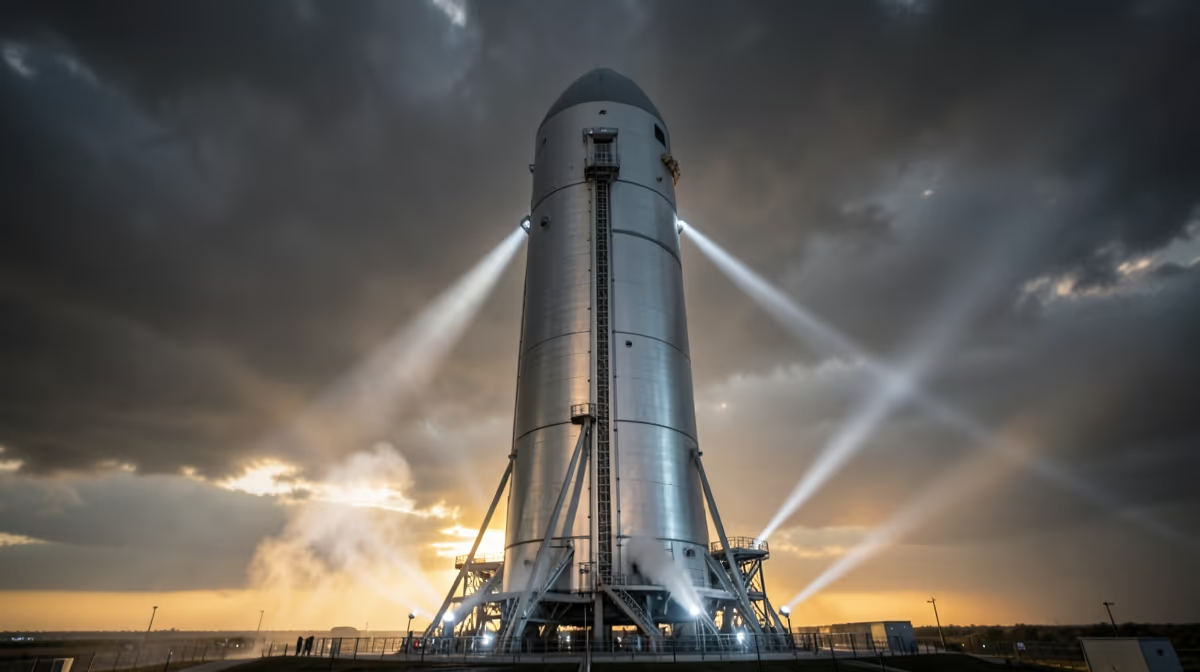
When the world's largest rocket prepares to breach the atmosphere, even a six-day schedule shift sends ripples across the entire commercial space industry. SpaceX has officially announced a SpaceX Starship launch delay, pushing the highly anticipated upcoming flight further into its autumn schedule. Moving the target date for Starship Flight 14 to September 28, 2026, the temporary postponement allows engineering teams additional time to finalize technical checkouts and system optimizations at the launch facility.
SpaceX has officially rescheduled the next Starship megarocket orbital flight to September 28, 2026, utilizing a six-day delay to complete essential technical evaluations and regulatory checks.
Why SpaceX Pushed Back Starship Flight 14
The schedule adjustment shifts the anticipated launch date for the massive vehicle as pre-flight preparations continue at the testing ground. Mid-September 2026 operational reviews initially set the stage for the mission, but an official announcement published on September 17, 2026, confirmed that the launch target was being pushed back by six days. The shift ensures that the Starship Flight 14 schedule aligns with stringent technical readiness parameters and regulatory oversight demands.
Technical refinement and regulatory compliance remain the primary root causes behind the revised timeline. In high-cadence aerospace development, schedule modifications are a standard operational practice designed to ensure that all vehicle sub-systems are operating at maximum efficiency. Federal regulatory oversight bodies and space agencies maintain strict scrutiny over orbital launch schedules, carefully balancing commercial innovation pressures against public safety requirements and environmental responsibilities.
SpaceX continues to perform ground tests and system checkouts on the megarocket, which comprises the upper-stage Starship vehicle and the Super Heavy booster. Pushing the mission target date to late September gives engineering crews the necessary window to conduct final pre-launch checks and resolve any minor operational parameters prior to propellant loading and final countdown execution.
Technical Refinement and Historical Parallels
Industry analysts point out that this brief adjustment reflects an evolving engineering methodology within the program. Rather than reacting to sudden hardware anomalies, schedule adjustments often point to a maturing developmental strategy that prioritizes system reliability over rigid calendar milestones. Ground test campaigns generate substantial operational data, and taking additional days to evaluate flight hardware parameters helps maximize the probability of mission success.
This iterative testing cycle shares direct historical parallels with major aerospace breakthroughs of the past:
- Saturn V Development: Early testing cycles of the Saturn V program frequently featured schedule adjustments to refine hardware reliability before major flight milestones.
- Commercial Space Integration: Modern commercial heavy-lift programs rely on rapid iteration, where flight schedules adapt fluidly based on real-time ground test data.
- Safety-First Verification: Granting additional time for pre-flight checkouts protects capital-intensive launch infrastructure and flight assets.
Iterative testing and rigorous safety checks remain the cornerstone of developing fully reusable heavy-lift orbital architecture.
The Starship system is fundamentally designed to be a fully reusable transportation platform capable of delivering crew and cargo to Earth orbit, the Moon, Mars, and beyond. Achieving full reusability and operational reliability for a vehicle of this scale requires an aggressive yet carefully controlled flight-test cadence where dates adjust to match technical data.
Timeline of Development and Launch Adjustments
Tracking the events surrounding the megarocket orbital flight update reveals a swift alignment of operational schedules across mid-September 2026.
| Date | Operational Event / Milestone |
|---|---|
| Mid-September 2026 | Initial preparations and operational reviews conducted for Flight 14 |
| September 17, 2026 | SpaceX officially announces 6-day flight delay to September 28 |
| September 28, 2026 | Newly targeted launch date for the megarocket orbital flight |
While primary focus centers on Starship at its launch facility, SpaceX maintains an intensive operational cadence across its broader launch portfolio during the same mid-September window:
- Vandenberg Orbital Operations: SpaceX prepared a Falcon 9 rocket launch carrying 27 Starlink V2 Mini satellites into orbit from Vandenberg.
- NASA Resupply Commitments: NASA issued invitations for media coverage regarding SpaceX's upcoming 35th commercial resupply launch to the International Space Station.
- Global Launch Scrutiny: Parallel international launch activities, including Russian rocket deployments supporting the "Rassvet" communications network or military reconnaissance assets, highlight a busy global orbital arena.
The Strategic, Economic, and Geopolitical Dimensions
A SpaceX September launch date adjustment carries implications that extend beyond immediate launchpad operations. The economic landscape surrounding heavy-lift vehicles involves substantial capital investments and long-term deployment strategies. Launch postponements temporarily stall the deployment roadmaps of next-generation orbital payloads, which can influence investor valuations and broader commercialization timelines for heavy-lift logistics.
From a political and regulatory perspective, federal oversight bodies, including those managing FAA launch license compliance, are tasked with maintaining rigorous safety standards. High-frequency launch programs require continuous coordination between private launch providers and public regulatory authorities. Ensuring full regulatory compliance prior to ignition mitigates operational risk and protects public safety.
Geopolitically, the pace of American heavy-lift aerospace development serves as a key indicator of national technological capability. Rapid progress in heavy-lift development serves as an instrument of space diplomacy and strategic capability within an increasingly competitive global space domain.
What to Expect from the Upcoming Megarocket Orbital Flight
As the new target date of September 28 approaches, operational teams are focusing on completing final pre-flight parameters. The upcoming flight represents a crucial test step for the entire Starship program as it works toward complete heavy-lift qualification.
Key operational areas under review during the delay window include:
- Booster Integration: Final structural and system checkouts between the Super Heavy booster and the upper-stage vehicle.
- Guidance and Flight Control: Software and hardware calibration for orbital trajectory management.
- Range Coordination: Final coordination with range control operators and aviation safety authorities.
- Ground Support Systems: Propellant loading infrastructure and launch mount system checks.
Organizations relying on future satellite deployments and space exploration timelines closely monitor these developmental steps, as successful test flights establish the foundation for routine heavy-lift logistics.
Future Outlook and Operational Predictions
Industry analysts and predictive models outline several key expectations for the immediate and short-term future of the mission.
Next 24 to 72 Hours
Over the next 24 hours, industry observers and aerospace analysts will continue monitoring the launch facility for updates, including static test reviews and launchpad preparations leading up to September 28. Over the next 72 hours, technical checkouts and countdown rehearsals will likely proceed as planned, with public and media attention focusing heavily on regulatory approvals and range readiness clearance.
Analyst Expectations and Scenario Planning
Space experts expect SpaceX to fully utilize the six-day window to refine flight control software, check ground fueling systems, and optimize all pre-launch parameters for the upcoming megarocket orbital flight.
- Best-Case Scenario: The six-day schedule shift allows engineering teams to resolve minor technical items smoothly, leading to an optimal countdown and successful Starship orbital flight on September 28 without further postponements.
- Worst-Case Scenario: Unforeseen technical issues or regulatory hurdles emerge during final countdown preparations, forcing mission managers to implement additional postponements beyond the revised September 28 target.
Despite the brief adjustment, SpaceX maintains its core strategy of iterative flight testing, ensuring each vehicle modification is backed by comprehensive ground validation before flight.
Frequently Asked Questions
Why did SpaceX push back the next Starship launch?
SpaceX delayed the upcoming Starship megarocket launch by six days, moving the target date back to September 28. Adjustments to launch schedules are common in aerospace testing to ensure all systems are fully prepared for flight.
What is the significance of the upcoming September 28 launch?
This mission marks a crucial step for the megarocket's ongoing flight program as SpaceX continues to refine its heavy-lift capabilities. Each test flight provides vital data required for future orbital operations and deep-space exploration.
Who is affected by the SpaceX Starship launch delay?
Space engineers, mission planners, and aerospace enthusiasts tracking the Starship program are impacted by the adjustment. Additionally, local regulatory authorities and range operators must adapt their scheduling to accommodate the new September 28 date.
What happens next in the Starship testing campaign?
Following the updated schedule, teams will perform final checkouts and pre-launch procedures leading up to the September 28 attempt. Successful execution will pave the way for subsequent developmental milestones and hardware upgrades.
What is the background of the SpaceX Starship development?
Starship is SpaceX's fully reusable transportation system designed to carry both crew and cargo to Earth orbit, the Moon, Mars, and beyond. The program relies on an aggressive flight-test cadence to rapidly iterate on design and performance.
How many days was the Starship launch delayed?
The megarocket's flight was pushed back by a total of six days, shifting the targeted lift-off from its original schedule to September 28. This brief postponement allows engineering teams additional time to review pre-flight parameters.
Conclusion
The six-day shift moving Starship Flight 14 to September 28, 2026, highlights the delicate balance between rapid aerospace iteration and strict technical validation. By taking additional time to complete system evaluations and regulatory checkouts, SpaceX continues to prioritize vehicle reliability and flight safety. As the September 28 target date approaches, the commercial space industry remains focused on the launch site, where the coming test flight will provide critical data for the future of reusable heavy-lift orbital flight.
Sources
- Starship Flight 14 — SpaceX
- SpaceX pushes next Starship launch back to Sept. 28, a 6-day delay for megarocket's 1st orbital flight — Space
- Live coverage: SpaceX to launch 27 Starlink V2 Mini satellites on Falcon 9 rocket from Vandenberg — Spaceflight Now
- SpaceX Eyes New Starship Launch Date. SPCX Orbits Aggressive Entry. — Investor's Business Daily
- NASA Invites Media to SpaceX’s 35th Resupply Launch to Space Station — NASA (.gov)
- New Russian Rocket Launch May Support “Rassvet” Network or Military Reconnaissance — UNITED24 Media


.webp)


