.webp)
Japan Earthquake Strikes Noto Peninsula As Tsunami Warnings Issued
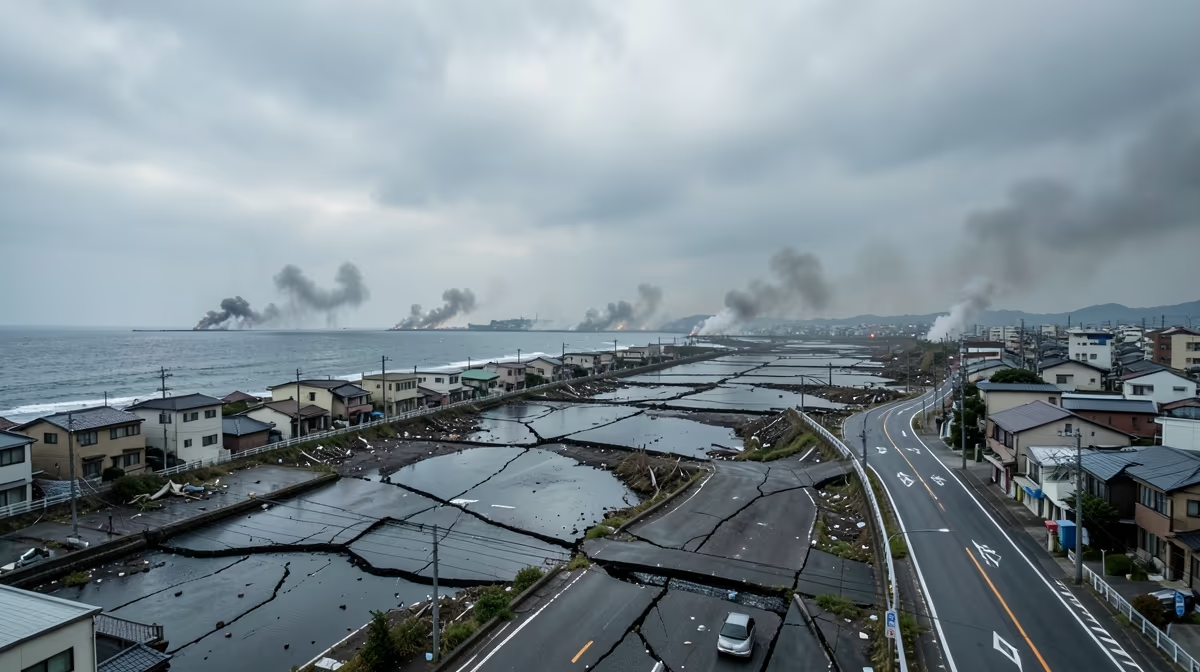
Tectonic pressure building silently beneath the earth has once again erupted along the Pacific Rim, testing the limits of modern disaster resilience in a nation perpetually on edge. A powerful 7.5 magnitude earthquake struck central Japan's Noto Peninsula on New Year's Day, triggering tsunami warnings and prompting widespread evacuation orders as authorities rushed to assess structural damage and casualties. A significant japan earthquake has struck the region, prompting immediate emergency responses and monitoring from authorities across the country.
Current Status and Epicenter Details
The shallow earthquake hit at approximately 4:10 p.m. local time, causing violent shaking that collapsed buildings, buckled highways, and sparked major fires in coastal communities such as Wajima in Ishikawa Prefecture. Japanese Prime Minister Fumio Kishida immediately established an emergency disaster response center, urging residents in affected coastal zones to move to higher ground immediately to escape potential tsunami waves. Waves of over one meter were confirmed hitting parts of the Sea of Japan coast, while transportation networks, including bullet train services in the region, were temporarily suspended for safety inspections.
Emergency services and the Japan Self-Defense Forces were mobilized rapidly, though rescue operations faced severe hurdles due to blocked roads, downed power lines, and ongoing aftershocks. Hospitals in the hardest-hit areas reported treating numerous patients with fractures and cuts, while local utilities confirmed tens of thousands of households were left without electricity amid freezing winter conditions. Japan sits on the Pacific Ring of Fire, making it one of the most seismically active nations in the world, equipped with stringent building codes designed to withstand major tremors. However, the sheer intensity of this sequence of initial shocks and recurring aftershocks severely tested local infrastructure, recalling memories of the devastating 2011 Tohoku earthquake and tsunami, though officials noted the current event's epicenter and characteristics differed significantly.
Japanese Prime Minister Fumio Kishida stated during an emergency press conference that the government is racing against time to save lives and assess the damage, urging everyone in affected areas to prioritize their safety, evacuate immediately, and stay tuned for accurate information. Chief Cabinet Secretary Yoshimasa Hayashi added that nuclear regulatory authorities confirmed no abnormalities at nuclear power plants in the region. Verified facts confirm that a 7.5 magnitude earthquake struck the Noto Peninsula in Ishikawa Prefecture on January 1, tsunami warnings were issued for Ishikawa, Niigata, and Toyama prefectures, multiple buildings collapsed and major fires broke out in the city of Wajima, and tens of thousands of homes experienced power outages following the seismic event. While the earthquake magnitude, initial tsunami wave heights, widespread structural damage in Ishikawa Prefecture, and the mobilization of national rescue forces are fully confirmed, the total casualty count, the extent of structural damage in remote or cut-off communities, and the frequency and severity of ongoing aftershocks remain actively developing.
Background Context and Root Causes
Japan has recently experienced a series of powerful earthquakes that have shaken buildings, triggered tsunami warnings, and caused widespread concern among residents. Emergency services and local authorities have swung into action, rushing to assess the damage, rescue anyone who might be trapped, and help people move to safer areas. Because Japan is one of the most earthquake-prone countries on Earth, its cities and infrastructure are specially designed to withstand heavy shaking. Even so, massive quakes can still disrupt daily life, knocking out power, halting bullet trains, and causing landslides in mountainous regions. Rescue workers are currently working around the clock to ensure everyone is safe and accounted for.
Japan's extreme seismic activity is driven by its location atop the convergent boundary of four major tectonic plates—Pacific, Philippine Sea, Eurasian, and North American—creating continuous subduction and massive strain accumulation. Historically, events like the 1923 Great Kanto earthquake reshaped the nation's political trajectory, accelerated militarization, and forced a complete reimagining of Tokyo's urban planning. In modern times, disaster management and post-earthquake reconstruction serve as pivotal arenas for political survival in Tokyo, where the ruling Liberal Democratic Party must balance rapid relief with public scrutiny over nuclear safety and infrastructure resilience. Economically, frequent mega-quakes trigger massive fiscal stimuli, straining national debt levels while temporarily boosting the construction sector, and globally, they disrupt high-tech semiconductor supply chains and insurance markets. Furthermore, Japan's vulnerability necessitates deep strategic reliance on the United States military for disaster logistics, while simultaneously positioning Tokyo as a global pioneer and exporter of seismic engineering and disaster-mitigation technology, though a hidden angle remains the psychological and demographic toll on rural depopulation where aging communities struck by earthquakes face permanent abandonment.
Why This Matters and Societal Impact
These earthquakes serve as a stark reminder of the unpredictable and destructive power of nature. They disrupt global supply chains, test the limits of modern disaster-resilience engineering, and highlight the critical importance of early warning systems in saving lives during sudden natural disasters. The affected populations include residents living in affected coastal and inland regions of Japan, tourists visiting the country, and families worldwide with loved ones in the impacted areas. Japan sits on the Pacific Ring of Fire, an intensely active seismic zone where several tectonic plates meet, making the island nation prone to frequent earthquakes and volcanic activity and leading it to develop some of the strictest building codes and most advanced early warning systems in the world.
Future Outlook and Expert Predictions
In the next 24 hours, expectations point to ongoing aftershocks and seismic monitoring by the Japan Meteorological Agency, with search and rescue operations focusing on any heavily impacted zones. Looking toward the next 72 hours, priorities will shift to the assessment of structural damage, restoration of critical infrastructure such as power and transport links, and the deployment of emergency relief supplies. Key players managing this response include the Japan Meteorological Agency, the Fire and Disaster Management Agency, the Prime Minister's Office of Japan, and the Self-Defense Forces, with impact areas spanning coastal regions, Tohoku, Kanto, and Chubu. Seismologists warn that moderate to strong aftershocks will continue for the next several days, requiring heightened preparedness for potential secondary tremors. In a best-case scenario, the outlook involves minor tremors with no significant structural damage, zero casualties, and all tsunami warnings lifted swiftly without incident. Conversely, the worst-case scenario warns that a major secondary earthquake could strike populated areas, causing widespread structural collapses, infrastructure disruption, and potential tsunami impacts.
Frequently Asked Questions
Why does Japan have so many earthquakes?
Japan experiences frequent earthquakes because it sits atop the Pacific Ring of Fire, an area with intense seismic activity. The country is located at the intersection of several major tectonic plates, including the Pacific, Philippine Sea, and Eurasian plates, which constantly grind against each other and build up immense pressure.
Are earthquakes common in Japan daily?
Yes, Japan experiences minor seismic activity almost every day, with thousands of earthquakes recorded annually across the archipelago. However, most of these tremors are too small to be felt by humans and are only detected by sensitive seismographs.
How does Japan prepare for major earthquakes?
Japan maintains some of the strictest building codes in the world, requiring structures to be engineered with advanced seismic-resistant technologies like base isolation and shock absorbers. Additionally, the country operates a nationwide early warning system and conducts regular disaster preparedness drills in schools and workplaces.
What was the largest earthquake ever recorded in Japan?
The largest earthquake recorded in Japan was the massive magnitude 9.0-9.1 Tohoku earthquake on March 11, 2011. This catastrophic event triggered a devastating tsunami that severely impacted the northeastern coast and caused the Fukushima Daiichi nuclear disaster.
Is it safe for tourists to visit Japan given the earthquakes?
Yes, Japan remains a very safe destination for travelers despite its high seismic activity. The country's exceptional disaster infrastructure, reliable public transit safety systems, and clear emergency guidelines ensure that tourists are well-protected during unexpected tremors.
What should tourists do if an earthquake happens while in Japan?
If you feel an earthquake, immediately drop, cover, and hold on under a sturdy table or protect your head away from falling objects. Stay calm, follow the instructions of local staff or emergency broadcasts, and do not use elevators during or immediately after the shaking.
Conclusion
The recent sequence of powerful earthquakes and associated tsunami advisories across central Japan underscore the relentless geological volatility of the Pacific Ring of Fire. Confirmed developments indicate widespread structural damage, transport suspensions, and power outages in Ishikawa Prefecture, prompting an immediate mobilization of national emergency services and defense forces. As authorities continue seismic monitoring and rescue operations through ongoing aftershocks, the priority remains the safety of residents and visitors in impacted coastal and inland zones, supported by Japan's advanced disaster infrastructure and strict building standards.


.webp)
.webp)
