
Mexico vs England Clash at Azteca Stadium Reveals Hidden Risks
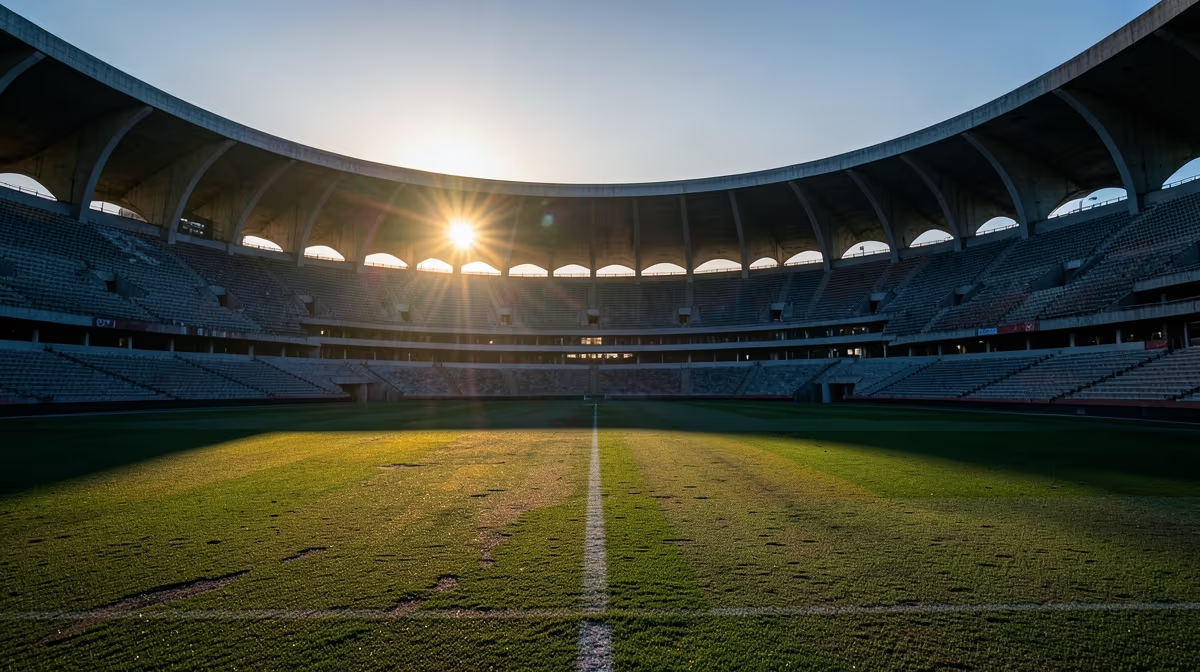
The physical toll of playing at nearly 2,240 meters above sea level remains an untamed variable that could redefine the traditional power dynamics of international football. As the FIFA World Cup 2026 approaches, the potential for a high-stakes Mexico vs England football rivalry clash has sparked debate among analysts, particularly regarding the physical demands of playing at the high altitude of Mexico City.
Historical Significance and Modern Realities
The Azteca Stadium stands as a cathedral of global football, yet for visiting European squads, it represents a profound physiological obstacle. While England maintains a position as a global powerhouse in the sport, their potential experience at this iconic venue is scrutinized through the lens of modern sports science. Historical encounters between Mexico and England are relatively rare, turning every fixture into a marquee event that captures international attention. When these two nations do collide, the spectacle often serves as a tactical testing ground, pitting the quick transitions and flair of the Mexican side against the controlled, set-piece-focused approach favored by English squads. The infrequency of these meetings adds a layer of mystery and anticipation that transcends standard international friendlies.
The Physics of Performance
The altitude of Mexico City introduces a specific set of challenges for any visiting team. Athletes accustomed to sea-level conditions often face significant respiratory and cardiovascular stress, which directly impacts recovery times and high-intensity movement during a ninety-minute match. Analysts note that the disparity in tournament preparation creates a unique pressure on teams like England, who are tasked with maintaining their elite status while adapting to environments that differ drastically from their domestic leagues. Sports experts have pointed out that the core challenge for Mexico involves bridging the gap in physical intensity against European powerhouses, a process that requires meticulous conditioning and strategic squad rotation.
Tactical Transitions and Future Cycles
Both nations are currently undergoing distinct phases of evolution within their respective national programs. For England, the focus remains on leveraging a deep pool of talent to achieve consistent success in major tournaments, balancing the rotation of players from top-flight clubs to maintain freshness. Conversely, Mexico is navigating the heightened expectations of hosting the 2026 FIFA World Cup. This dual responsibility requires the Mexican Football Federation to refine team chemistry and tactical adaptability against diverse opponents. International friendlies serve as the primary laboratory for these experiments, providing coaching staffs with essential data to solidify starting lineups and tactical formations ahead of the world stage.
Geopolitical and Economic Context
The relationship between Mexico and England extends beyond the football pitch, anchored by complex geopolitical and economic realities. Mexico serves as a critical linchpin for North American manufacturing and supply chain security, while the United Kingdom functions as a primary financial gateway and key diplomatic partner for the United States. In the broader context of global power projection, these nations operate within different but overlapping spheres of influence. The diplomatic focus typically remains on trade continuity, bilateral stability, and collaboration on regional security. While the sports world focuses on the intensity of a match, the underlying administrative bandwidth of both nations is often consumed by long-term strategic goals, such as managing security architectures and nearshoring priorities.
Projections and Market Outlook
The next seventy-two hours are likely to see continued monitoring of social media sentiment and economic reports regarding trade stability between the two nations. In the immediate future, diplomatic discourse is expected to emphasize cooperation, with no anticipated major shifts in foreign policy. Analysts suggest that the relationship will remain transactional, focusing on shared technological infrastructure and security, even as public interest in potential sporting clashes remains high. The potential for future exhibition matches remains a subject of ongoing negotiations, as promoters look to leverage the immense market interest within the United States, where large fanbases for both teams ensure near-capacity crowds.
Navigating Cultural and Living Differences
Understanding the cultural and practical differences between Mexico and England provides deeper insight into the global nature of these nations. Mexico features a diverse range of climates and a collectivist culture rooted in indigenous and Spanish traditions, with a strong focus on family and social gatherings. England offers a maritime climate and a culture that, while globally integrated, is characterized by a long history of distinct societal norms and individualistic traditions. The cost of living and the culinary landscapes of both nations further define the experience for those traveling between them, reflecting the broad spectrum of lifestyle choices available across these two regions.
Frequently Asked Questions
Is it cheaper to live in Mexico or England?
Generally, the cost of living in Mexico is significantly lower than in England. While expenses depend on your specific city and lifestyle, housing, food, and services are typically much more affordable in Mexico.
How do the climates of Mexico and England differ?
Mexico features a diverse range of climates, generally characterized by tropical, desert, and temperate zones with plenty of sunshine. In contrast, England experiences a maritime climate, known for being mild, humid, and frequently cloudy or rainy throughout the year.
What are the main cultural differences between Mexico and England?
Mexico is known for a warm, collectivist culture deeply influenced by indigenous and Spanish traditions, with a focus on family and social gatherings. England maintains a culture often perceived as more reserved and individualistic, with a long history of traditions, etiquette, and distinct societal norms.
How does the food culture compare in Mexico and England?
Mexican cuisine is world-renowned for its bold use of spices, chilies, corn, and fresh ingredients, with a focus on vibrant flavors. English food culture historically centers on comfort dishes like roasts, pies, and fish and chips, though modern cities in England now offer a highly diverse international culinary scene.
Is Mexico or England better for a vacation?
The choice depends on your interests; Mexico is ideal for those seeking beautiful beaches, Mayan ruins, and warm weather. England is better suited for travelers interested in historical landmarks, royal heritage, vibrant city life, and exploring iconic museums.
What is the primary language spoken in Mexico and England?
The official language of Mexico is Spanish, which is spoken by the vast majority of the population. England's official language is English, which serves as the primary medium for government, education, and daily communication.
Conclusion
The dynamics surrounding a potential Mexico vs England football clash highlight a fascinating intersection of physiological endurance, sporting diplomacy, and strategic planning. As both nations continue to prepare for their respective international cycles, the focus remains on refining team structures and managing the logistical demands of high-profile global competition. While diplomatic and economic ties remain stable and focused on cooperation, the allure of a rare match between these two footballing cultures continues to serve as a significant point of interest for global audiences. Future developments in scheduling and tactical evolution will undoubtedly remain central to the narrative as both nations move toward the 2026 World Cup horizon.


.webp)
