
Russian Plane Interception Near UK Airspace Signals Rising Tensions
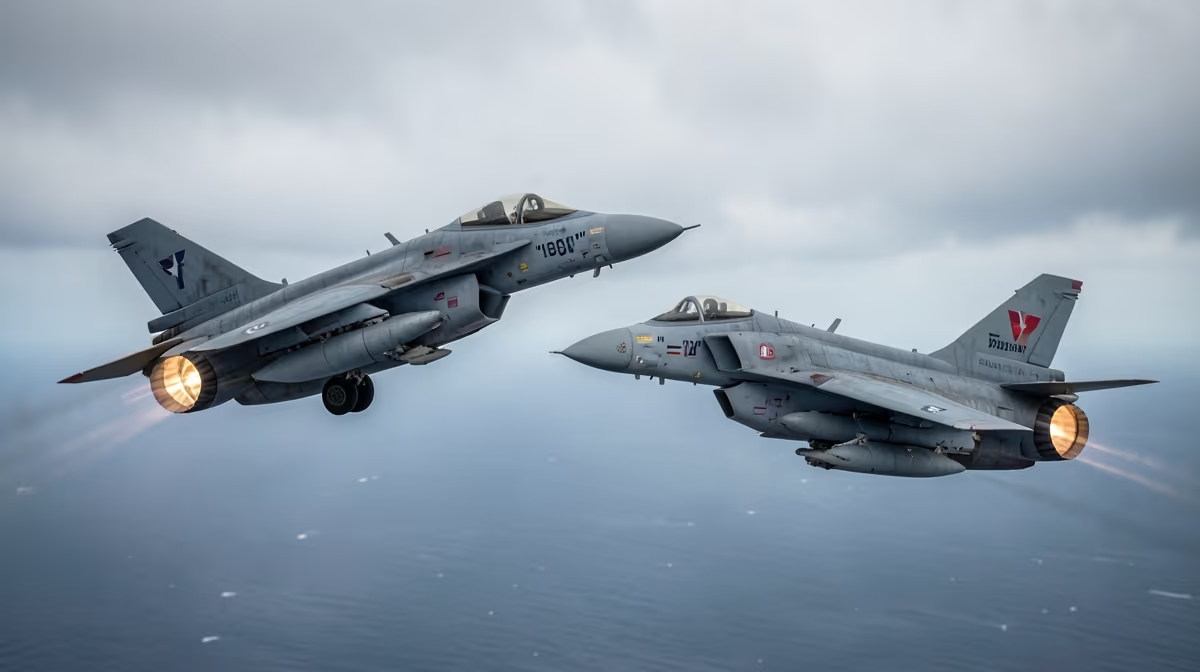
Shadowing unidentified aircraft as they approach the edge of national boundaries has become a recurring rhythm in the high-stakes environment of North Atlantic defense. The UK MOD has reported a high-profile russian plane interception as concerns over regional security continue. Following maneuvers involving the UK Carrier Strike Group, RAF assets were scrambled to ensure territorial integrity, highlighting the ongoing tension within international airspace as both NATO and Russian forces maintain a constant state of operational readiness.
Operational Reality and Response
Royal Air Force Typhoon jets were scrambled from bases in the UK and eastern Europe this week to intercept Russian military aircraft operating in close proximity to NATO-monitored airspace. The Ministry of Defence confirmed that RAF pilots carried out the standard interception procedure after identifying Russian jets approaching the NATO area of interest. These manoeuvres, which occur periodically, are conducted to ensure that unauthorized aircraft do not enter sovereign airspace without filing a flight plan or communicating with air traffic control. The aircraft were shadowed by British jets until they moved away from the sensitive zone, ensuring the safety of commercial and military air traffic in the region.
The RAF relies on its Quick Reaction Alert capabilities to address these scenarios. Typically deployed from RAF Lossiemouth in Scotland or RAF Coningsby in England, these fighter jets remain at high readiness to launch at a moment's notice. The intercept process is not a combat engagement but a defensive maneuver intended to provide visual identification and ensure that all aerial activity near the UK Flight Information Region adheres to international safety standards.
Strategic Context and Deterrence
These intercepts function as a barometer for current maritime security and shifting deterrence strategies in the North Atlantic. At its core, the situation stems from the assertion of sovereign control over the North Atlantic and Baltic airspace boundaries amid ongoing deterrence posture against Russian incursions. Historically, these interactions echo the Cold War-era Northern Flank intercept cycles, specifically the RAF versus Soviet Bear bomber sorties during the 1970s and 80s.
In the contemporary era, such incidents have become a routine part of the UK’s air policing mission, particularly in the Baltic region and over the North Sea. The MoD maintains that these interceptions are vital for demonstrating the UK's commitment to collective security under the NATO alliance. While the ongoing conflict in Ukraine has intensified geopolitical tensions, these flights remain within international airspace, serving as a form of strategic communication where both sides utilize interception to demonstrate capability without triggering direct kinetic engagement.
Analytical Perspectives
From a geopolitical standpoint, the normalization of brinkmanship has become a standard strategic communication tool. While these missions demonstrate domestic resolve and NATO commitment for the UK government, they also introduce systemic risks. Experts suggest that these operations serve as a demonstration of readiness for the RAF, testing the speed of response times from the Quick Reaction Alert crews.
There is also a hidden intelligence dimension to these encounters. These interceptions are frequently used as opportunities for real-time intelligence gathering, specifically mapping Russian radar signatures, communications protocols, and reaction times. However, this comes at an economic cost. Substantial fuel and maintenance expenses for Quick Reaction Alert missions weigh on defense budgets that are already strained by equipment provisions to international partners. The overarching strategy is one of controlled calibration, where the objective is to maintain a robust defense posture while preventing any miscalculation that could lead to a loss of life or destruction of hardware.
Future Projections
The immediate outlook suggests a continuation of current patterns. Over the next 24 hours, the RAF will likely maintain increased surveillance patrols and enhanced monitoring of Russian long-range aviation sorties near NATO airspaces. Moving into the next 72 hours, observers should anticipate diplomatic statements from the UK MoD calling for adherence to international flight safety norms, alongside a potential increase in NATO-wide alert status for rapid reaction aircraft.
The best-case scenario remains that Russian aircraft continue to operate within international norms, which would stabilize regional tensions and reduce the frequency of intercepts. Conversely, the worst-case scenario involves a mid-air collision or an aggressive maneuver that could force an emergency escalation in both diplomatic and military posture. For now, the situation remains in a state of monitored equilibrium, with NATO forces and the Russian Aerospace Forces maintaining distance as they navigate the boundaries of international airspace.
Frequently Asked Questions
Why does the UK intercept Russian planes near its airspace?
The Royal Air Force intercepts Russian aircraft to maintain the integrity of UK airspace and ensure national security. These missions, often referred to as Quick Reaction Alert scrambles, occur when unidentified aircraft approach the UK's area of interest without maintaining contact with air traffic control.
How often does the RAF intercept Russian jets?
The RAF conducts these intercepts periodically whenever Russian military aircraft, such as long-range bombers, fly close to the UK's flight information region. While not a daily occurrence, these events happen several times a year as part of regular monitoring operations to deter potential incursions.
Do Russian planes ever enter UK airspace?
Most intercepted Russian aircraft operate in international airspace near the UK and do not technically cross into sovereign UK territory. However, the RAF intercepts them as a precautionary measure to monitor their movements and demonstrate a robust defense posture.
What type of RAF jets are used for interceptions?
The RAF primarily uses Typhoon fighter jets based at RAF Lossiemouth in Scotland and RAF Coningsby in England for these interceptions. These aircraft are kept at high readiness to launch at a moment's notice to identify and escort foreign aircraft away from sensitive areas.
Is the interception of Russian aircraft considered an act of war?
No, intercepting aircraft in international airspace is a standard defensive procedure performed by air forces globally and does not constitute an act of war. These operations are managed according to international aviation protocols to prevent miscalculation or accidental escalations.
Where are Russian planes usually intercepted by the UK?
Intercepts typically take place over the North Sea or the North Atlantic, where Russian long-range bombers often conduct patrol missions. The RAF monitors these flight paths closely to ensure that the aircraft remain in international waters and do not pose a threat to civilian aviation.
Conclusion
The Ministry of Defence has confirmed that RAF assets successfully intercepted Russian military aircraft in international airspace in accordance with standard NATO air policing protocols. These encounters, characterized by the absence of hostile or physical contact, underscore the persistent nature of air defense operations in a heightened security environment. As the UK and its NATO allies continue to monitor Russian aerial activity near the North Atlantic and Baltic regions, the focus remains on maintaining the integrity of sovereign airspace while preventing escalation. Future developments will likely involve continued vigilance and a reliance on established communication protocols to manage these high-readiness encounters.


.webp)
