
UK Carrier Group Russian Interception Signals a Shift in Maritime War
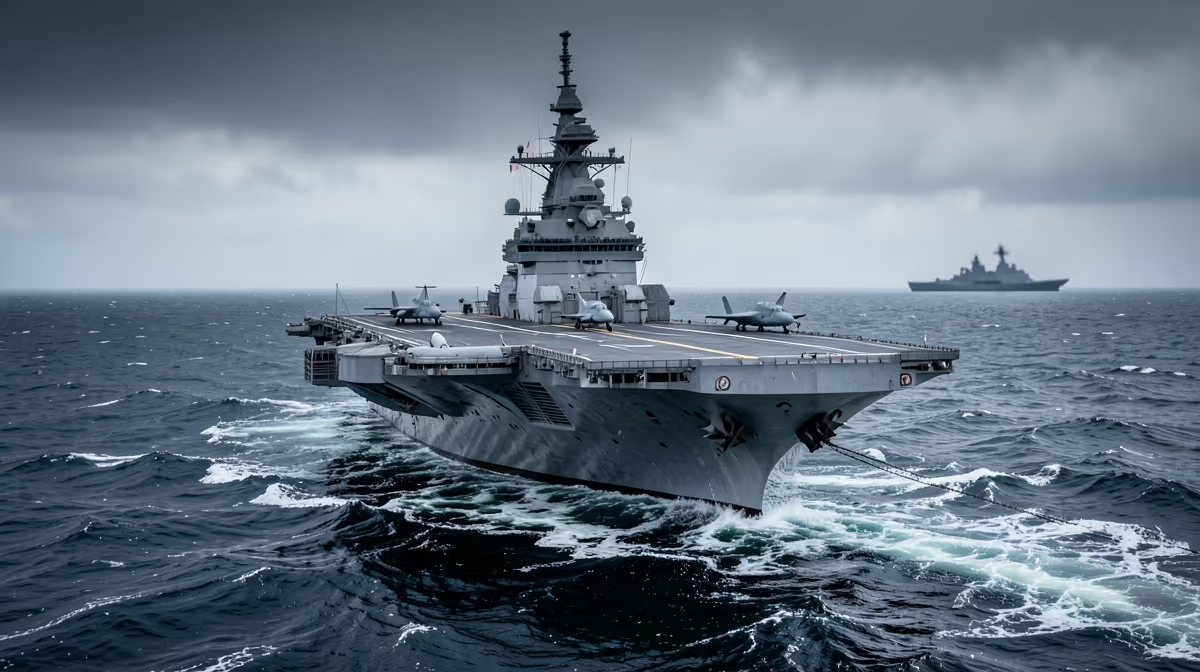
The North Sea has once again become a stage for the high-stakes naval brinkmanship that defines modern maritime security, as British and Russian forces engage in a tense game of strategic surveillance. This latest UK carrier group Russian interception highlights the ongoing friction between London and Moscow, raising critical questions about the stability of northern waters and the evolving nature of maritime freedom of navigation.
The Anatomy of the Encounter
During the ongoing Strike Warrior exercise, a large-scale NATO military drill designed to stress-test the alliance's naval capabilities in contested waters, the Royal Navy Carrier Strike Group led by HMS Prince of Wales found itself under close observation. As the British fleet navigated the North Sea, Russian naval assets moved to the periphery of the group to monitor the proceedings. This operation constitutes a routine, albeit high-tension, occurrence in the current geopolitical climate.
British defense officials have confirmed that the interaction remained professional throughout. There were no reports of hostile actions, and the Royal Navy maintained its operational schedule without disruption. The HMS Prince of Wales, serving as the flagship, continued its commitment to the exercise objectives, ensuring that NATO training requirements were met despite the external surveillance. Ministry of Defence spokespeople have noted that such monitoring is a standard maneuver, emphasizing that the interaction posed no threat to the carrier strike group's mission effectiveness.
Operational Significance and Strategic Signaling
At its core, this incident represents a calculated display of military posturing rather than a precursor to kinetic escalation. Experts note that the root cause of these activities is the assertion of sovereignty over contested maritime corridors and the strategic testing of NATO's maritime rapid-response capabilities. By tracking the British carrier group, Russian forces aim to demonstrate their awareness of NATO movements near their sphere of influence and gather high-fidelity data on Western sensor ranges, electronic warfare signatures, and reaction times.
This move mirrors the classic Cat and Mouse maneuvers observed in the North Atlantic during the 1980s, marking a cyclical return to heightened strategic brinkmanship. For the UK, these deployments serve as a core component of demonstrating global maritime reach and projecting power. The incident acts as a reminder of the heightened state of readiness in European waters, where frequent monitoring serves as a form of deterrence, allowing both sides to map out the operational capabilities of their counterparts.
The Geopolitical and Political Dimension
The political angle behind these maneuvers is twofold. For the Kremlin, such displays are often utilized for domestic signaling to project strength amidst international sanctions. Conversely, the UK government leverages these deployments to demonstrate the operational reality of Global Britain. This environment signals a transition from the post-Cold War era of maritime cooperation to a grey zone of persistent friction, reflecting a shift toward a more multi-polar naval order.
The economic implications, while less immediately visible, include increased operational costs for naval maneuvers and the potential for long-term impacts on insurance premiums for commercial shipping routes in these contested zones. As the North Atlantic and Arctic regions have seen a significant increase in military activity over the last decade, countries are increasingly competing for strategic influence. These shadowing incidents have become a routine, if costly, aspect of the geopolitical posturing between Russia and Western military alliances.
Future Outlook and Potential Scenarios
Looking toward the next 24 to 72 hours, observers anticipate increased surveillance flights by Russian Aerospace Forces near the carrier group and the possibility of official diplomatic protests from Moscow. In the short term, there may be potential naval shadow exercises by the Russian Northern Fleet to demonstrate capability without initiating kinetic conflict, after which the carrier group will likely continue its scheduled mission.
While the best-case scenario involves the carrier group completing its exercises without further incident, leading to a de-escalation of rhetoric, the risks remain real. The worst-case scenario centers on the possibility of a minor tactical error during an interception, which could result in a mid-air or maritime collision, potentially triggering an emergency diplomatic crisis and the temporary suspension of critical naval transit corridors. Ultimately, both sides appear to be prioritizing the maintenance of established deterrence boundaries.
Frequently Asked Questions
Why did Russian jets intercept a UK carrier strike group?
Russian military aircraft frequently conduct sorties to monitor NATO naval movements near their maritime borders. These interceptions are often characterized by Russia as defensive maneuvers to ensure their territorial sovereignty is respected during international naval exercises.
Is it common for Russian aircraft to intercept British warships?
Yes, close-proximity encounters between Russian aircraft and British carrier strike groups are relatively common in international waters. These incidents serve as a demonstration of military posture and are part of the ongoing geopolitical tension between NATO and Russia.
Do Russian interceptions of UK carriers violate international law?
Most of these interactions occur in international airspace and waters, meaning they generally do not violate international law as long as safe operating distances are maintained. However, military commanders often categorize aggressive maneuvers as unprofessional or provocative, even if they remain within legal boundaries.
What is the purpose of the UK carrier strike group deployments?
UK carrier strike groups are deployed to demonstrate global maritime reach, support international security, and participate in multinational training exercises with NATO allies. These deployments serve to project British power and reassure regional partners of the UK's commitment to collective defense.
How does the Royal Navy respond to Russian interceptions?
The Royal Navy maintains a policy of professional conduct, ensuring that the carrier group's mission is not disrupted by external interference. While monitoring the Russian aircraft, they utilize defensive systems and surveillance technology to track the movements without escalating the situation into direct conflict.
Are Russian flybys of UK ships considered a security threat?
While these flybys are largely interpreted as posturing and intelligence gathering, they carry inherent risks of accidental collision or miscalculation. Western military officials treat these encounters with high concern, constantly assessing the risk of escalation during these close-range interactions.
Conclusion
The recent shadowing of the UK Carrier Strike Group by Russian naval assets confirms that the North Sea remains a zone of persistent strategic friction. While the interaction remained professional and did not disrupt the NATO-led Strike Warrior exercise, the incident underscores the reality of modern maritime surveillance and the risks associated with close-quarters military posturing. As the Royal Navy continues its mission, the primary focus remains on maintaining operational security and adhering to international maritime protocols. Future developments will likely involve continued surveillance and tactical posturing, as both NATO and Russian forces balance the necessity of deterrence with the objective of avoiding direct escalation.


.webp)
