.webp)
Ukraine Caspian Sea Strikes Redraw the Map of Modern Warfare
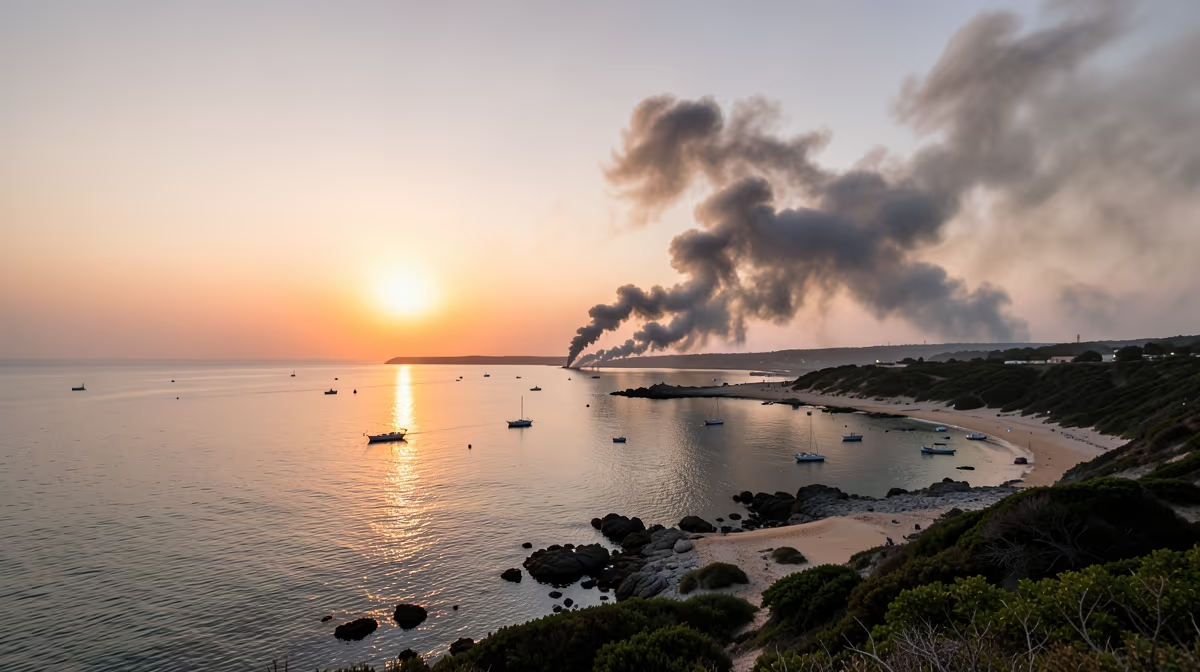
Geographic isolation has long served as a shield for Russia's rear military staging grounds, but recent developments show that ukraine caspian sea strikes are expanding the geographical scope of the ongoing conflict. When long-range unmanned aerial vehicles bridge a gap spanning over one thousand kilometers from the frontlines to inland water bodies, foundational assumptions about spatial security in modern warfare undergo a radical rewrite.
Background
Since the full-scale Russian invasion began in 2022, Ukraine has rapidly developed its own domestic drone industry to compensate for weapons restrictions, steadily increasing the distance and sophistication of its retaliatory strikes inside Russia. This strategic necessity stems from the requirement to disrupt Russian logistical supply chains, military manufacturing hubs, and energy transport routes located beyond standard drone operational ranges.
The Caspian Sea basin serves as a vital maritime corridor for Russia to transport military supplies, equipment, and goods from neighboring countries like Iran. Russian warships stationed in the Caspian Flotilla have also previously launched Kalibr cruise missiles against targets in Ukraine. Securing this body of water allows Moscow to maintain a relatively safe logistical route away from direct Western and Ukrainian surveillance.
What Unfolded
Ukrainian long-range drones reached the Caspian Sea region during recent operations, marking a significant logistical and tactical milestone for Ukraine's defense forces. The Caspian Sea basin is located hundreds of kilometers away from Ukrainian-controlled territory and has historically been viewed as a safe haven for Russia's naval fleet. Regional reports and local accounts confirmed unusual explosions near strategic naval infrastructure, indicating that the operations targeted military facilities located far away from the main frontlines.
Military intelligence representative Andriy Yusov stated, 'The systematic destruction of logistics and staging areas deep within the aggressor's territory is a necessary measure to protect Ukrainian cities, proving that no geographic location hosting military aggression remains entirely beyond reach.' While regional reports and local accounts confirmed unusual explosions near strategic naval infrastructure, Moscow's official channels have remained largely reticent about the exact scale of the damage.
Strategic Significance
The operations are designed to hit Russian supply lines, communication hubs, and military equipment used to attack Ukrainian cities. By moving the fight hundreds of miles into Russian territory, Ukraine aims to disrupt Moscow's war machine and show its citizens that the conflict has a direct cost at home. Defense analysts point out that the targeted ports in the Caspian region are frequently utilized by Russian forces to launch Kalibr cruise missiles against Ukrainian critical infrastructure. By striking these staging grounds, Kyiv aims to disrupt the supply chain and preemptively degrade Russia's capacity to execute coordinated missile bombardments from maritime platforms.
This development shatters the idea that any part of Russia is completely safe from the war, raising the pressure on Russian leadership and potentially forcing them to move valuable air defenses and military assets away from the front lines to protect distant regions. The Russian military and civilians living near strategic defense sites are directly affected, while global energy markets and neighboring countries monitor the security of the Caspian region closely.
Analyst View
Demonstrating to domestic constituents and Western allies that Kyiv retains strategic initiative and the capability to project power into Russia's secure rear forms a core political objective of these operations. From an economic perspective, targeting energy infrastructure and Caspian maritime trade routes pressures Russia's hydrocarbon revenues and increases insurance and operational costs for Caspian basin trade.
Geopolitically, these actions redraw the security map of the post-Soviet space, signaling to Central Asian states and Iran that Russia's sphere of influence is porous and vulnerable. The covert use of asymmetric sabotage cells and modified civilian infrastructure within third-party territories surrounding the landlocked sea to launch or guide long-range strikes represents a hidden operational layer reminiscent of historical precedents, such as Japanese attacks on distant Allied supply lines and remote bases in the Indian Ocean during World War II, utilizing extended-range unorthodox platforms to shock an overconfident adversary.
Future Outlook
Over the next twenty-four hours, analysts anticipate increased reconnaissance drone activity over the Caspian Sea corridor and heightened air defense readiness at Russian naval facilities in Dagestan and Astrakhan. Looking toward a seventy-two-hour horizon, diplomatic demarches from Caspian littoral states regarding regional security may emerge, coupled with potential adjustments to Russian logistics and maritime supply routes.
Long-range asymmetric strikes by Ukraine will increasingly test Russia's ability to secure secondary and tertiary strategic rear areas previously considered safe from direct engagement. In the best-case scenario, strikes remain limited, prompting enhanced regional diplomatic dialogues on demilitarization and freedom of navigation without escalating into broader regional conflicts. Conversely, the worst-case scenario involves an escalation featuring stray munitions or direct counter-attacks that disrupt critical Caspian energy exports and draw in neighboring Central Asian or Caucasus states.
Frequently Asked Questions
Can Ukraine strike targets in the Caspian Sea region?
Ukraine has demonstrated the capability to conduct long-range drone strikes far beyond its borders, targeting military infrastructure deep inside Russian territory. While the Caspian Sea is hundreds of kilometers away from the front lines, the use of advanced long-range unmanned aerial vehicles makes extended-range operations theoretically possible. However, such strikes would require navigating complex airspace and overcoming significant logistical hurdles.
Why is the Caspian Sea important to Russia's military operations against Ukraine?
The Caspian Sea serves as a vital maritime corridor for Russia to transport military supplies, equipment, and goods from neighboring countries like Iran. Russian warships stationed in the Caspian Flotilla have also previously launched Kalibr cruise missiles against targets in Ukraine. Securing this body of water allows Moscow to maintain a relatively safe logistical route away from direct Western and Ukrainian surveillance.
Have any Ukrainian attacks actually reached the Caspian Sea?
As of now, there are no confirmed reports of successful Ukrainian drone or missile strikes directly hitting targets in the Caspian Sea basin. Most of Ukraine's long-range interdiction efforts have focused on airbases, oil refineries, and naval assets located closer to the conflict zone and within Russia's western federal districts. The Caspian region remains largely out of range for standard Ukrainian tactical strike packages.
What kind of drones could potentially reach the Caspian Sea from Ukraine?
Ukraine has developed and deployed several types of long-range one-way attack drones with reported operational ranges exceeding 1,000 to 2,000 kilometers. Aircraft-style drones, such as the UJ-22 or newer proprietary models, possess the fuel capacity to cover vast distances if flight paths are carefully planned. To reach the Caspian, these systems would need to bypass advanced Russian air defense networks spread across southern Russia.
How does Russia defend its Caspian Sea assets from potential aerial threats?
Russia maintains layered air defense networks, including S-400 and Pantsir missile systems, around key strategic installations near the Caspian Sea and the Volga-Don canal. These defenses are designed to protect critical naval bases, shipping lanes, and energy infrastructure from incoming airborne threats. Monitoring and electronic warfare capabilities are also heavily utilized in the region to disrupt enemy drones.
What are the geopolitical implications of potential strikes near the Caspian Sea?
An attack reaching the Caspian Sea would significantly escalate the conflict by threatening critical trade and military supply routes involving Central Asian nations and Iran. It would demonstrate a dramatic expansion of Ukraine's long-range targeting capabilities, forcing Moscow to redeploy scarce air defense assets to the east. Such an event could also heighten regional tensions regarding security and freedom of navigation in the inland sea.
Conclusion
Ukrainian long-range drone operations reaching toward the Caspian Sea basin underscore a decisive technological and tactical expansion in modern naval and aerial warfare. While the full extent of structural damage to port facilities and naval assets remains under evaluation amidst official reticence from Moscow, the demonstrated operational reach fundamentally alters the risk calculus for Russian logistics and regional security. As monitoring intensifies across southern Russian defense nodes and Caspian maritime corridors, defense analysts and regional actors will closely track how Moscow adjusts its strategic rear protection in response to this evolving asymmetric capability.


.webp)
.webp)
