.webp)
US Power Grid Emergency Measures Triggered by Sudden Strain
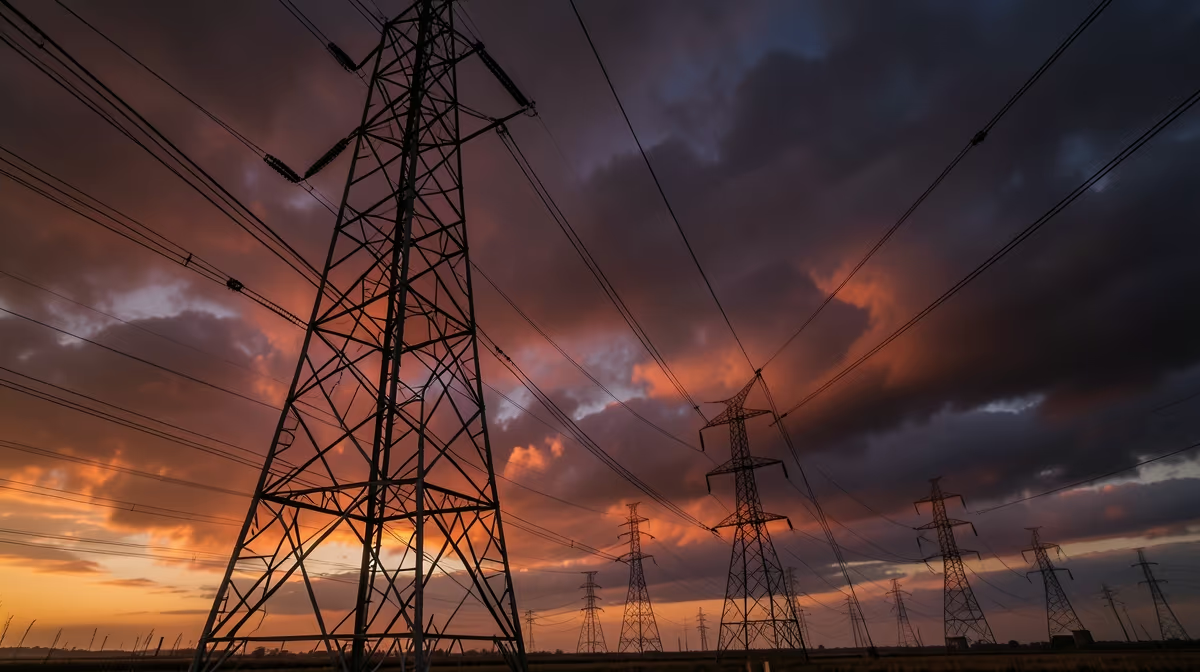
Federal regulators directed the nation's grid operators on Tuesday to implement immediate emergency protocols following an unprecedented surge in electricity demand driven by overlapping extreme weather events across multiple US regions. Recent developments have forced federal officials to enact strict us power grid emergency measures to safeguard against unprecedented disruptions. Energy infrastructure experts noted that the measures are designed to prevent cascading blackouts similar to those experienced during previous extreme winter and summer storms, as decades of underinvestment in decentralized microgrid infrastructure and compounding vulnerabilities to extreme weather events continue to strain the system.
What Unfolded
The Federal Energy Regulatory Commission and the North American Electric Reliability Corporation issued the joint directive early Tuesday morning, compelling transmission organizations to mobilize emergency reserves and temporarily suspend non-critical maintenance schedules. Grid operators in the Mid-Atlantic and Texas reported record-breaking power consumption as consecutive heatwaves strained generation capacity to near-breaking points. Utilities have been authorized to utilize demand-response programs, which financially incentivize large industrial consumers to voluntarily curtail their operations during peak hours. State governors in at least five affected states have declared states of emergency, urging residents to voluntarily reduce electricity usage between the peak hours of 2 PM and 9 PM. Wholesale electricity prices spiked significantly in spot markets as supply margins tightened, prompting federal watchdogs to monitor for potential market manipulation. Grid operators have successfully maintained system frequency within safe operating limits, and no widespread involuntary blackouts have been reported as of Tuesday afternoon.
Power Grid Security Protocols
Federal energy regulators have declared an emergency to protect the United States power grid from severe stress and potential blackfalls as extreme weather events become more frequent and electricity demand surges. To combat this, emergency measures allow grid operators to bypass certain standard procedures and regulations, granting them temporary powers to quickly order power plants to produce more electricity or direct emergency energy transfers between regions. The North American Electric Reliability Corporation established thresholds for Energy Emergency Alerts, ranging from EEA Level 1, which indicates energy inadequacy, to EEA Level 3, which necessitates firm load shedding. These alerts inform utilities, government agencies, and the public about the heightened risk of rolling blackouts. Furthermore, power plants can be ordered to remain online even if they were scheduled for retirement or maintenance, and energy can be forcefully rerouted between different regions to prevent localized grid collapses.
Infrastructure Vulnerability and System Stress
The U.S. power grid is an aging network of interconnected systems built decades ago for predictable weather patterns and lower energy demands. In recent years, the combination of extreme climate events, the retirement of fossil-fuel plants, and the rapid growth of power-hungry technologies has made grid management increasingly precarious. Decades of underinvestment in decentralized microgrid infrastructure have compounded vulnerabilities to extreme weather events and aging interconnections between regional transmission organizations struggling with surging electric vehicle and data center demand. This systemic strain creates heightened vulnerability to sophisticated cyber warfare from state actors like China and Russia, transforming domestic power infrastructure into a frontline theater of gray-zone deterrence and altering global perceptions of US technological resilience. Trillions in required capital expenditure are triggering massive shifts in utility bond ratings, skyrocketing retail electricity rates for working-class consumers, and lucrative subsidies for private equity firms consolidating transmission assets.
Expert Outlook and Immediate Forecast
Over the next 24 hours, FERC and regional transmission organizations will issue emergency directives to manage localized peak loads, while utilities coordinate immediate reserve sharing. Over the next 72 hours, weather forecasts will dictate stabilization efforts as demand plateaus, with potential lift of initial emergency alerts if generation capacity rebounds. Grid operators are expected to successfully navigate the immediate capacity shortfall through demand response programs and temporary emergency waivers, avoiding widespread rolling blackouts. In a best-case scenario, mild weather shifts reduce cooling or heating demand faster than anticipated, allowing reserves to recover quickly without consumer curtailments. Conversely, the worst-case scenario involves coincident forced outages of major baseload generation units during extreme weather leading to mandatory rolling blackouts across multiple metropolitan areas.
Frequently Asked Questions
What are emergency measures for the US power grid?
Emergency measures for the US power grid include a range of protocols executed by grid operators to prevent widespread blackouts during extreme stress. These actions involve calling for voluntary power reductions, utilizing emergency energy reserves, and purchasing power from neighboring regions. In severe scenarios, grid operators may implement rolling blackouts to protect the overall infrastructure from total collapse.
Who declares a power grid emergency in the United States?
A power grid emergency can be declared by regional transmission organizations like PJM Interconnection or independent system operators managing specific grids. At the federal level, the Department of Energy has the authority under the Federal Power Act to issue emergency orders during critical energy shortages. These declarations allow grid operators to take extraordinary actions that might otherwise violate environmental or operational regulations.
What triggers grid emergency alerts like Energy Emergency Alerts?
Energy Emergency Alerts are triggered by plummeting operating reserves, unexpected power plant failures, or extreme weather events that spike electricity demand. The North American Electric Reliability Corporation establishes the thresholds for these alerts, ranging from EEA Level 1, which indicates energy inadequacy, to EEA Level 3, which necessitates firm load shedding. These alerts inform utilities, government agencies, and the public about the heightened risk of rolling blackouts.
Can the President declare a national power grid emergency?
Yes, the President of the United States can declare a national emergency affecting the bulk-power system under specific statutory authorities like the International Emergency Economic Powers Act. Such declarations are typically used to address foreign cyber threats or severe vulnerabilities in critical electrical infrastructure. This grants federal agencies sweeping powers to restrict the use of certain foreign-sourced equipment in the US grid.
How do rolling blackouts work during a grid emergency?
Rolling blackouts are a controlled, last-resort measure where grid operators temporarily cut off electricity to specific neighborhoods in a rotating fashion. This drastic action reduces overall demand to match the dangerously low supply, preventing an uncontrolled, cascading blackout that could take weeks to repair. Utilities typically try to rotate these outages so no single area bears the burden for too long, though critical infrastructure like hospitals is usually exempt.
What should households do during a US power grid emergency?
During a grid emergency, households should immediately reduce electricity use by turning off non-essential appliances, adjusting thermostats, and avoiding large energy-consuming chores like laundry. Residents should also keep emergency supplies such as flashlights, non-perishable food, and battery-powered radios on hand in case rolling blackouts occur. Staying informed through local utility alerts and emergency broadcast systems ensures households receive real-time instructions and safety updates.
Conclusion
Federal regulators and grid operators have established joint emergency directives to manage record-breaking electricity demand and protect national critical infrastructure from severe stress. While system frequencies have been maintained within safe operating limits and no widespread involuntary blackouts have been reported, transmission organizations continue to monitor regional capacity and utilize demand-response programs. Stabilization efforts over the coming days will depend heavily on weather patterns, generation recovery, and ongoing cross-state coordination among utilities and regulatory bodies.


.webp)
.webp)
