
American Airlines AI Rebooking Glitch Leaves Travelers Stranded
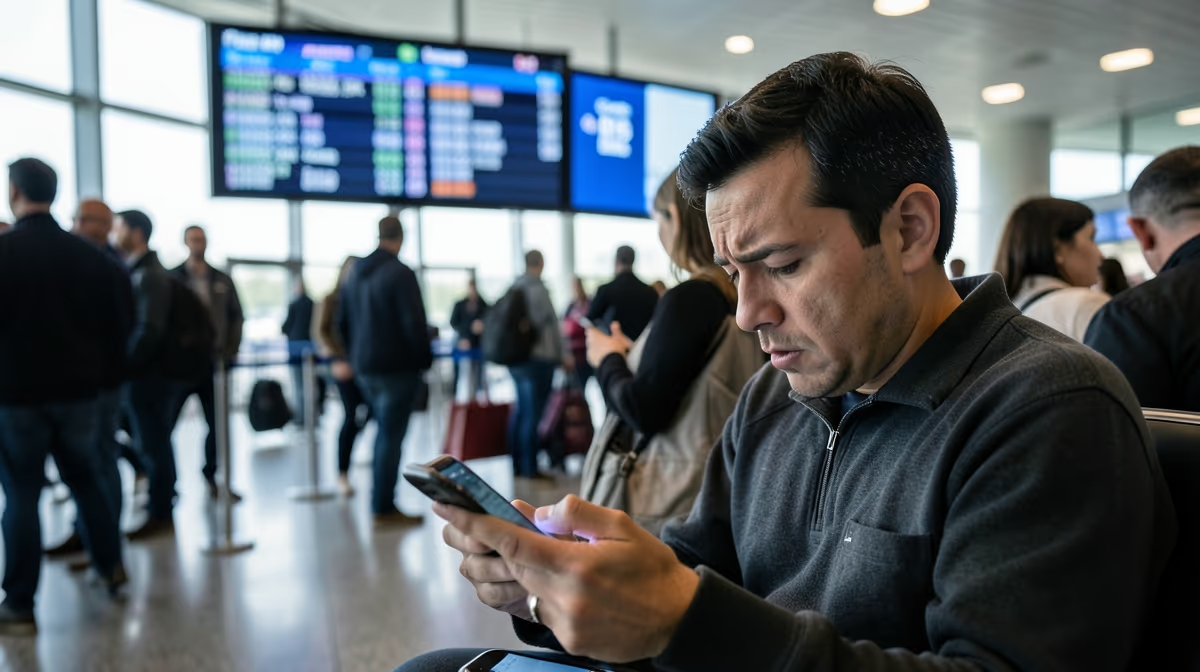
American Airlines passengers nationwide are reporting a frustrating new issue where the carrier's automated artificial intelligence systems are autonomously rebooking travelers on delayed or canceled flights without their explicit consent, often stranding them on convoluted itineraries or separating families. Behind the seamless veneer of digital transformation, travelers are discovering that american airlines ai is erroneously rebooking delayed passengers without consent, turning routine flight schedule updates into complex logistical mazes. This developing operational challenge highlights the growing friction points as legacy transport systems cede critical decision-making responsibilities to unvetted software loops and machine-learning code.
The Mechanics of Automated Rerouting
The glitches have surfaced repeatedly over the last several weeks as U.S. airlines increasingly rely on machine-learning algorithms to manage disruptions caused by severe weather and air traffic control congestion. According to dozens of traveler accounts filed with consumer protection groups, passengers waiting at boarding gates are suddenly receiving text notifications that their seats have been reassigned, and their original tickets canceled by the automated system. American Airlines utilizes automated AI systems to manage rebooking during flight disruptions, moving travelers onto new flights without their explicit consent. Multiple passengers have reported being placed on inconvenient flights, alternate days, or routed through multiple unnecessary layovers. This automated rebooking has frequently resulted in unwanted routing and separated travel companions, stripping travelers of control over their preferred itineraries and connections. Fixing these AI-generated changes often requires long waits at customer service counters or endless loops with automated chatbots, compounding the frustration of delayed flyers.
Operational Drivers and Economic Pressures
The underlying root cause of these software errors stems from aggressive cost-cutting and algorithmic automation by airlines to minimize operational disruption penalties, prioritizing network velocity over passenger agency. By shifting to predictive AI to manage post-pandemic staffing shortages, carriers aim to reduce labor costs and speed up passenger reaccommodation. However, this economic angle externalizes the financial cost of delays directly onto passengers, reducing airline compensation liability and hotel voucher expenditures. Industry analysts note that while AI holds the potential to streamline airline operations during mass cancellations, the lack of a human-verification step before finalizing changes is severely harming the customer experience. The system creates digital shadow queues where passengers are algorithmically stranded or rerouted into suboptimal itineraries without human oversight, echoing the computerized reservation system antitrust battles of the 1980s, where automated gatekeeping was first used to disadvantage consumers and competitors.
Regulatory Scrutiny and Consumer Impact
When an algorithm decides your travel plans without your input, it strips away consumer agency and turns a stressful delay into a logistical nightmare, said Sarah Pearson, a senior researcher at the Aviation Consumer Advocacy Project. Airlines must ensure that artificial intelligence serves the passenger, rather than forcing passengers to serve a broken software loop. When airlines implement automated technology without proper guardrails or human oversight, it shifts the burden of fixing mistakes directly onto the consumer. For everyday travelers, this means added stress, wasted time at airports, and potential financial or scheduling disruptions during already frustrating travel delays. Consumer advocates are now calling on the Department of Transportation to investigate whether these automated practices violate passenger rights regarding involuntary schedule changes. The political angle involves regulatory capture of the Department of Transportation, where consumer protection enforcement lags far behind software deployment, leaving passengers exposed to algorithmic negligence while class-action litigation begins to take shape.
Outlook and Industry Response
Transportation media and consumer advocacy groups are picking up the story, prompting expectations that American Airlines will soon release a more detailed technical explanation and temporary rollback or adjustment of the automated rebooking feature. In the immediate 24-hour window, American Airlines typically issues brief statements acknowledging minor software glitches affecting a small percentage of rebookings, while customer complaints trend on social media. Industry experts predict the incident will be classified as an IT teething problem rather than a systemic failure, leading to a quick patch by the airline that temporarily increases call center volumes and consumer frustration. In a best-case scenario, American Airlines quickly halts the faulty AI logic, offers compensation to affected flyers, and updates the system to require manual confirmation, restoring passenger trust swiftly. Conversely, a worst-case scenario envisions the automated rebooking error stranding thousands of passengers during a peak travel period, triggering a formal Department of Transportation investigation and heavy fines for deceptive or disruptive booking practices.
Frequently Asked Questions
Why is American Airlines AI rebooking my flight without my permission?
American Airlines utilizes automated artificial intelligence systems to manage flight disruptions and proactively move passengers to alternative flights during delays or cancellations. However, this system sometimes triggers automatically before passengers can evaluate their own travel options or consent to the change. If this happens, it can disrupt your original travel plans and assigned seats.
Can I revert an automated rebooking by American Airlines AI?
Yes, you can often revert an AI-generated rebooking by contacting American Airlines customer service or using their mobile app to review alternative itineraries. Agents at the airport ticket counter or gate can also help reinstate your original itinerary if seats are still available. It is recommended to act quickly before the original seats are permanently released to other travelers.
What should I do if American Airlines AI rebooks me on a worse flight?
If the AI rebooks you onto a less convenient flight with long layovers or downgrades, immediately speak with an American Airlines gate agent or call customer support. You have the right to request a flight that better matches your original schedule or ask to be placed on a partner airline. Be polite but firm about your preferred routing to get the best possible resolution.
Does American Airlines compensate passengers for unauthorized AI rebookings?
American Airlines typically does not offer direct cash compensation solely for automated AI rebookings unless the new flight results in a significant delay of three hours or more upon arrival. If the schedule change causes a major disruption or missed connection, you may be eligible for meal vouchers, hotel accommodations, or a full refund if you choose not to travel. Review the airline's Contract of Carriage for specific passenger rights regarding delays.
How can I stop American Airlines from automatically changing my flight?
There is no direct setting to completely opt out of the automated AI rebooking system once a major delay or cancellation is processed by the airline. To maintain control, monitor your flight status closely via the American Airlines app as soon as a delay is announced. If you see a pending change, immediately contact customer service to lock in the itinerary you actually prefer before the automated system finalizes it.
Are other airlines using AI that rebooks passengers without consent?
Yes, many major domestic and international airlines are increasingly adopting automated AI algorithms to handle mass flight disruptions and minimize airline delay costs. These systems are designed to clear backlogs quickly by shifting passengers to available seats across the network. Unfortunately, this efficiency often comes at the expense of personalized customer service and traveler autonomy.
Conclusion
The deployment of automated rebooking systems by American Airlines has generated widespread consumer friction and highlighted significant gaps in algorithmic governance within the aviation sector. Confirmed developments indicate that unvetted software loops are currently overriding passenger travel preferences during flight disruptions, leading to unauthorized itinerary changes and extended customer service wait times. As consumer advocacy groups and transportation media apply pressure, industry observers await formal technical updates from the carrier and potential responses from federal regulators regarding passenger rights and automated booking practices.


.webp)

