
Cambridge Professor Death Uncovers Severe Academic Pressure Crisis
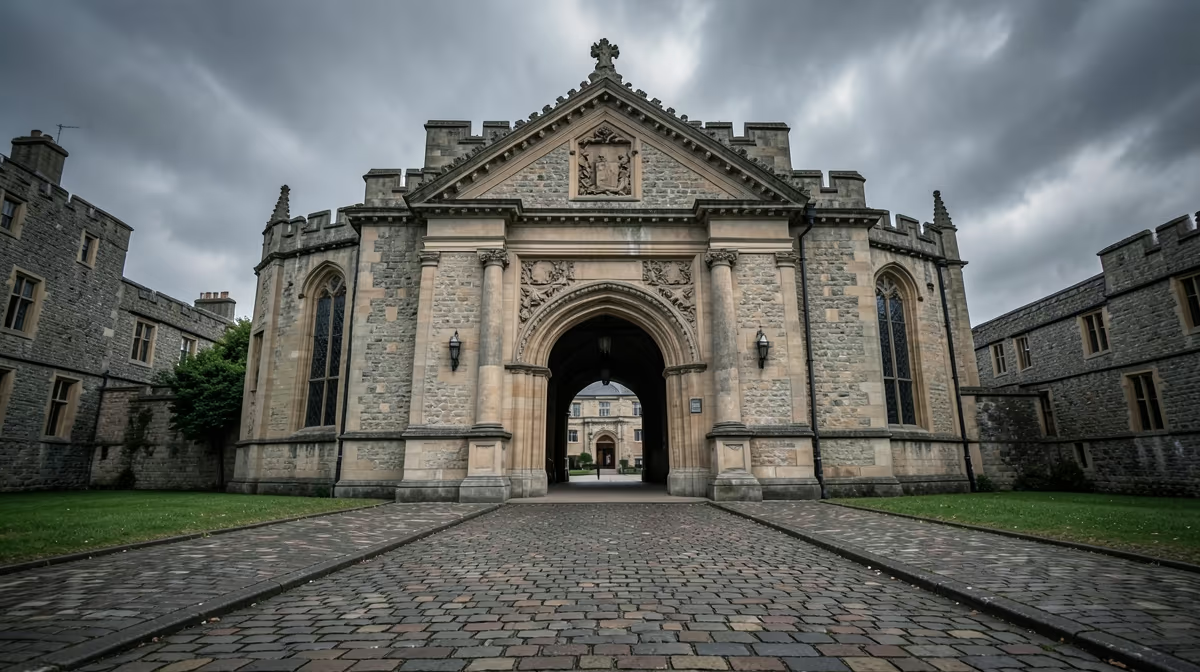
Recent events surrounding Cambridge professor academic scrutiny have sparked intense global debate over institutional pressures and faculty welfare. Cambridge professor Jason Arday has been found dead following intense scrutiny over his academic record and allegations of plagiarism, prompting statements from his family about sustained abuse.
What Unfolded
Jason Arday, a prominent professor at Cambridge University, was found dead following scrutiny over his academic record. He had faced public accusations regarding plagiarism prior to his death. His sudden passing has sent shockwaves through the academic community, prompting widespread conversations about the immense pressures faced by public figures in academia.
In the wake of his death, Professor Arday's family released a statement revealing that he had been subjected to sustained abuse online and elsewhere while dealing with these allegations. News of his passing was widely reported by major outlets including The New York Times and CNN in August 2026. Professor Jason Arday, a prominent academic at the University of Cambridge, was found dead amid a period of rigorous examination concerning his academic background and published work. The circumstances surrounding his death have drawn widespread attention across academic and public circles in the United Kingdom and internationally.
In the wake of his passing, family members have spoken out, highlighting the severe pressure he experienced and stating that he faced sustained abuse during the scrutiny into his academic record. The university and broader academic community now face difficult questions regarding the processes of academic review and the welfare of scholars under public investigation. As authorities and institutional bodies examine the sequence of events leading to this tragic outcome, tributes and discussions regarding academic accountability and online harassment continue to emerge.
Institutional Investigation and Key Facts
Academia relies heavily on trust, originality, and rigorous peer review. When high-profile academics face allegations of research misconduct or plagiarism, institutions typically launch formal investigations to review the claims. In the digital age, these professional inquiries often spill over into intense social media and public scrutiny, placing unprecedented emotional strain on the individuals involved.
- Jason Arday, a professor at Cambridge University, was found dead following scrutiny over his academic record
- He had faced public accusations regarding plagiarism prior to his death
- His family stated that he had been subjected to sustained abuse amid the controversy
- News of his passing was widely reported by major outlets including The New York Times and CNN in August 2026
- The investigation and subsequent public discourse have highlighted the intense pressures surrounding academic integrity and public scrutiny
The Human Cost and Mental Health
This tragic event highlights the devastating human cost of intense online scrutiny and public harassment. It forces academic institutions, media platforms, and the public to reexamine how allegations and controversies are handled, emphasizing the urgent need to protect the mental health and well-being of individuals facing public pressure.
The compounding mental health toll of digital-era public shaming and cancel culture on high-profile public figures sees academic disputes rapidly escalate into sustained online harassment. The immediate family, friends, and colleagues of Professor Arday are most deeply impacted by the loss. Additionally, the broader academic community at Cambridge University and beyond is affected as they reflect on institutional support systems and online harassment.
Analyst View
The root cause of this situation stems from intense public scrutiny and institutional pressure following allegations of academic plagiarism involving a high-profile Cambridge professor. The incident highlights the intense ideological and cultural fault lines surrounding diversity, meritocracy, and representation in elite British higher education institutions.
Reputational damage to top-tier universities can affect global rankings, international student recruitment, and philanthropic endowments tied to institutional prestige. As British universities operate as global hubs for soft power and elite networking, controversies at this scale attract international scrutiny regarding academic integrity standards. This parallels the pressures faced by high-profile academics caught in institutional or public scandals, reminiscent of historical cases where intense media scrutiny preceded tragic outcomes.
Outlook and Future Impact
In the next 24 hours, continued coverage and official statements are expected regarding the death of Cambridge professor Jason Arday following academic scrutiny and allegations of plagiarism. Over the next 72 hours, broader discussions and institutional responses are anticipated regarding academic pressures, plagiarism investigations, and the impact of sustained public scrutiny on researchers.
Analysts would likely expect increased scrutiny on how universities handle plagiarism allegations and the psychological toll of intense public and media pressure on academic staff. In a best-case scenario, institutions use the tragedy to implement stronger mental health safeguards and more compassionate, transparent processes for handling academic disputes. In a worst-case scenario, the incident triggers polarized debates that overshadow necessary reforms regarding academic accountability and the wellbeing of researchers.
The tragic passing of Professor Jason Arday forces academic institutions, media platforms, and the public to confront the severe psychological toll of digital-era public scrutiny and the urgent need for institutional support systems.
Frequently Asked Questions
What happened to Jason Arday, the Cambridge professor?
Jason Arday, a professor at Cambridge who faced intense scrutiny over his academic record and allegations of plagiarism, was found dead. His sudden death has drawn widespread attention and raised questions regarding the pressures of academic investigations.
What did his family say about the circumstances surrounding his death?
Following his passing, family members stated that he had faced sustained abuse during the period of scrutiny over his academic background. This perspective highlights the severe psychological toll that public and institutional investigations can take on individuals.
Why does this case matter to the wider academic community?
This tragic event has sparked crucial conversations within higher education regarding how institutions handle plagiarism allegations and academic reviews. It brings to light the urgent need to balance rigorous academic standards with the mental health and well-being of faculty members.
Who is most affected by this news?
The immediate family, friends, and colleagues of Professor Arday are most deeply impacted by the loss. Additionally, the broader academic community at Cambridge University and beyond is affected as they reflect on institutional support systems and online harassment.
What happens next following the investigation into his academic record?
As institutions review these events, universities may re-evaluate their protocols for managing high-profile academic misconduct investigations. Stakeholders are calling for more transparent, supportive, and compassionate processes when handling sensitive inquiries.
What specific background details were highlighted during the scrutiny?
The scrutiny centered heavily on questions surrounding his academic record and subsequent plagiarism allegations before his untimely passing. Media coverage from outlets like The New York Times and CNN detailed both the professional investigations and the mounting personal pressures he experienced.
Conclusion
The verified developments surrounding the death of Professor Jason Arday following academic scrutiny and plagiarism allegations have exposed critical vulnerabilities in how elite institutions and public platforms manage high-stakes inquiries. As academic bodies and family representatives address the realities of online harassment and sustained abuse, universities face renewed pressure to evaluate their review processes and faculty welfare protocols. Further institutional investigations and statements from academic bodies regarding the pressures faced by scholars under review will continue to shape the discourse across higher education governance and academic integrity policies.


.webp)

