
Dr Congo Ebola Outbreak Sparks Urgent Global Health Response
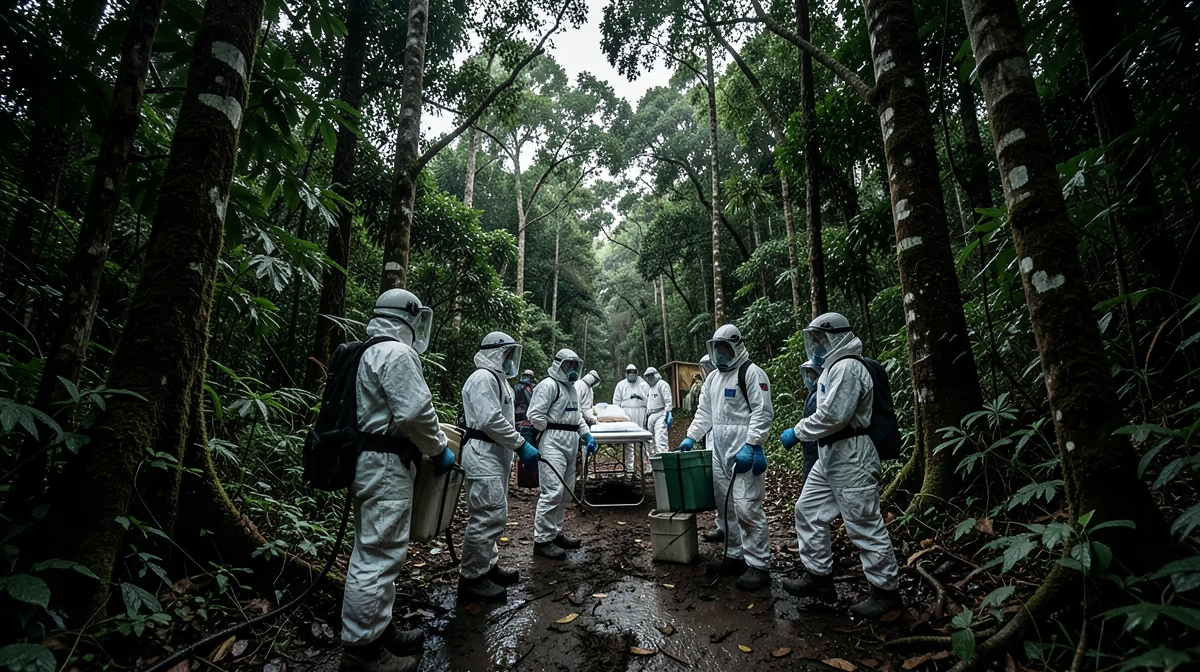
Health authorities are closely monitoring the new dr congo ebola outbreak as response teams deploy to affected regions. The resurgence of the deadly virus was detected following laboratory tests confirming positive cases in a localized health zone, prompting an immediate emergency response from the World Health Organization. This marks yet another chapter in the Democratic Republic of Congo is ongoing battle against endemic infectious diseases, raising international concern and testing the resilience of local public health infrastructure.
Medical teams are currently deployed to trace contacts and establish treatment centers to contain the spread before it reaches densely populated urban areas. Previous outbreaks in the region have severely strained local healthcare infrastructure, though decades of accumulated response experience have equipped national health agencies with rapid deployment protocols. International health bodies are mobilizing financial and logistical support to assist local responders, while vaccination campaigns targeting frontline health workers and high-risk individuals are already being organized to blunt the transmission curve. As our priority is to break the chains of transmission as quickly as possible using the proven tools and vaccines at our disposal, as stated by a senior World Health Organization representative during an emergency briefing in Geneva, coordinated action remains critical to managing this developing public health crisis.
Background Context and Historical Roots
The Democratic Republic of Congo has experienced multiple Ebola outbreaks over the past several decades, giving its medical professionals extensive experience in managing the virus, though logistical and security hurdles often complicate their efforts. The country has recorded over a dozen Ebola outbreaks since the virus was first discovered near the Ebola River in 1976, including the devastating 2018-2020 Kivu outbreak, which was the second-largest in history. The high frequency of these events is linked to the country is unique ecological conditions and persistent humanitarian challenges.
The root cause of these recurrent events lies in decades of state fragility, systemic distrust in authority, and the collapse of public health infrastructure in eastern Democratic Republic of Congo, exacerbated by armed conflict and displacement. The Zaire ebolavirus species is endemic to the region is rainforests, where animal reservoirs, particularly fruit bats, help maintain the virus in the wild. This dynamic leads to zoonotic spillover events when humans come into contact with infected wildlife. Historical parallels, such as the 2014-2016 West Africa Ebola epidemic, demonstrate how delayed international response, post-colonial distrust, and weak health systems can allow a localized outbreak to become a global crisis, underscoring the necessity of immediate, localized intervention.
Current Outbreak Status and Verified Facts
Health authorities have officially confirmed a new ebola virus outbreak in the eastern region of the Democratic Republic of Congo. Laboratory tests verified positive cases within the affected health zone, confirming the specific viral strain and initiating the immediate deployment of international and national health response teams. Unchecked ebola outbreaks pose a serious threat to human life and can rapidly overwhelm fragile local healthcare systems. Because international travel makes it easy for viruses to cross borders, swift containment in the Democratic Republic of Congo is vital to prevent a larger regional or global health emergency.
Ebola causes high fever, severe bleeding, and organ failure, spreading through direct contact with the blood, secretions, organs, or other bodily fluids of infected people. It can also be transmitted through surfaces and materials, such as bedding and clothing, contaminated with these fluids. Traditional burial practices that involve direct touching of the body have historically been major drivers of transmission. Early symptoms include sudden onset of fever, severe fatigue, muscle pain, headache, and a sore throat, often followed by vomiting, diarrhea, rash, and impaired kidney and liver function. In severe cases, patients may experience both internal and external bleeding.
Response Strategies and Medical Interventions
Medical teams are actively racing to contain the virus by treating patients, tracking down anyone who came into contact with them, and preparing vaccines for vulnerable communities. Controlling an ebola outbreak is always difficult, especially in areas facing other challenges like conflict or displacement. However, health workers now have better tools than in past outbreaks, including effective vaccines and treatments that significantly lower the risk of death if administered early.
Health authorities primarily use the rVSV-ZEBOV vaccine, known by the brand name Ervebo, to combat ebola outbreaks in the Democratic Republic of Congo. This vaccine has proven highly effective and is deployed using a ring vaccination strategy to immunize contacts and contacts of contacts. A second vaccine, Ad26.ZEBOV/MVA-BN-Filo, has also been introduced in certain areas to provide supplementary protection. While there is no guaranteed cure, advanced therapeutics have dramatically improved survival rates in recent years. Monoclonal antibody treatments, such as Ebanga and Inmazeb, neutralize the virus and are most effective when administered early in the course of the disease, complemented by supportive care including rehydration and symptom management.
Socio-Political Realities and Regional Impact
The ongoing congo ebola outbreak intersects with complex political and security dynamics across the region. Health interventions have historically been weaponized by both rebel factions and state security forces, leading to community resistance, targeted attacks on treatment centers, and proxy political sabotage. At the same time, the crisis results in the disruption of lucrative cross-border trade networks, the exploitation of mineral-rich zones under the guise of quarantine zones, and massive international aid dependency masking local economic stagnation.
Global health security concerns trigger rapid militarized intelligence responses from the World Health Organization, the United Nations, and Western powers, effectively turning the region into a testing ground for experimental vaccines and biosecurity protocols. Furthermore, the complicity of local elites and transnational smuggling networks can sometimes exploit the chaos of the outbreak to launder conflict minerals and misappropriate humanitarian funds. Residents living in the affected region, local healthcare workers on the frontline, and families of infected individuals remain the most immediately impacted by these overlapping humanitarian and security challenges.
Immediate Outlook and Future Trajectory
Response operations are scaling up rapidly under the guidance of key players including the World Health Organization, the Democratic Republic of Congo Ministry of Health, and Médecins Sans Frontières. In the next twenty-four hours, priorities include intensified contact tracing and the rapid deployment of vaccines to affected rural zones. Over the next seventy-two hours, plans involve the establishment of localized treatment centers and increased community engagement to combat misinformation and educate local populations on safe burial practices and symptom recognition.
Expert prediction indicates that a prompt international response will help contain the outbreak to rural clusters, preventing widespread urban transmission. In the best case scenario, rapid containment via targeted ring vaccination will yield zero new cases reported outside the initial epicenter after one week. Conversely, the worst case scenario warns of potential spillover into densely populated urban areas, which could overwhelm local health infrastructure and spark cross-border transmission, threatening public health, cross-border trade, and regional stability.
Frequently Asked Questions
What caused the recent Ebola outbreaks in the Democratic Republic of Congo?
The outbreaks in the DRC are primarily driven by the Zaire ebolavirus species, which is endemic to the region is rainforests. Animal reservoirs, particularly fruit bats, help maintain the virus in the wild, leading to zoonotic spillover events when humans come into contact with infected wildlife. Additionally, ongoing regional conflict, community mistrust, and population displacement complicate containment efforts and increase transmission rates.
How many Ebola outbreaks has the DRC experienced?
The Democratic Republic of Congo has experienced over a dozen Ebola outbreaks since the virus was first discovered near the Ebola River in 1976. This includes the devastating 2018-2020 Kivu outbreak, which was the second-largest in history. The high frequency of these events is linked to the country is unique ecological conditions and persistent humanitarian challenges.
What vaccines are used during Ebola outbreaks in the DRC?
Health authorities primarily use the rVSV-ZEBOV vaccine, known by the brand name Ervebo, to combat Ebola outbreaks in the DRC. This vaccine has proven highly effective and is deployed using a ring vaccination strategy to immunize contacts and contacts of contacts. A second vaccine, Ad26.ZEBOV/MVA-BN-Filo, has also been introduced in certain areas to provide supplementary protection.
How is Ebola transmitted among humans?
Ebola spreads through direct contact with the blood, secretions, organs, or other bodily fluids of infected people. It can also be transmitted through surfaces and materials, such as bedding and clothing, contaminated with these fluids. Traditional burial practices that involve direct touching of the body have historically been major drivers of transmission.
What are the primary symptoms of the Ebola virus?
Early symptoms of Ebola include sudden onset of fever, severe fatigue, muscle pain, headache, and a sore throat. These are often followed by vomiting, diarrhea, rash, and impaired kidney and liver function. In severe cases, patients may experience both internal and external bleeding.
Is there a cure for Ebola?
While there is no guaranteed cure, advanced therapeutics have dramatically improved survival rates in recent years. Monoclonal antibody treatments, such as Ebanga and Inmazeb, neutralize the virus and are most effective when administered early in the course of the disease. Supportive care, including rehydration and treating specific symptoms, further increases the likelihood of recovery.
Conclusion
The confirmation of a new ebola virus outbreak in the eastern region of the Democratic Republic of Congo highlights the persistent health security challenges facing the area. Verified developments confirm that national authorities, alongside international partners such as the World Health Organization, have deployed emergency response teams to verify cases, establish treatment centers, and organize targeted vaccination campaigns for frontline workers. Realistic next steps focus on intensifying contact tracing, expanding localized treatment access, and engaging communities to prevent further transmission. Swift international support and coordinated local action remain essential to containing the virus within rural clusters and safeguarding regional stability.


.webp)

