
Eclipse 2026 Date Set to Bring a Rare Phenomenon Across the UK
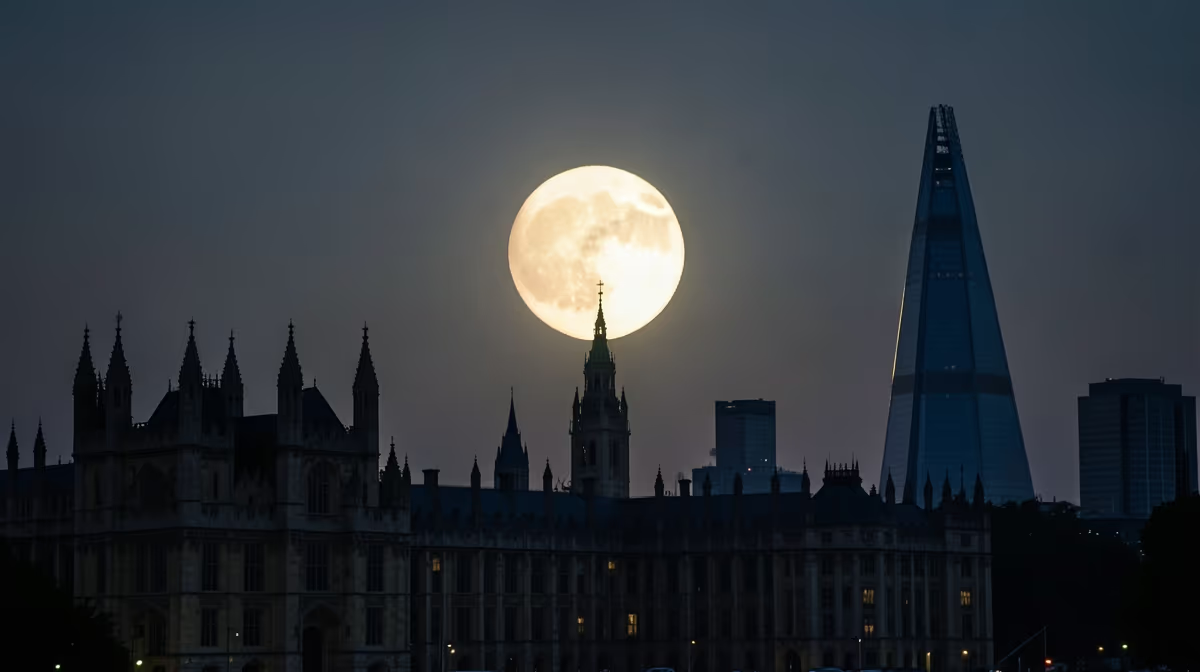
Skywatchers across the UK are preparing for a rare astronomical event as a total solar eclipse is scheduled to pass over parts of Europe, including northern regions of the UK, on August 12, 2026. As stargazers look ahead, many are asking when is the eclipse 2026 and how it will be visible from the UK. Mark your calendars because a breathtaking astronomical event is heading our way. A major solar eclipse will grace the skies on August 12, 2026, offering skywatchers a truly unforgettable spectacle as the Moon passes directly between the Earth and the Sun. While this will be a total solar eclipse in parts of the world, people watching from the UK will see a stunning partial eclipse. Depending on where you are in Great Britain, a large chunk of the Sun will be blocked out by the Moon, causing a noticeable dimming of daylight and a drop in temperature during the late afternoon. To view the eclipse safely, you will need special solar viewing glasses, as looking directly at the Sun without protection can cause permanent eye damage. The peak of the eclipse in the UK is expected to occur just an hour or so before sunset, making for a dramatic evening view weather permitting.
When is the Eclipse 2026 Scheduled?
The celestial event will mark the first total solar eclipse visible from the UK and surrounding European territories since 1999. Totality will be best observed from regions in northern Spain, Iceland, and parts of the Arctic, while the British Isles will experience a significant partial eclipse, with coverage reaching up to 96% in parts of western Scotland and southwest England. The root cause of this alignment is found in celestial mechanics governed by the Saros cycle alignment of the Sun, Moon, and Earth, specifically resulting in a rare total solar eclipse touching parts of Europe and the Arctic. Astronomers and tourism boards are already anticipating high demand for travel to the path of totality. Weather permitting, the event will begin in the late afternoon on August 12, 2026, culminating just before sunset. Safety organizations have begun emphasizing the critical importance of using certified solar viewing glasses to prevent permanent eye damage during the partial phases. Local authorities and astronomical societies are planning educational campaigns and public viewing events. Given the UK notoriously unpredictable August weather, enthusiasts are weighing travel options to ensure clear skies for the duration of the peak alignment. Dr. Emily Richardson, a senior astrophysicist at the Royal Astronomical Society, stated that an eclipse of this magnitude so close to home is a generational experience, adding that while the UK will see a deep partial eclipse rather than full totality, the sheer scale of the darkening skies will be unforgettable for anyone who steps outside.
What Time Is the Solar Eclipse 2026 in the UK?
The exact timing of the event is a matter of precise astronomical calculation. The solar eclipse will take place on Wednesday, August 12, 2026. In the UK, it will be visible as a partial solar eclipse rather than a total one, with the peak viewing time happening in the late afternoon, shortly before sunset. What time is the solar eclipse 2026 depends slightly on your exact geographic positioning within the British Isles, but the universal trajectory places the climax of the partial phase during the final hours of daylight. Local councils, transport networks, and tourism agencies are still developing logistical plans to manage potential crowds and traffic surge points, particularly in areas predicted to have the highest visibility. Astronomical forecasting and early tourism booking coordination are currently underway across various institutions. Hotels are expected to sell out as the date approaches, while local councils issue safety warnings regarding ISO-certified viewing glasses, and transport authorities prepare contingency plans.
The Mechanics and Core Facts
Solar eclipses occur when the New Moon moves precisely between the Earth and the Sun, blocking its light. While partial eclipses happen relatively often, total solar eclipses visible from Europe are much rarer, making the 2026 event a major milestone for stargazers across the continent following the famous North American eclipse of 2024. The total eclipse 2026 event features several key parameters that have been mathematically confirmed by astronomical agencies. Totality will be best experienced in northern Spain, Iceland, and parts of Greenland. Everyone in the UK will be affected by a slight dimming of sunlight if skies are clear, while amateur astronomers, photographers, and travelers planning trips to Spain or Iceland for the full totality will be most deeply engaged. This rare celestial event offers a fantastic opportunity to spark public interest in science and astronomy, bringing communities together outdoors. However, because it occurs late in the day, it also serves as a crucial reminder about eye safety, as millions of people will need to take proper precautions while looking toward the horizon. Special certified solar eclipse glasses are strictly required to view the event safely from any location observing the partial phases.
Socioeconomic and Logistical Implications
The impending celestial alignment brings a complex web of secondary effects across multiple sectors. Local and national governments are scrambling for resource allocation regarding infrastructure, emergency services, and public safety management during massive tourism influxes. There will be significant surges in the travel, hospitality, and aviation sectors, contrasted with potential productivity losses and localized supply chain disruptions on the day of the event. Key players such as the Royal Astronomical Society, the Met Office, the UK Civil Aviation Authority, and major UK travel operators are actively monitoring the situation. Public interest will steadily build over the next year, peaking dramatically in the months leading up to August 2026, with significant demand for flights to regions experiencing the full eclipse. Travel providers and accommodation platforms in northern Spain and Iceland, which serve as prime viewing spots for UK travelers, will report increased booking inquiries for August 2026. On the geopolitical and cooperative front, nations involved will engage in collaborative international airspace management and scientific collaboration, alongside heightened domestic security mobilization for mass gatherings across affected airspace and territories. Historical parallels can be drawn to the logistical responses to the 1999 and 2017 total solar eclipses, which served as stress tests for municipal civil defense and urban planning.
Future Outlook and Risk Assessment
Looking ahead toward the event, search trends for the August 12, 2026 total solar eclipse will surge in the UK, prompting travel and astronomy websites to release updated viewing guides and path-of-totality details. In the best-case scenario, clear weather conditions across key European viewing locations allow millions of UK and international tourists to witness the partial eclipse at home and total eclipse abroad safely, boosting scientific literacy and public engagement. Conversely, in the worst-case scenario, widespread cloud cover across the UK could obscure the partial eclipse, leading to public disappointment, alongside severe logistical bottlenecks and price gouging for travel to the path of totality. Public engagement and education initiatives, retail astronomy equipment sales, and travel and tourism markets will remain the primary impact areas as the timeline progresses.
Frequently Asked Questions
When is the next solar eclipse visible in 2026?
The next major solar eclipse of 2026 will occur on August 12, 2026. This celestial event will be a total solar eclipse visible across parts of the Arctic, Greenland, Iceland, and northern Spain.
Will the 2026 eclipse be visible from the UK?
Yes, a partial solar eclipse will be visible from the UK on August 12, 2026. Depending on your exact location in Britain, a significant portion of the sun will be obscured by the moon in the late afternoon.
What time does the August 2026 eclipse happen in the UK?
The partial eclipse on August 12, 2026, is expected to take place in the late afternoon, peaking shortly before sunset. Exact timings will vary slightly depending on whether you are viewing from England, Scotland, Wales, or Northern Ireland.
What type of eclipse is happening in August 2026?
The main event on August 12, 2026, is a total solar eclipse. However, for observers outside the narrow path of totality—such as those in the UK—it will appear as a partial solar eclipse.
When is the next total solar eclipse in the UK?
While the UK will experience a partial eclipse in August 2026, the next total solar eclipse with a path directly crossing parts of the UK will not occur until September 23, 2090. However, a notable partial eclipse will also be visible in 2027.
Do I need special glasses to view the 2026 partial eclipse in the UK?
Yes, you must use certified solar viewing glasses or a proper solar filter to safely watch the partial eclipse from the UK. Looking directly at the sun without eye protection, even when it is partially covered by the moon, can cause permanent eye damage.
Conclusion
The upcoming solar eclipse on August 12, 2026, represents a rare and significant astronomical milestone for observers across the UK and Europe. With confirmed scientific trajectories indicating a deep partial eclipse domestically and full totality accessible in regions such as northern Spain and Iceland, public interest and travel planning are already accelerating. As local authorities, scientific bodies, and travel operators prepare for the logistical demands of the event, individuals are encouraged to secure certified solar viewing glasses and monitor official updates regarding viewing safety and weather conditions as the date draws closer.