
Flock Cameras Police Misuse Triggers Massive Privacy Overhaul
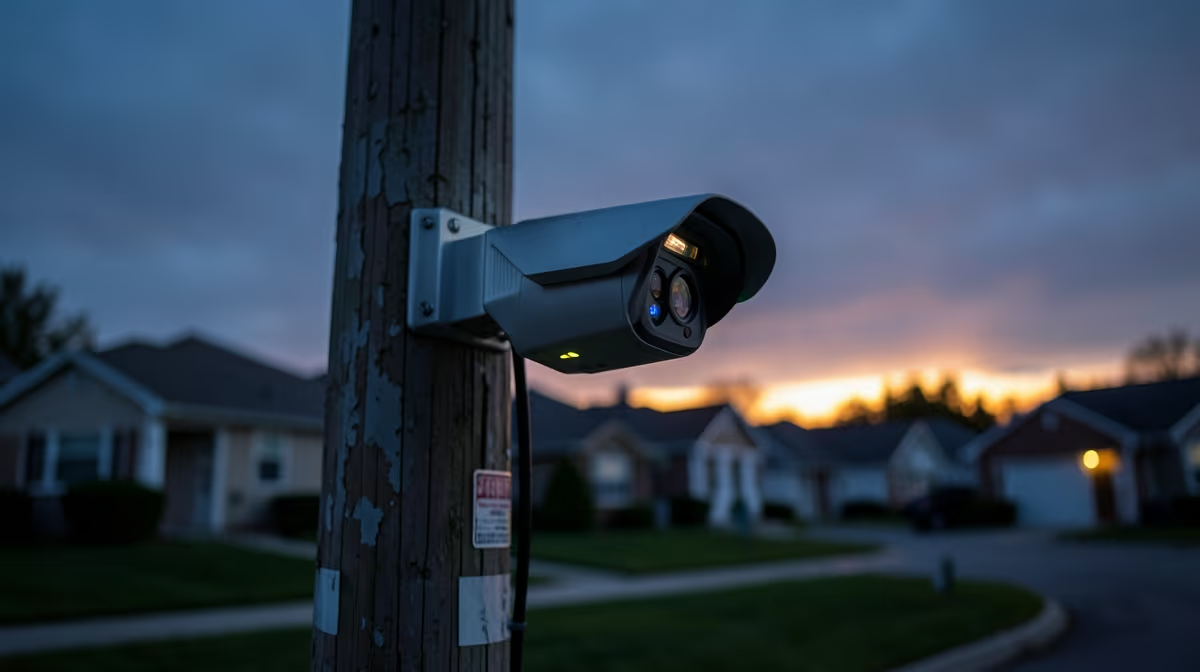
Flock Safety has announced policy and system changes for its automated license plate reading cameras following reports of police misuse, leaving communities and local officials across the United States weighing privacy concerns against law enforcement utility. Growing concerns over Flock cameras police misuse have triggered urgent calls for a nationwide privacy overhaul regarding automated surveillance.
The Surveillance Infrastructure and Recent Disclosures
Automated license plate reader cameras, commonly made by companies like Flock Safety, are becoming a massive part of everyday policing across the United States. While law enforcement agencies use these camera networks to track vehicles and help solve crimes, recent reports have exposed serious vulnerabilities regarding privacy and misuse. Recent media investigations and reports, including coverage by The Washington Post, have highlighted instances of potential police misuse involving Flock surveillance camera networks.
- Flock Safety has announced a system overhaul following investigative reporting regarding the police misuse of its vast camera network
- A New Bedford police officer was investigated for allegedly using Flock surveillance cameras to track her ex-partner
- A protest regarding Flock cameras in Fargo ended abruptly after fights broke out
- Communities like Pflugerville remain skeptical of automated surveillance cameras despite the company's proposed policy changes
- The founder of Flock Safety publicly claimed that the company's camera technology could have helped solve the Nancy Guthrie case
In one specific incident, a New Bedford police officer is under investigation for allegedly using the technology to track her ex-partner. This highlights how easily these powerful tools can be abused. Concerns over privacy and surveillance overreach have sparked public friction, with a recent protest in Fargo ending abruptly after physical fights broke out. In response to mounting pressure and investigative reporting, Flock Safety has introduced a major privacy overhaul and system changes to try and curb unauthorized access.
Community Skepticism and Local Pushback
Despite the proposed policy changes, communities and local governments remain skeptical. Protests and debates have popped up nationwide—ranging from cities like Pflugerville maintaining caution to protests in Fargo turning chaotic—as citizens question where the line should be drawn between public safety and mass surveillance. Pflugerville remains skeptical of automated surveillance cameras despite the announced overhaul. Residents and local officials continue to question whether privacy safeguards are robust enough to prevent overreach and unauthorized tracking.
The rapid expansion of automated license plate readers touches on a fundamental tension in modern society: the trade-off between public safety and personal privacy.
While proponents of the technology argue that automated camera networks are powerful investigative tools capable of solving high-profile crimes—with company founders pointing to potential applications in major missing persons cases—critics and civil liberties advocates demand stricter accountability and transparency regarding how vehicle data is accessed, shared, and stored.
Broader Context and Analytical Perspectives
The rapid, unregulated expansion of automated mass surveillance infrastructure by private tech firms has outpaced municipal governance, leaving systems vulnerable to both systemic police overreach and targeted personal misuse. Automated license plate reader networks have grown rapidly over the last decade, deployed by both private neighborhoods and municipal police forces. While historically used to flag stolen vehicles or wanted suspects, the proliferation of these private-public data-sharing networks has frequently sparked intense debates regarding Fourth Amendment rights, data retention policies, and the lack of federal oversight on commercial surveillance technology.
Elected officials face intense constituent backlash and polarization, caught between demands for law and order and the growing civil liberties movement advocating for strict surveillance overhauls and privacy safeguards. Flock Safety's business model relies on scaling municipal contracts for automated license plate reader networks, creating a lucrative market that is now forced to invest in costly policy overhouse and PR damage control to protect its revenue streams. Everyday drivers whose vehicles are captured by the nationwide network are affected, as well as local police departments facing stricter oversight.
The rapid expansion of automated surveillance infrastructure has forced communities to reevaluate how much tracking they are willing to accept in the name of security.
Future Outlook and Industry Trajectory
Continued local reporting and community debate are expected following recent protests, police misuse investigations, and announcements regarding Flock camera system overhauls. Over the next 72 hours, heightened scrutiny from municipal leaders and citizens will evaluate automated license plate reader policies, privacy measures, and the effectiveness of proposed safety overhauls. Analysts would likely expect municipalities to closely reassess automated surveillance contracts and demand stricter internal controls and auditing procedures following widespread reports of police misuse. In the best-case scenario, surveillance companies and police departments successfully implement transparent overhauls and tighter access controls, restoring community trust and addressing core privacy concerns. Conversely, the worst-case scenario involves persistent systemic misuse and public skepticism leading to prolonged protests, legal challenges, and abrupt cancellations or bans of automated camera networks in various communities.
Frequently Asked Questions
What led to Flock Safety announcing a major privacy overhaul for its surveillance cameras?
Flock Safety unveiled significant changes to its camera network following a prominent Washington Post report detailing instances of police misuse of the technology. The overhaul aims to address mounting privacy concerns and curb potential abuses by law enforcement agencies.
How are police officers accused of misusing Flock surveillance cameras?
Concerns over police misuse have surfaced in various jurisdictions, including an investigation into a New Bedford police officer accused of using the cameras to track her ex-partner. Incidents like these have heightened public scrutiny regarding how law enforcement accesses and utilizes automated license plate reader data.
Why are local communities remaining skeptical despite Flock's safety overhaul?
Communities such as Pflugerville remain skeptical about the expanded use of automated surveillance despite the company's new policy rollouts. Residents and local officials continue to question whether privacy safeguards are robust enough to prevent overreach and unauthorized tracking.
Who is affected by the controversies surrounding automated license plate reader networks?
Everyday drivers whose vehicles are captured by the nationwide network are affected, as well as local police departments facing stricter oversight. Protests and public pushback have also emerged in cities like Fargo, reflecting widespread community anxiety over expanding surveillance.
What happens next as cities evaluate Flock Safety's new policy changes?
Local governments and police departments are currently reviewing the newly implemented security and privacy adjustments to determine if they adequately protect civil liberties. Public debates and community meetings will likely continue as municipalities weigh crime-fighting benefits against privacy rights.
How can vehicle owners check if their car has been searched by Flock cameras?
Vehicle owners looking to understand their exposure can consult informational guides detailing how automated license plate reader databases operate and how to check for vehicle searches. These resources help demystify the extent to which public and private surveillance networks track everyday travel.
Conclusion
Flock Safety has introduced network changes following public reporting on police misuse, while multiple local incidents involving questionable camera tracking have drawn official investigations and public protests. Whether the newly announced safety and privacy overhauls will satisfy community concerns and how strictly local law enforcement agencies will enforce the revised rules remain open questions. Local governments and police departments continue to review security adjustments as public debate persists across the United States.
Sources
- Has your vehicle been searched by Flock cameras? Here’s how to check — Hawaii News Now
- Flock camera protest in Fargo ends abruptly after fights break out — InForum
- New Bedford police officer investigated for allegedly using Flock surveillance cameras to track her ex — Boston.com
- Flock founder says his cameras could have solved Nancy Guthrie case — NewsNation
- Flock Safety overhaul keeps Pflugerville skeptical of surveillance cameras — KXAN Austin
- Flock unveils changes after Post report on police misuse of vast camera network — The Washington Post


.webp)

