
Iran UAE Missile Strike Leaves Persian Gulf on High Alert After Fall
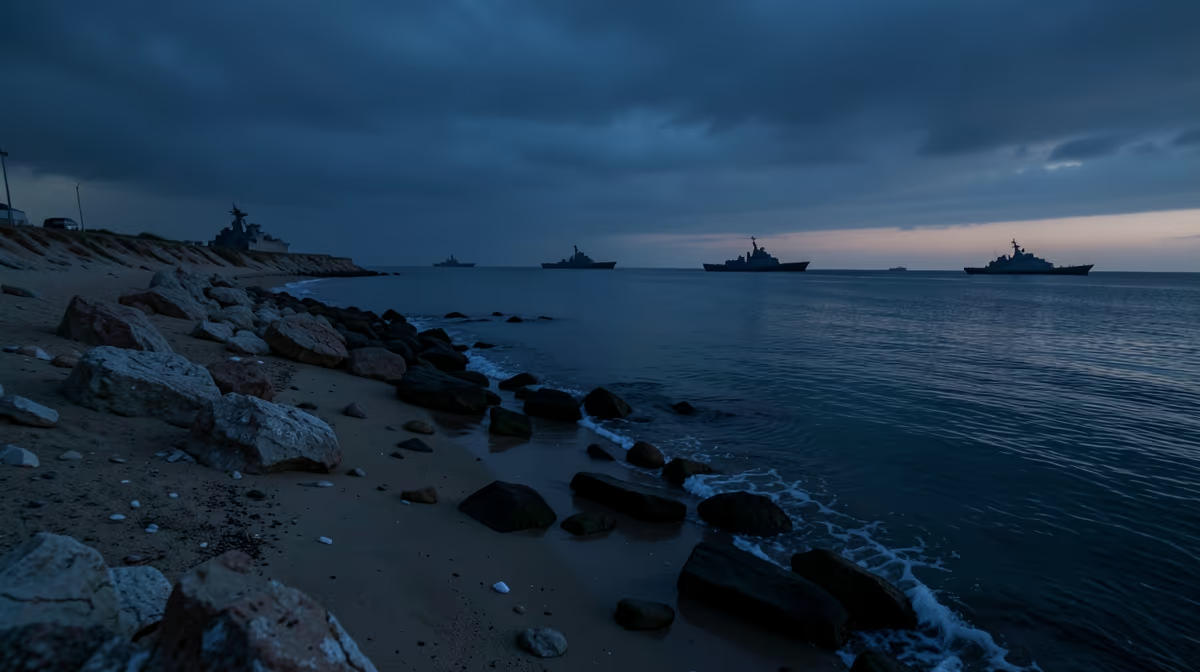
The latest Iran UAE missile strike has heightened regional tensions after two ballistic missiles landed in territorial waters. This alarming development places the Gulf region on edge as defense forces evaluate the trajectory and origin of the incoming projectiles amid escalating friction.
The United Arab Emirates has officially announced that two ballistic missiles launched from Iran fell into its territorial waters, raising regional tensions further following recent maritime incidents. According to reports from Reuters and NDTV, the ballistic missiles were detected after phone warnings were issued in Dubai, prompting authorities to place the region on high alert. The incident follows a tense period in the region, which also saw recent developments regarding a UAE-linked tanker in the Strait of Hormuz. Defense and security authorities are currently monitoring the situation closely as the UAE evaluates the nature of the missile launch. The arrival of the projectiles in territorial waters has added urgency to diplomatic and security discussions across the Gulf. Regional stakeholders and international observers are assessing the security implications of the incident. Further updates from official channels are expected as authorities continue their investigation into the trajectory and origin of the launched missiles.
Background of Regional Friction
Tensions in the Middle East have escalated further as the United Arab Emirates reported that two ballistic missiles launched from Iran fell into its territorial waters. The incident comes on the heels of mounting regional friction, following separate reports of maritime disputes in the Strait of Hormuz involving UAE-linked vessels. Residents in parts of the UAE, including Dubai, reported receiving phone warnings prompting them to remain on high alert as authorities tracked the incoming projectiles. While the situation is developing rapidly, security forces are monitoring the developments closely to ensure public safety amid the heightened regional anxiety.
The root cause of this alarming situation stems from heightened regional tensions following maritime incidents involving UAE-linked assets in the Strait of Hormuz, escalating into direct projectile crossfire. The region surrounding the Persian Gulf has long experienced geopolitical friction involving Iran and neighboring Arab states, frequently centered around maritime trade routes, territorial claims, and broader proxy conflicts in the Middle East.
Chronology of Recent Developments
The timeline of events highlights how quickly the security situation escalated across maritime and urban centers in the region:
- Mon, 17 Aug 2026: Iran claims seizure of a UAE-linked tanker in the Strait of Hormuz.
- Tue, 18 Aug 2026 (Early): Dubai residents receive phone warnings, placing the city on high alert.
- Tue, 18 Aug 2026 (Later): UAE officially confirms two ballistic missiles launched from Iran fell into its territorial waters.
These developments were widely covered by major news outlets including Reuters, NDTV, Hindustan Times, Al Jazeera, and DW.com. Furthermore, the broader geopolitical climate has impacted other sectors, including regional sports and diplomatic engagements, such as neutral venue matches in the Champions League being arranged for Iran, Qatar, and UAE sides.
Strategic Implications and Analysis
The incident places regional governments under intense domestic pressure to project strength and security, particularly after phone warnings were triggered in major hubs like Dubai, forcing authorities onto high alert. Geopolitical friction in crucial shipping lanes and financial hubs threatens investor confidence in the UAE economy, impacting trade, tourism, and maritime logistics across the Gulf. The launch of ballistic missiles from Iran into UAE territorial waters risks widening the Gulf conflict, drawing international scrutiny and testing diplomatic alignments in the Middle East.
An underlying dynamic involves timing that coincides with regional sports fixtures being shifted to neutral venues, suggesting a broader, multi-sector decoupling or pre-emptive security posture across cultural and diplomatic exchanges. This situation shares historical parallels with the 2019 attacks on oil tankers in the Gulf of Oman, which heightened regional naval tensions and security alerts without triggering a full-scale conventional war.
Why This Situation Matters
This incident significantly raises the stakes for security and stability in the Gulf region, directly threatening vital shipping lanes, regional airspace, and civilian safety. Any military escalation between Iran and Gulf states has immediate global implications for energy markets, international travel, and broader geopolitical peace.
Residents and travelers in the United Arab Emirates, international shipping companies operating in the Persian Gulf and Strait of Hormuz, and global energy markets dependent on Middle Eastern stability are directly affected by these developments.
The UAE stated that two ballistic missiles launched from Iran fell into its territorial waters amid growing maritime and regional disputes.
Outlook and Future Scenarios
Authorities in the UAE are likely to maintain high alert status following reports of ballistic missiles launched from Iran falling into territorial waters, alongside ongoing monitoring of maritime security in the Strait of Hormuz. Diplomatic and military officials are expected to assess the security implications of the missile incident and tanker seizures, while regional and international observers watch for potential escalations over the next 72 hours.
Expert analysis suggests that observers would likely expect heightened diplomatic tensions and increased defensive readiness across the region following direct reports of missile activity near territorial waters. In a best-case scenario, the situation remains contained through diplomatic channels and de-escalation efforts, preventing further military incidents or disruptions to regional commerce. Conversely, the worst-case scenario involves escalating tensions leading to further maritime disruptions in the Strait of Hormuz and heightened military posturing between the involved nations.
Frequently Asked Questions
What official statement did the UAE make regarding the missiles?
The UAE stated that two ballistic missiles launched from Iran fell into its territorial waters.
How were residents alerted to the incoming threat?
Residents in Dubai reported receiving phone warnings prompting them to remain on high alert as authorities tracked the incoming projectiles.
What maritime incident preceded the missile detections?
Iran claimed the seizure of a UAE-linked tanker in the Strait of Hormuz prior to the missile incident.
Which international news outlets covered the events?
Major news outlets including Reuters, NDTV, Hindustan Times, Al Jazeera, and DW.com reported on the developments.
Conclusion
The United Arab Emirates has officially confirmed that two ballistic missiles launched from Iran fell into its territorial waters, occurring concurrently with maritime disputes in the Strait of Hormuz and emergency alerts in Dubai. Verified reports from international news agencies substantiate the high-alert status enacted by regional defense authorities. As key players continue to monitor maritime security and evaluate the security implications, diplomatic and military officials are expected to assess the evolving situation to maintain regional stability and protect vital trade routes.
Sources
- UAE Says 2 Ballistic Missiles Launched From Iran Fell Into Territorial Waters — NDTV
- Iran claims seizure of UAE-linked tanker in Strait of Hormuz — TradeWinds News
- UAE says Iran launched two missiles at it — reuters.com
- UAE says 2 ballistic missiles from Iran detected after Dubai gets phone warnings: ‘On high alert' | World News — hindustantimes.com
- Iran clubs face Qatar and UAE sides at neutral venues in Champions League — Al Jazeera
- UAE economy: On the brink or bouncing back? — DW.com


.webp)