
Mount Etna Eruption Triggers Rare Lightning Storm and Airport Closure
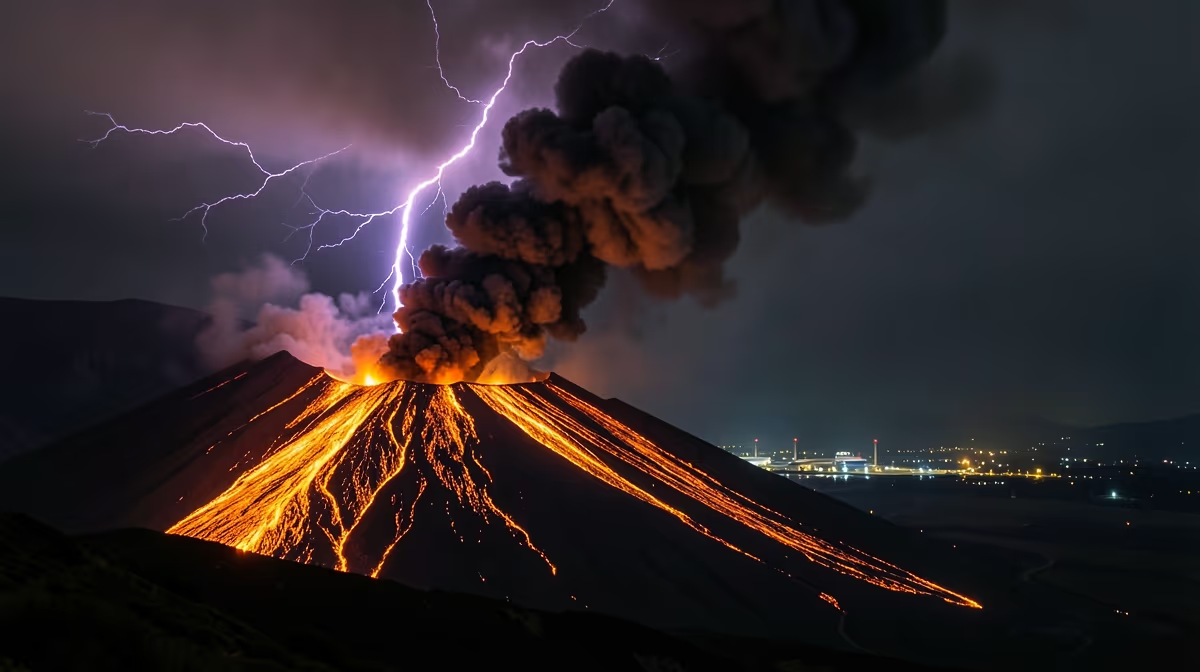
The latest Mount Etna eruption has captured global attention as dramatic footage reveals a rare lightning storm enveloping the Sicilian volcano. Amid this volatile intersection of geological forces and adverse atmospheric conditions, an American tourist tragically lost their life following a lightning strike on the mountain.
Mount Etna, located on the east coast of Sicily, is Europe's most active volcano. Volcanic eruptions from Etna frequently generate ash clouds that pose significant hazards to aviation and local communities, sometimes triggering localized weather phenomena such as lightning within the ash plumes. The continuous activity has severely disrupted regional travel, forcing the extended closure of Catania airport and leading to the cancellation or delay of hundreds of flights. International and local news outlets, including the BBC, AccuWeather, UPI, Reuters, The New York Times, and NBC News, have closely monitored the dual crisis of aviation paralysis and mountain safety hazards.
Volcanic Activity and Catania Airport Disruptions
The ongoing volcanic activity has spewed massive clouds of volcanic ash into the sky above Sicily. This heavy ash emission led to extended closures at Catania airport, stretching through the week and into Saturday.
- Hundreds of flights were canceled or delayed across Sicily
- Catania airport experienced extended closures due to the heavy ash plume
- Regional transport hubs faced severe disruption during peak travel seasons
- Aviation officials and airlines continuously monitored safety conditions
Transport hubs and regional authorities have had to prolong flight suspensions to ensure passenger safety as the volcanic plume persisted. These frequent closures severely impact Sicily's tourism industry, supply chains, and regional transportation revenue.
The Science Behind the Etna Lightning Strike
While the volcano spewed ash, extreme weather conditions created a hazardous environment for visitors near the summit. A US hiker and American tourist tragically lost their life after being struck by lightning on the Italian volcano.
Volcanic lightning can occur when colliding ash particles, rock fragments, and ice crystals inside a volcanic plume generate static electricity. This rare and dangerous phenomenon frequently accompanies explosive eruptions like those seen at Mount Etna, highlighting the extreme and unpredictable hazards present during these intense natural events.
A US hiker tragically died after being struck by lightning on Mount Etna amid volatile weather conditions accompanying the volcanic eruption.
Global and Economic Impact
Disruptions to key Mediterranean aviation hubs highlight the vulnerability of European transport corridors to natural disasters, prompting broader discussions on regional infrastructure resilience. Local and regional authorities face mounting pressure from constituents and tourism boards to improve early warning infrastructure and emergency response protocols around active volcanic zones.
The increasing frequency of flight disruptions due to volcanic ash clouds may accelerate calls for European airspace management to adopt more agile, localized rerouting technologies rather than prolonged blanket closures. This situation carries strong historical parallels to the 2010 Eyjafjallajökull eruption in Iceland, which caused massive, prolonged European airspace shutdowns and forced a reevaluation of aviation risk thresholds regarding volcanic ash.
Timeline of Events
- Mid-August 2026: Mount Etna spews volcanic ash, causing widespread flight cancellations and extending closures at Catania airport.
- August 17, 2026: A US hiker tragically dies after being struck by lightning on the volcano amid adverse weather conditions.
- Current: Authorities manage ongoing travel disruptions and assess safety protocols for visitors near the active crater.
Natural disasters like volcanic eruptions combined with severe weather demonstrate the unpredictable dangers travelers and local populations face, while also causing widespread economic and logistical disruptions through grounded flights and closed transportation hubs.
Future Outlook and Expert Predictions
Analysts expect ongoing travel delays and heightened safety warnings for visitors as volcanic and adverse weather conditions persist around Mount Etna. Regional authorities, aviation officials, emergency services, and tourists and hikers remain key players as the situation continues to evolve.
In the next 24 hours, continuous monitoring of Mount Etna's volcanic activity and weather conditions will follow the fatal lightning strike and continued ash emissions. Over the next 72 hours, assessment of flight disruptions at Sicily's Catania airport and evaluation of safety protocols for tourists and hikers on the volcano will remain paramount.
Worst-case scenarios involve prolonged volcanic ash emissions extending airport closures further, causing severe regional travel gridlock and increased risks from severe weather near the summit. Conversely, best-case scenarios see weather conditions improve and volcanic activity subside, allowing flight operations at Catania airport to resume fully without further safety incidents.
Frequently Asked Questions
What happened during the recent Mount Etna event?
Mount Etna experienced significant volcanic activity that spewed massive amounts of ash into the atmosphere. The eruption coincided with severe weather, leading to a tragic lightning strike on the volcano.
Why did a hiker die on Mount Etna?
A US hiker and American tourist tragically lost their life after being struck by lightning while on the Italian volcano. Severe weather conditions during the eruption created hazardous environments for visitors on the mountain.
How has the Mount Etna eruption affected travel in Sicily?
The volcanic ash and ongoing activity have caused major flight disruptions across Sicily. Hundreds of flights have been canceled or delayed, significantly impacting travelers in the region.
Is Catania airport open following the Etna eruption?
Due to the continuous heavy ash emissions, Sicily's Catania airport faced extended closures. Authorities and transport officials have had to prolong flight suspensions to ensure passenger safety.
What happens next for tourists and flights in Sicily?
Airlines and local authorities are continuously monitoring Mount Etna's activity levels to determine when it is safe to resume normal flight operations. Travelers heading to Sicily are advised to check directly with their airlines for up-to-date schedule changes.
Can volcanic eruptions cause lightning?
Yes, volcanic lightning can occur when colliding ash particles, rock fragments, and ice crystals inside a volcanic plume generate static electricity. This rare and dangerous phenomenon frequently accompanies explosive eruptions like those seen at Mount Etna.
Conclusion
Mount Etna's recent eruptions and concurrent severe weather have resulted in confirmed travel paralysis across Sicily, extended airport closures at Catania, and the tragic death of an American hiker due to a volcanic lightning strike. Regional authorities, aviation officials, and emergency services continue to manage ongoing transport disruptions and safety protocols while monitoring volcanic activity. Travelers heading to the region must check directly with carriers for schedule changes as safety assessments proceed.
Sources
- Mount Etna: US hiker dies after being struck by lightning on Italian volcano — BBC
- Mount Etna eruptions cause major flight disruptions in Sicily — AccuWeather
- American tourist struck by lightning on Italy's Mount Etna dies — upi.com
- Etna eruption extends closure of Sicily's Catania airport until Saturday — Reuters
- Hundreds of Flights Canceled in Sicily as Mount Etna Spews Volcanic Ash — The New York Times
- Mount Etna eruption disrupts travel in Sicily — NBC News


.webp)

