
Powerball Jackpot Climbs to Historic High Ahead of Weekend Drawing
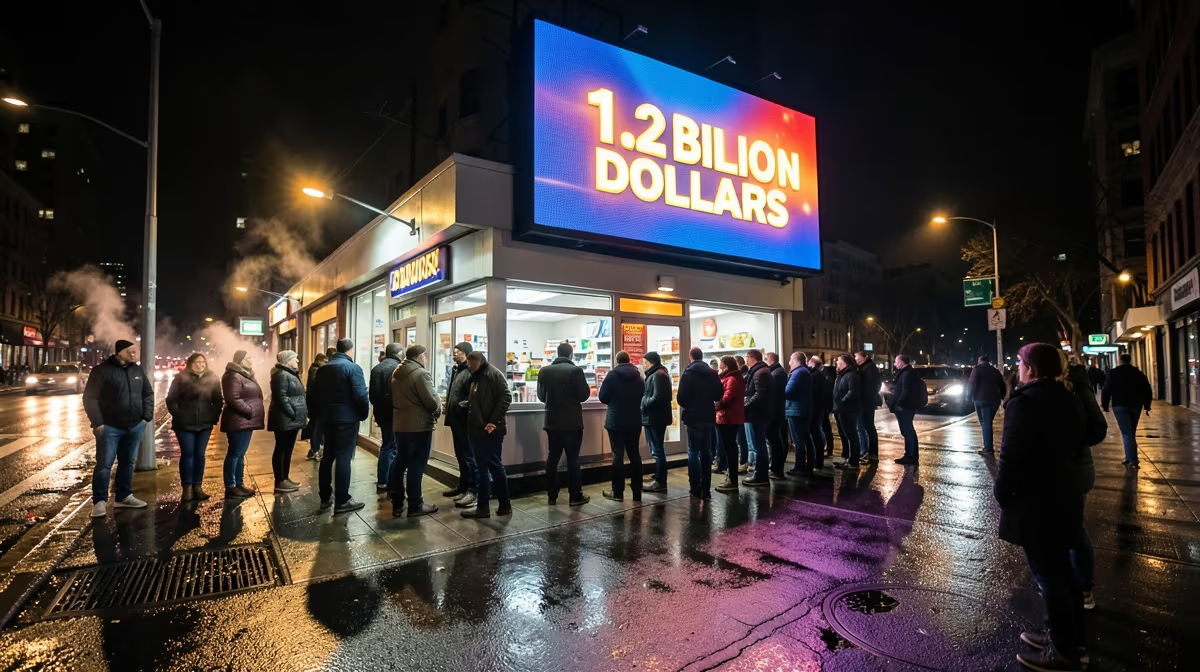
The latest powerball jackpot has climbed to an estimated massive total, drawing immense interest nationwide ahead of the upcoming drawing. The Powerball jackpot has climbed to an estimated $1.23 billion after no player matched all six numbers drawn on Wednesday night, setting up the fourth-largest prize in the game's history for the next drawing on Saturday.
What Unfolded
The winning numbers for the Wednesday drawing were white balls 11, 38, 41, 62, 65, and the red Powerball was 15. While the grand prize went unclaimed, lottery officials reported that millions of lower-tier tickets won prizes nationwide, including five tickets that matched all five white balls to secure $1 million prizes in California, Florida, New York, and Texas. Ticket sales have surged significantly over the past week as the jackpot crossed the billion-dollar threshold. Retailers across participating states reported long queues as hopeful players purchased entries ahead of the weekend deadline. The Multi-State Lottery Association, which administers the game, noted that the increased volume is typical during multi-state rollover sequences of this magnitude. The odds of winning the grand prize remain long at approximately 1 in 292.2 million. Winners of the jackpot can choose between an annuitized prize paid over 30 years or a lump-sum cash payment, which for Saturday's drawing is currently estimated at $595.1 million before federal and state taxes. Lottery officials remind players to gamble responsibly. While the excitement of a billion-dollar jackpot is contagious, we always encourage participants to play within their means, said Drew Svitko, Powerball Product Group Chairman and Pennsylvania Lottery Executive Director.
The Mechanics Of The Game
The Powerball is a massive multi-state lottery game in the United States that captures the attention of millions whenever the jackpot climbs to staggering amounts. Players pick five numbers from one set and one Powerball number from another, hoping to match all six to win the grand prize. Because the odds of winning are extremely low, the prize money rolls over and grows larger with each drawing until someone finally beats the odds. When a winner is announced, they are faced with a life-changing choice: take the full prize spread out in annual payments over 30 years, or take a smaller, immediate lump-sum cash payout. Even if you do not hit the multi-million dollar jackpot, there are smaller cash prizes available for matching just a few numbers, which keeps people coming back week after week. Tickets cost $2 per play in most participating US states and jurisdictions. Jackpots start at a guaranteed minimum of $20 million and grow until won. The odds of winning the grand prize are roughly 1 in 292.2 million. Players can add a Power Play multiplier for an extra dollar to increase non-jackpot winnings. Drawings are held three times a week on Mondays, Wednesdays, and Saturdays. The game was launched in 1992 as the successor to Lotto America, and it was the first lottery game to use two drums to select numbers, a design that inspired many other lotteries worldwide to create massive, fast-growing jackpots.
Economic And Systemic Realities
Massive Powerball jackpots spark a cultural phenomenon, bringing together coworkers, families, and friends who pool their money to buy tickets and dream about financial freedom. Furthermore, a significant portion of lottery ticket sales goes toward funding vital public programs, such as state education systems, parks, and senior services, turning a game of chance into a major source of public revenue. General adult consumers in 45 US states, Washington D.C., Puerto Rico, and the U.S. Virgin Islands who choose to purchase tickets are affected, as well as public education and state programs that benefit from lottery revenue. Underlying these massive draws are systemic wealth inequality and the state-sponsored monetization of hope targeting economically vulnerable demographics. State governments act as predatory monopolies, relying on lottery revenues as a regressive substitute for progressive taxation. This dynamic results in the extraction of capital from lower-income brackets to fund state budgets, creating a reverse wealth transfer disguised as voluntary entertainment. Foreign syndicates and international players also exploit cross-border loopholes to funnel massive capital pools into US state-controlled funds, while hidden psychological tolls and predatory marketing target areas stripped of traditional industrial union jobs. Historically, this mirrors the use of state-sanctioned lotteries in the 18th century to fund colonial expansion and public debts while pacifying the domestic populace. The timeline of this trajectory spans from 1992 when Powerball replaced Lotto America to create larger jackpots, through 2015 rule changes that lowered odds to generate historic multi-billion dollar jackpots, leading to the present centralization of national wealth into massive lottery pools managed by state consortiums.
Future Outlook And Immediate Trajectory
Monitoring ticket sales surge as the estimated jackpot continues to climb following no winning match in the latest drawing occupies the next 24 hours. Over the next 72 hours, activities will involve conducting the upcoming live drawing, verifying winning numbers, and awaiting potential high-tier jackpot claims overseen by the Multi-State Lottery Association and State Lottery Directors. Public interest and retail lottery sales remain the primary impact areas. Expert prediction indicates that readers should expect increased media coverage and a spike in impulsive ticket purchases as the prize reaches staggering amounts. The best-case scenario involves a single lucky winner claiming the life-changing jackpot cleanly, sparking widespread community excitement and charitable planning. Conversely, the worst-case scenario entails technical glitches occurring during the ticket sales rush or fraud attempts targeting regional lottery systems.
Frequently Asked Questions
What time is the Powerball drawing tonight?
Powerball drawings take place every Monday, Wednesday, and Saturday at 10:59 PM Eastern Time. The drawings are broadcast live from the Florida Lottery draw studio in Tallahassee. Ticket sales usually close one to two hours before the drawing, depending on the state you are purchasing them in.
How much does a Powerball ticket cost?
A standard Powerball ticket costs $2 per play. Players can also choose to add the Power Play option for an additional $1, which multiplies non-jackpot prizes by 2, 3, 4, 5, or 10 times. In some states, a Double Play add-on is also available for another $1 to enter a separate drawing.
What are the overall odds of winning a Powerball prize?
The overall odds of winning any prize in Powerball are approximately 1 in 24.9. However, the odds of winning the jackpot by matching all five white balls and the red Powerball are much steeper, at about 1 in 292.2 million. Prizes range from $4 for matching just the Powerball up to the multi-million-dollar jackpot.
Can you remain anonymous if you win the Powerball?
Whether you can remain anonymous after winning the Powerball depends entirely on the laws of the state where the ticket was purchased. Several states allow lottery winners to keep their identities completely private, while others legally require the winner's name and city of residence to be made public upon request. Winners in states that lack anonymity laws often use legal trusts to help protect their privacy.
What happens if no one wins the Powerball jackpot?
When no ticket matches all six numbers to win the jackpot, the prize pool rolls over and grows larger for the next scheduled drawing. This rollover effect continues until a player finally hits the winning combination, often resulting in massive, record-breaking jackpots that capture national attention. A portion of every ticket sale also contributes to public education and other state-funded programs.
How long do you have to claim a Powerball prize?
The deadline to claim a Powerball prize typically ranges from 90 days to one year from the date of the drawing, depending on the state rules where the ticket was bought. If a prize goes unclaimed after the designated expiration period, the money is usually returned to the participating state lotteries for education funds or future jackpots. It is crucial to sign the back of your ticket immediately and check your state lottery website for exact expiration guidelines.
Conclusion
The estimated jackpot for the next drawing stands at $1.23 billion with a cash option of $595.1 million after no ticket matched all five white balls and the red Powerball on Wednesday. Ticket sales continue to accelerate ahead of the weekend broadcast as retailers manage high volumes of participants. Lottery officials are closely monitoring ticket sales surges and preparing for the upcoming live drawing while reminding players to review local claim deadlines and gamble responsibly.


.webp)

