
Santy Sharma Arakshan Hatao Campaign Triggers Intense National Debate
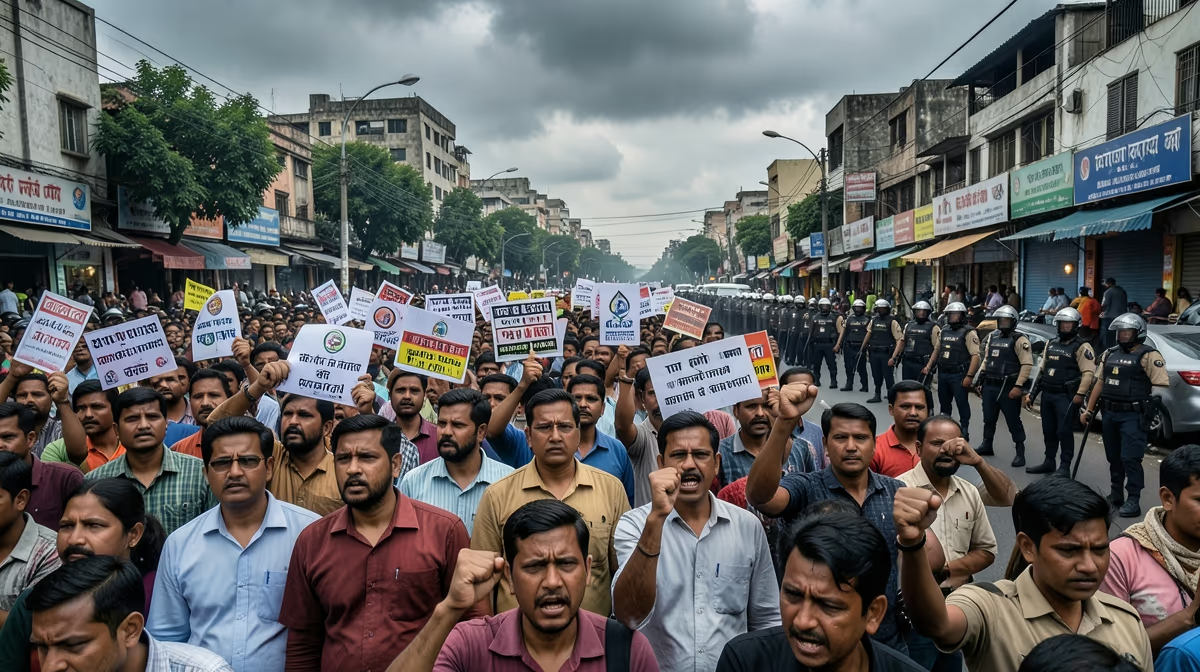
Santy Sharma, a prominent social activist, has intensified protests demanding the complete removal of the reservation system in India, sparking widespread debates across multiple states regarding merit-based opportunities and constitutional reforms. Get the latest updates on santy sharma arakshan hatao movement and ongoing protests across the region to understand the underlying tensions driving this contemporary social debate. The movement has captured national attention, transforming digital discussions into ground-level demonstrations that touch the core of India's social fabric and public policy frameworks.
Who is Santy Sharma and Why Arakshan Hatao Protest?
Santy Sharma is a prominent social media influencer and activist known for leading campaigns demanding the removal of the reservation system in India. Through various digital platforms, he has mobilized youth to voice their opinions against caste-based reservations, utilizing short-term videos, live sessions, and digital campaigns to connect instantly with disillusioned citizens. The core demand of the movement is arakshan hatao, translating to remove reservations, which calls for an end to caste-based quotas in education and government jobs. Proponents of this view argue that reservations should be based strictly on economic status rather than caste, asserting that the current framework undermines meritocracy and deepens societal divisions.
The demonstrations associated with the santy sharma protest have led to heated debates across social media platforms and public forums, drawing thousands of supporters to rallies and awareness campaigns organized in key urban centers. Local administrations have responded by beefing up security measures to maintain public order. Meanwhile, critics and political analysts note that while the demand resonates with a specific segment of the youth concerned about employment opportunities, it faces stiff opposition from marginalized communities and major political parties who view reservations as an essential tool for social justice and equity.
Latest Updates on Santy Sharma Arakshan Hatao Campaign
The campaign led by Santy Sharma demanding the abolition of reservations is active, has generated public demonstrations, and has drawn sharp contrasting responses from political and social factions. Rallies and awareness campaigns have prompted law enforcement agencies to increase security measures in areas witnessing heightened campaign activities. Various political and social organizations have publicly opposed the demands raised by the campaign, warning that any call for the complete removal of constitutional safeguards threatens social harmony and historical justice.
As the movement continues to evolve, the potential nationwide expansion of the protests remains a key point of observation, alongside official legal or political responses from governing bodies regarding the demands. Authorities are closely monitoring the situation to maintain public order and safety. Representatives from various socio-political organizations have called for dialogue to address the underlying grievances concerning unemployment and educational access without dismantling constitutional safeguards.
Root Causes and Socio-Political Drivers
The demand for the abolition of reservation championed by figures like Santy Sharma reflects deep-seated systemic frustration among unreserved or general category communities who perceive state-mandated affirmative action as institutionalized reverse discrimination and a barrier to meritocracy. Stagnant job growth, high youth unemployment, and the shrinking proportion of stable government jobs intensify the zero-sum competition over quotas, transforming the reservation debate into an economic survival issue for families excluded from caste-based benefits.
Mobilization around anti-reservation sentiments serves as a polarizing wedge in Indian electoral politics, challenging established vote-bank equations by consolidating upper-caste and economically distressed general category voters against dominant caste-based coalition politics. Beneath the surface rhetoric of merit versus quota lies a proxy conflict over control of educational institutions and bureaucratic patronage networks, often fueled by elite anxieties over the shifting balance of socio-political power. This dynamic closely mirrors the fierce agitations surrounding the Mandal Commission implementation in 1990, which sparked widespread protests and self-immolations among upper-caste youth, setting a precedent for contemporary anti-reservation movements.
Future Outlook and Expert Predictions
In the next 24 hours, increased social media mobilization and online discourse regarding Santy Sharma's anti-reservation stance are expected, leading to localized digital debates and potential counter-responses from pro-reservation groups. Over the next 72 hours, analysts anticipate a potential amplification of the narrative across regional media outlets in India, drawing reactions from political commentators and caste-based organizations.
Expert predictions suggest that the rhetoric around arakshan hatao will likely remain a polarizing topic online, sparking impassioned debates on social equity and meritocracy without translating into immediate legislative or ground-level policy shifts. The best-case scenario envisions constructive public discourse on economic reforms and merit-based opportunities without escalating into offline social unrest or caste-based animosity. Conversely, the worst-case scenario involves the escalation of online hate speech, deepening social polarization, and potential localized protests or confrontations between opposing groups.
Frequently Asked Questions
Who is Santy Sharma in the context of the Arakshan Hatao movement?
Santy Sharma is a prominent social media influencer and activist known for leading campaigns demanding the removal of the reservation system in India. Through various digital platforms, he has mobilized youth to voice their opinions against caste-based reservations. His viral videos and rallies have significantly fueled debates on merit-based opportunities.
What is the main objective of the Arakshan Hatao campaign led by Santy Sharma?
The primary objective of the movement is to abolish the current caste-based reservation system and replace it with a system purely based on economic criteria. Activists like Santy Sharma argue that reservations promote inequality and division while sidelining merit. They advocate for equal opportunities for all citizens regardless of their caste background.
Why has Santy Sharma's stance on reservation sparked controversy?
His outspoken views against caste-based reservations have drawn sharp criticism from supporters of the quota system, who view reservations as vital for social justice and representation. Critics argue that abolishing quotas would marginalize historically disadvantaged communities further. This clash of perspectives has made him a controversial figure in Indian socio-political discourse.
How has social media impacted Santy Sharma's Arakshan Hatao movement?
Social media platforms have served as the primary catalyst for spreading Santy Sharma's message to a wider audience across India. Short-form videos, live sessions, and digital campaigns have helped him connect instantly with disillusioned youth. This digital outreach has successfully transformed local protests into a broader national conversation.
What are the alternative policies proposed by anti-reservation activists?
Activists campaigning against the current quota system generally propose financial support and free education for the underprivileged instead of job or admission reservations. They believe that uplifting the poor through quality schooling and economic aid creates a fairer playing field. This approach aims to address poverty directly rather than through caste identity.
Is Santy Sharma associated with any political party?
As of now, Santy Sharma operates primarily as an independent social activist and digital creator rather than holding an official position in a major political party. While various political groups have tried to leverage the anti-reservation sentiment, he positions his movement as a grassroots citizen initiative. His focus remains heavily centered on online advocacy and public mobilization.
Conclusion
The campaigns and public demonstrations led by Santy Sharma have brought discussions surrounding India's reservation framework back into the forefront of public consciousness. Verified developments confirm active grassroots mobilization, heightened security measures in urban centers, and sharp ideological divisions between proponents and opponents of the quota system. As law enforcement and civil authorities continue to monitor the situation, the realistic next steps involve navigating polarized digital discourses and managing public demonstrations while addressing underlying economic and educational concerns through established institutional channels.


.webp)


.webp)