
Sony PlayStation Disc Future Faces Critical Crossroads in US Market
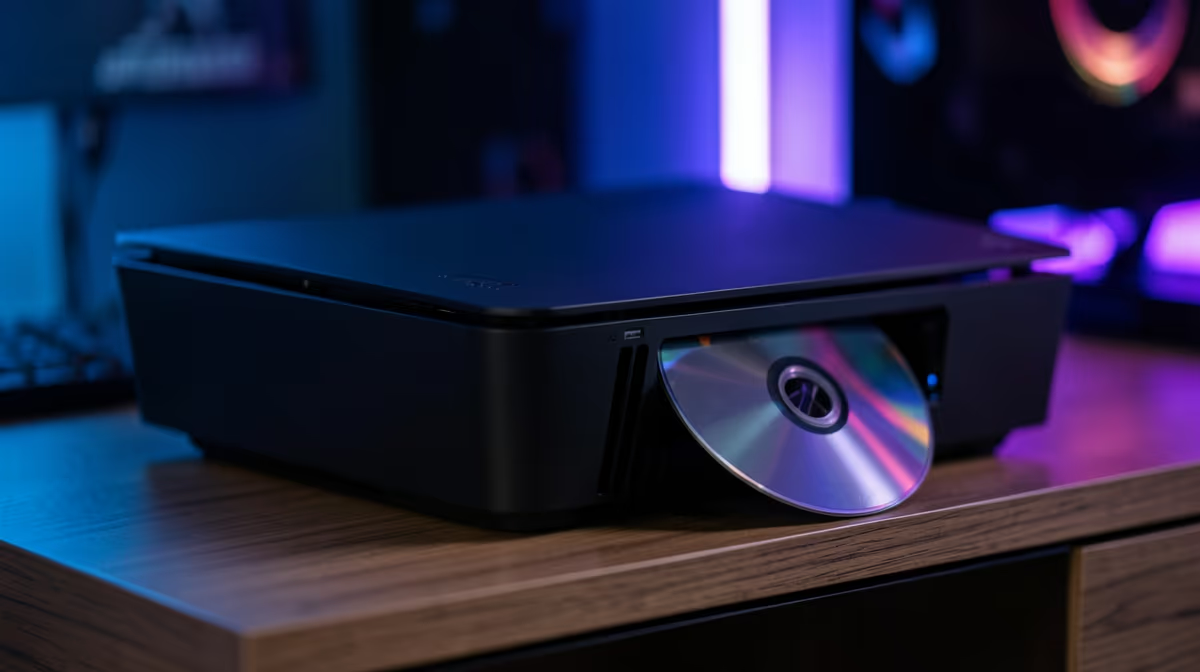
As the gaming industry shifts toward online ecosystems, the sony playstation disc future remains a hot topic among gamers and industry analysts alike. Sony Interactive Entertainment has signaled a definitive shift in its hardware strategy for the US market, confirming that physical game discs will remain a core component of its console ecosystem for the PlayStation 5 generation while the industry accelerates its digital-first transition.
The Hardware Shift and Current Strategy
During a recent financial briefing in New York, Sony executives addressed ongoing consumer speculation regarding the future of physical media following the release of the slim PlayStation 5 model, which features a detachable disc drive. The company reiterated that consumer demand for physical game ownership, particularly in Western markets like the United States, continues to justify the manufacturing and distribution of disc-based software alongside digital storefronts.
Industry analysts note that while digital downloads now account for the vast majority of software sales across the US gaming sector, collectors, retro enthusiasts, and rural consumers with limited broadband access still rely heavily on physical media. Retail partners have also pressured hardware manufacturers to maintain disc options to sustain high-margin hardware accessory sales and in-store foot traffic.
Looking further ahead to potential future hardware iterations, such as a hypothetical PlayStation 6, industry insiders suggest Sony is weighing the economic realities of optical drive production against declining market shares. However, for the immediate future, the company has chosen a dual-format approach to appease both traditionalists and the rapidly growing digital consumer base. Sony's hardware engineering division stated in a recent product briefing that offering players the choice between physical and digital formats remains a fundamental pillar of the PlayStation hardware philosophy and our commitment to player choice.
Economic Drivers and Industry Trends
The rapid democratization of high-speed fiber-optic infrastructure and digital distribution platforms has rendered physical media logistics increasingly redundant, creating a margin-expansion opportunity for platform gatekeepers. Digital-only distribution eliminates manufacturing, shipping, warehousing, and used-game resale friction, drastically improving profit margins for Sony while capturing one hundred percent of aftermarket software revenue.
For decades, video games were sold primarily on physical media like cartridges and discs. Over the last ten years, faster internet speeds and digital storefronts have made downloading games the preferred method for millions of players, leading console makers to introduce digital-only hardware options. This shift highlights a major trend in the tech and gaming world, where physical media is slowly being phased out in favor of purely digital downloads. While digital games are convenient, this change means players no longer truly own a physical copy of the game that they can trade, sell, or lend to friends.
Market Realities and Consumer Impact
The death of physical discs changes the fundamental way consumers interact with entertainment media. Without physical copies, players lose the ability to buy used games cheaply, trade games with friends, or keep a physical collection, ultimately giving platform holders like Sony total control over game pricing and availability. This systematic erosion of consumer digital rights and asset ownership transforms purchased games into revocable licenses subject to geopolitical licensing disputes and corporate server deprecation.
Regulatory capture and antitrust scrutiny over digital storefront monopolies also come into play, where platform holders dictate pricing and terms without retail competition, shifting leverage away from traditional brick-and-mortar lobbies. Supply chain vulnerabilities, rare earth element dependencies for optical lasers, and geopolitical flashpoints in East Asian manufacturing hubs further accelerate the strategic pivot toward asset-light cloud and digital models. This evolution mirrors the music industry transition from compact discs to MP3s and streaming in the early 2000s, which crushed legacy retail but ultimately consolidated immense power into a handful of digital aggregators.
Next Steps and Industry Outlook
Retailers and industry analysts will debate the implications of digital-only console trends on physical disc sales following recent supply chain reports. Gaming media outlets will publish deeper analysis on physical media sustainability, and consumer forums will actively discuss backward compatibility concerns for future PlayStation hardware. Key players across this ecosystem, including Sony Interactive Entertainment, GameStop, Walmart, and Amazon, face mounting pressure to adapt to changing consumer habits across the physical retail ecosystem, the used game market, collector editions, and consumer ownership rights.
Expert prediction models suggest Sony will gradually phase out disc drives as standard internal components, transitioning them to optional modular add-ons for future hardware generations while heavily incentivizing digital storefronts. In the best-case scenario, Sony maintains a hybrid approach for multiple generations, offering detachable disc drives that satisfy both physical collectors and digital-first consumers without alienating either market. Conversely, the worst-case scenario involves an abrupt elimination of physical disc support sparking severe consumer backlash, hurting specialized retail partners and leading to a significant loss of market share among traditional gamers.
Frequently Asked Questions
Will the next PlayStation have a disc drive?
Sony is expected to continue offering disc drives, likely through modular attachments similar to the PS5 Slim approach. While digital sales dominate the market, a significant portion of the PlayStation fanbase still prefers physical media for resale and collection purposes. Therefore, complete abandonment of the disc drive in the immediate next generation is unlikely.
Is Sony phasing out physical game discs?
Sony is not officially phasing out physical discs yet, but the industry-wide shift toward digital downloads is undeniable. The massive success of digital storefronts and all-digital console editions indicates that physical media is slowly losing market share. However, retail discs will likely remain a viable option for collectors and gamers with limited internet bandwidth for the foreseeable future.
Can you play PS5 physical discs on a PS6?
Backward compatibility plans for the hypothetical PS6 have not been officially announced by Sony yet. Given the architecture continuity between the PS4 and PS5, it is technically feasible for Sony to support backward compatibility for physical discs in future consoles. Consumer demand for preserving physical game libraries will heavily influence Sony's decision on this feature.
Why are people buying digital-only PlayStation consoles?
Digital-only consoles are often cheaper upfront and offer the convenience of instant game switching without needing to swap physical discs. Many modern gamers prioritize the clutter-free experience and the frequent digital sales hosted on the PlayStation Store. Additionally, manufacturing trends by Sony favor digital editions to reduce hardware production costs.
Will PS5 games stop coming out on disc?
Major AAA PlayStation 5 games are still being released on disc alongside digital editions. While some smaller indie titles are digital-exclusive, physical media remains a standard release format for major blockbusters. This trend is expected to continue for the active lifespan of the current console generation.
Do physical PS5 discs actually install the game?
Yes, physical PS5 discs are primarily used to verify ownership and copy the game data directly onto the console's ultra-fast SSD. Modern games are simply too large to run directly from a disc at the required speeds for current-gen hardware. Once installed, the disc must still remain in the drive to act as a license key when launching the game.
Conclusion
Sony Interactive Entertainment continues to navigate the complex transition from physical media to digital dominance while balancing consumer demand for physical ownership in Western markets. Current hardware iterations maintain hybrid solutions, such as detachable optical drives, ensuring that players retain access to physical game discs. As retail ecosystems, supply chains, and digital storefronts continue to evolve, Sony's long-term hardware roadmap will rely heavily on consumer adaptation rates and ongoing industry discussions surrounding digital rights and game preservation.


.webp)

