
Strait of Hormuz Vessels Attacked in Major Escalation
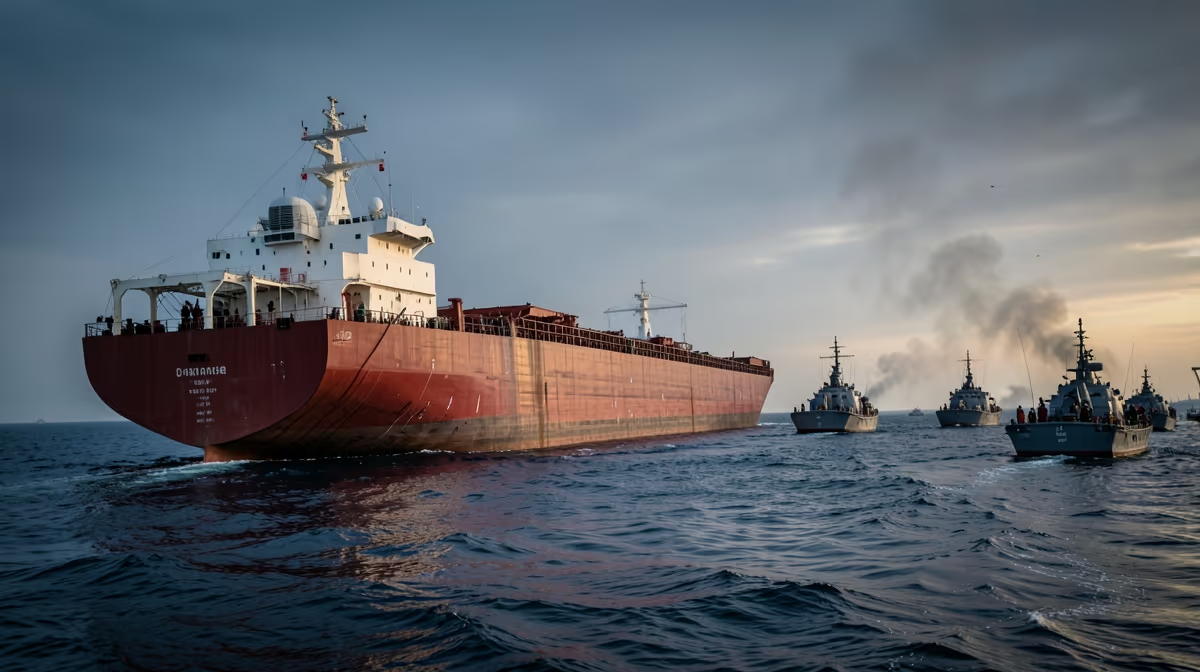
Recent tensions escalated drastically after the ADNOC vessel attack Strait of Hormuz, prompting international concern. The United Arab Emirates has stated that Iran attacked two ADNOC vessels in the Strait of Hormuz, resulting in no reported injuries according to reports from Reuters.
Background and Context
The incident comes amid heightened tensions in the vital maritime trade route, as traffic through the Strait of Hormuz remains low while global markets monitor ongoing regional conflicts and blockades. Vessel crossings have fluctuated, with reports noting an increase to 13 crossings from nine a day earlier amid broader disruptions involving the US, Iran, and regional actors. The situation has severely impacted shipping and oil transport, drawing heightened attention from international observers and military analysts as stockpiles are drawn down. Meanwhile, diplomatic and rhetorical friction continues to mount between Washington and Tehran over the security and control of the critical waterway.
The Strait of Hormuz is a narrow and strategically crucial waterway connecting the Persian Gulf with the Gulf of Oman and the Arabian Sea. Due to its geography, it has historically been a flashpoint for geopolitical tensions and military posturing involving regional and global powers seeking to control or protect oil transit. This event occurs against a backdrop of ongoing regional conflict involving Iran, the United States, and various maritime disputes. Traffic through the vital waterway has remained noticeably restricted while global markets watch closely.
Key Facts of the Maritime Incident
- The UAE stated that two ADNOC vessels came under attack in the Strait of Hormuz.
- No injuries were reported following the attacks on the two vessels.
- Strait of Hormuz vessel crossings have experienced significant disruptions and low traffic volumes amid the ongoing standoff.
- The United States has maintained that it can continue its blockade on Iran indefinitely.
- Iran has accused the US of miscalculated the situation in the vital maritime trade route.
The United Arab Emirates reported that two ADNOC vessels were attacked by Iran in the Strait of Hormuz with no resulting injuries. The full security impact on shipping, future vessel traffic numbers in the Strait of Hormuz, and potential international diplomatic responses remain under observation.
Economic and Geopolitical Analysis
Escalating maritime tensions and direct military posturing in the critical Strait of Hormuz choke point, leading to targeted attacks on commercial and state-linked energy infrastructure, form the root cause of the current crisis. The incident ratchets up domestic pressure on Gulf states like the UAE to balance their diplomatic ties with Iran against security alliances with the United States, while testing the administration's stated willingness to maintain an indefinite blockade.
With global oil stockpiles depleting and commercial vessel crossings through the Strait of Hormuz remaining severely depressed, any threat to ADNOC shipping directly jeopardizes regional energy exports and inflames global crude pricing volatility. The attacks risk widening the current theater of conflict from localized proxy flashpoints into a direct confrontation over freedom of navigation in one of the world's most vital energy corridors. Beyond the immediate security threat, these vessel incidents may be calculated pressure tactics by Tehran to test the logistical limits and economic sustainability of the ongoing US-led maritime blockade.
Why This Matters
The Strait of Hormuz is one of the world's most critical energy chokepoints, through which a massive portion of the global oil supply passes. Incidents and blockades in this region threaten international shipping lanes, energy security, and can cause sudden spikes in global oil prices. Global consumers, international shipping companies, energy markets, and economies heavily reliant on Middle Eastern oil imports are all affected by these developments.
Chronology of Regional Friction
- Aug 10, 2026: Houthi-linked attacks result in casualties in Yemen, signaling broader regional friction.
- Aug 13, 2026: UAE reports that two ADNOC vessels were attacked in the Strait of Hormuz without causing injuries.
- Aug 14, 2026: Strait traffic remains severely restricted as world powers weigh responses and trade accusations over regional miscalculations.
Future Outlook
Maritime authorities and regional governments are expected to closely monitor vessel traffic in the Strait of Hormuz following the reported attacks on ADNOC vessels, while diplomatic channels address the escalation. Energy markets and shipping companies will likely assess the security risks to commercial transit, potentially influencing vessel crossings and international responses to the blockade and naval tensions.
Analysts would likely expect heightened security postures around critical chokepoints and continued volatility in maritime traffic through the Strait of Hormuz as global powers and regional states navigate the ongoing blockade. In the best-case scenario, diplomatic interventions de-escalate tensions in the region, allowing vessel crossings through the Strait of Hormuz to resume normal operations without further attacks on commercial shipping. Conversely, the worst-case scenario involves the security situation deteriorating further, leading to a prolonged disruption of oil shipments, depleted global stockpiles, and expanded military confrontations in the region.
Frequently Asked Questions
What happened to the ADNOC vessels in the Strait of Hormuz?
The United Arab Emirates reported that two ADNOC vessels were attacked by Iran in the Strait of Hormuz. Fortunately, the incident resulted in no reported injuries.
Why is the Strait of Hormuz important during this conflict?
The Strait of Hormuz is a critical global chokepoint for oil transport and maritime trade. Ongoing tensions and attacks in the region have led to fluctuating vessel crossings and low traffic as global oil stockpiles are consumed.
Who is affected by the disruptions in the Strait of Hormuz?
Global energy markets, shipping companies, and countries dependent on Middle Eastern oil imports are heavily impacted by the ongoing security threats. The disruptions have forced authorities to monitor maritime traffic closely as trade routes face continuous risks.
What happens next regarding the US blockade and regional tensions?
The US has stated it can maintain a blockade on Iran indefinitely while tensions remain elevated. Meanwhile, diplomatic and strategic maneuvers continue as Iran criticizes US positioning and claims calculations in the strait are miscalculated.
What is the background of the escalating tensions involving Iran and maritime traffic?
Escalating conflicts across the region, including Houthi attacks in Yemen and direct friction in key waterways, have heightened fears over maritime security. These events have steadily increased the risks for commercial vessels operating near vital shipping lanes.
How has vessel traffic through the Strait of Hormuz responded recently?
Vessel crossings through the Strait of Hormuz have experienced slight fluctuations, recently rising to 13 crossings from 9 a day earlier. Despite this slight uptick, overall traffic remains low compared to normal operational levels.
Conclusion
The United Arab Emirates has confirmed that two ADNOC vessels were attacked by Iran in the Strait of Hormuz, causing no injuries but intensifying ongoing regional maritime disruptions. As vessel crossings remain restricted, global markets, energy investors, and international observers continue to track security conditions in the vital waterway while diplomatic and naval positions remain deadlocked.
Sources
- Iran war latest: Houthi attacks kill seven in Yemen — Sky News
- Strait of Hormuz vessel crossings rise to 13 from 9 a day earlier — Anadolu Ajansı
- Iran war updates: US says can maintain blockade on Iran ‘indefinitely” — Al Jazeera
- Iran talks tough to US, says Trump 'miscalculated' on Strait of Hormuz — Fox News
- August 13, 2026 — Strait of Hormuz traffic remains low as world burns through oil stockpiles — CNN
- UAE says Iran attacked two ADNOC vessels in Strait of Hormuz; no injuries — Reuters


.webp)

