
Super El Nino Winter Weather Sparks Urgent US Preparation Across States
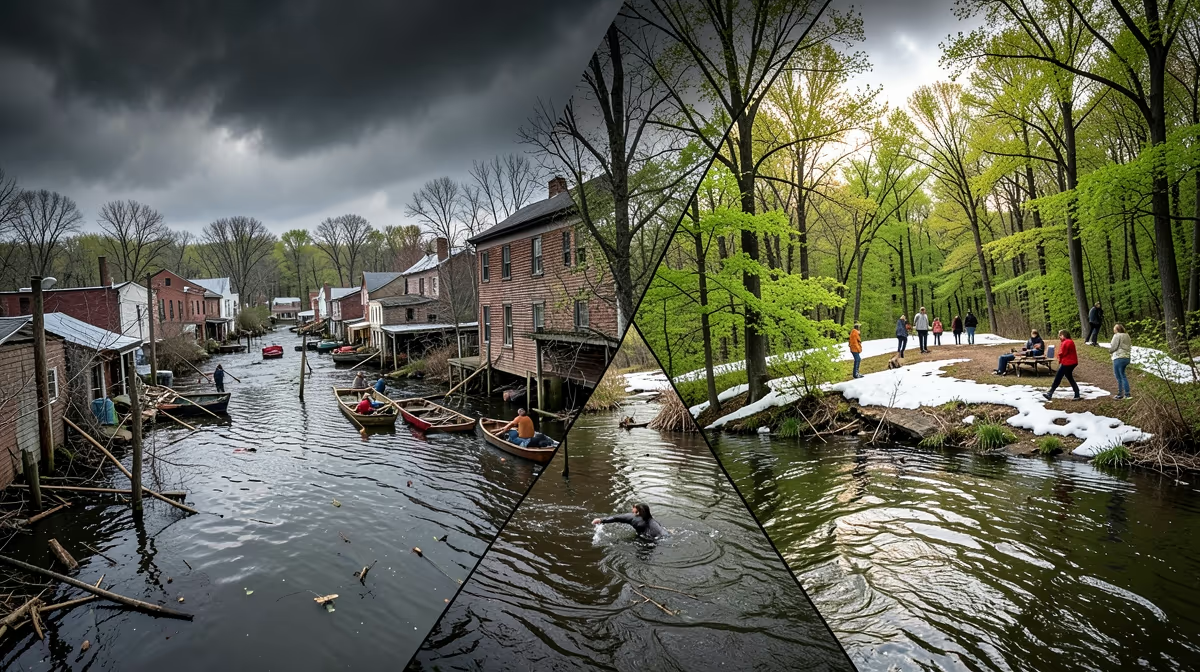
Federal meteorologists confirmed today that a historically strong Super El Nino climate pattern is firmly entrenched in the Pacific Ocean, directly shaping the upcoming winter weather outlook across the United States with threats of severe storms in the South and unseasonable warmth in the North. As meteorologists monitor Pacific Ocean temperatures, the conversation around super el nino winter weather is dominating discussions across the country, driving urgent re-evaluations among policy makers, economists, climate scientists, and risk analysts alike.
What Unfolded
The Climate Prediction Center issued its updated seasonal outlook, indicating that current sea surface temperatures in the equatorial Pacific rival those recorded during the historic Super El Nino events of 1997-1998 and 2015-2016. This dominant climate driver typically alters the Pacific jet stream, shifting it southward and bringing distinct weather anomalies across the North American continent. Meteorotropic agencies are actively issuing updated seasonal outlooks highlighting persistent jet stream anomalies linked directly to the ongoing climate phase.
For the southern tier of the country, stretching from central California across the Gulf Coast and into the Carolinas, the forecast calls for significantly wetter-than-average conditions. Emergency management officials are already preparing for an increased risk of flash flooding, mudslides, and severe thunderstorms as persistent atmospheric rivers and storm systems track across the region through the peak winter months. Conversely, the Pacific Northwest, the Upper Midwest, and the Northeast are anticipated to experience a milder and drier winter than usual. Ski resorts and winter tourism economies in these regions are monitoring the forecast closely, as reduced snowfall totals and above-average temperatures could threaten winter recreation revenue and impact regional snowpack water supplies for the coming spring.
Root Causes And Scientific Mechanics
The underlying mechanism driving these shifts stems from anomalous sea surface temperature spikes in the central and eastern equatorial Pacific, marking an intense transition into the warm phase of the El Nino-Southern Oscillation. This oceanic warming is coupled with a strengthened subtropical jet stream and a disrupted polar vortex. According to Michelle L'Heureux, a lead operational climate scientist at the Climate Prediction Center, this El Nino has developed into one of the strongest on record, giving operational teams high confidence in the expected temperature and precipitation anomalies for the upcoming winter season, though local impacts can still vary across microclimates.
This natural climate cycle swings between warmer El Nino phases and colder La Nina phases every few years. When ocean temperatures spike dramatically, scientists classify it as a Super El Nino, historically leading to some of the most disruptive and pronounced winter weather anomalies on record, similar to the strong events seen in 1997-1998 and 2015-2016. The current event ranks among the strongest ever recorded, amplifying its potential impacts across agricultural sectors, municipal planning, and commodity markets.
Economic And Market Adjustments
Energy markets and agricultural commodities are actively adjusting pricing models in anticipation of abnormal temperature distributions across the continental US. Severe supply chain disruptions due to infrastructure paralysis in the Midwest and Northeast contrast sharply with potential agricultural booms in the drought-relieved West and catastrophic losses in southern energy sectors. Global commodity price volatility spikes for grains and energy as US export capacities drop, altering trade balances and increasing diplomatic pressure from import-dependent nations.
Furthermore, a hidden angle of this climate phenomenon is the disproportionate strain placed on municipal bond markets and municipal credit ratings in southern and coastal regions unprepared for extreme weather events, accelerating climate gentrification and insurance market collapses. Federal disaster relief funding allocation is becoming a traditional bipartisan battleground, as states declare emergencies to secure Federal Emergency Management Agency funds while federal agencies face scrutiny over disaster preparedness and climate adaptation policies.
Regional Vulnerabilities And Scenarios
Forecasters anticipate a classic Super El Nino signature featuring a split jet stream, bringing wetter conditions to the southern tier and milder weather to the northern US. In the best-case scenario, well-timed winter precipitation successfully replenishes reservoirs in drought-prone western states without causing catastrophic flooding or infrastructure damage. However, the worst-case scenario warns that extreme atmospheric river events could trigger severe mudslides in California while unprecedented warmth cripples the winter tourism and heating fuel economies in the Northeast.
Residents in the southern US facing heavy rains and flood risks, communities in the northern US experiencing unusually warm winter weather, winter recreation businesses like ski resorts, farmers relying on specific seasonal precipitation, and emergency management services across the country all face direct operational challenges. This shift in winter weather directly impacts daily life, local economies, and public safety across the nation. Homeowners in the South need to prepare for potential flooding and severe storms that can damage property, while northern communities and winter tourism businesses may suffer from a lack of snow and ice.
Frequently Asked Questions
What is a Super El Nino winter in the US?
A Super El Nino occurs when sea surface temperatures in the equatorial Pacific Ocean rise significantly above average. During the US winter, this powerful climate phenomenon heavily influences the jet stream, usually pushing it further south and altering traditional temperature and precipitation patterns across the country.
How does a Super El Nino affect winter weather in the northern US?
Northern states, including the Pacific Northwest, the upper Midwest, and the Great Lakes region, typically experience much warmer and drier conditions than normal during a Super El Nino winter. This often leads to below-average snowfall totals and reduced winter recreation opportunities in those areas.
What does a Super El Nino mean for winter weather in the southern US?
The southern tier of the United States, stretching from California across the Gulf Coast and into Florida, generally experiences a much wetter and cooler winter during a Super El Nino. Enhanced moisture from the southern jet stream frequently brings heavy rainfall, increased storm activity, and a higher risk of localized flooding to these regions.
Will a Super El Nino bring more snow to the Northeast US?
Generally, a Super El Nino does not favor heavy snowfall in the major cities of the Northeast, as the storm tracks tend to stay further south or bring a mix of rain and sleet. However, depending on the exact positioning of cold air masses, the region can occasionally still experience a major nor'easter.
How does Super El Nino impact California's winter weather?
Super El Nino winters typically bring significantly above-average rainfall and heavy mountain snowpacks to California due to the southward shift of the atmospheric river track. While this helps replenish vital water reservoirs and drought conditions, it also substantially increases the risk of mudslides, flash floods, and severe coastal erosion.
Is every El Nino winter the same in the US?
No two El Nino events are exactly alike, and while statistical trends provide a reliable baseline, other global climate drivers can modify the final outcome. Factors such as the Arctic Oscillation and the strength of the polar vortex can interact with El Nino to produce unexpected regional weather variations.
Conclusion
Federal meteorologists and observational networks have confirmed the establishment of a historic Super El Nino, characterized by near-record sea surface temperatures in the equatorial Pacific and a distinct southward shift in the jet stream. As National Weather Service agencies and the Climate Prediction Center continue to issue updated seasonal guidance, communities, agricultural producers, and energy markets across the United States are actively preparing for polarized regional outcomes, ranging from severe flood risks in the southern tier to unseasonable warmth and reduced snowpack in the northern states.


.webp)

